




Vintage Collar Necklace
These vintage collar necklace pieces sit high on the neck, bringing together decades of metalwork and gemstones.
Vintage Collar Necklace
A vintage collar necklace sits close to the throat, often resting directly upon the clavicle to frame the neck with distinct presence. When buyers search for a vintage collar necklace, they encounter shorter, structural adornments that span periods from the Victorian era through the mid-twentieth century.
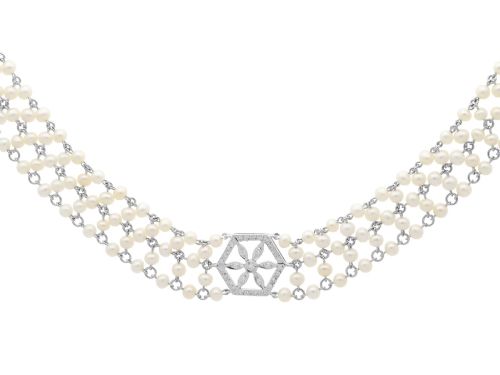
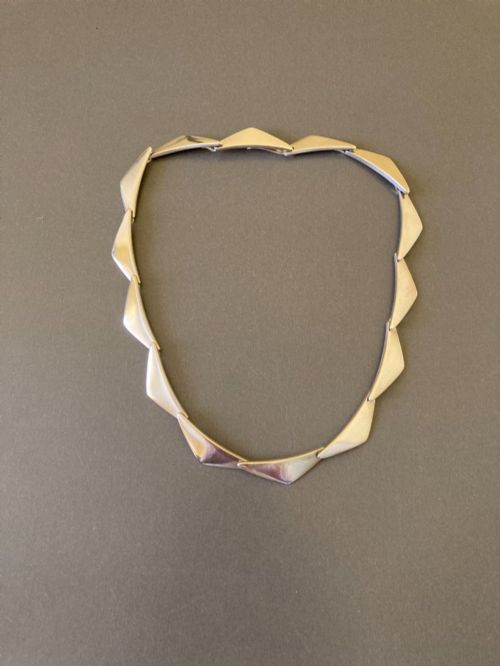
The selection here includes Art Deco platinum and diamond fringe designs, Scandinavian silver torque pieces, and Italian gold and onyx sets. Mid-century modernism and Victorian revival styles also appear frequently alongside pearl and coral strands.
These items function as focal points for formal attire, designed to stay rigidly in place or drape smoothly across the upper chest. They range from simple silver bands to heavily encrusted diamond and sapphire centerpieces.
Materials and construction
Metals span sterling silver, German silver, 18ct white and yellow gold, platinum, and 9ct gold. Goldsmiths shaped these metals into rigid torques, flexible linked fringes, and solid bands to support heavier gemstones.
Gemstones such as diamonds, rubies, emeralds, sapphires, coral, onyx, and Baltic amber are set alongside pearls and enamel work. Techniques rely on secure prong settings, intricate metal wirework, and hinged links that allow rigid collars to follow the curve of the neck.
Vintage Collar Necklace Retail Price Guide 2026
Typical asking prices for vintage collar necklace among the pieces listed under this phrase on Sellingantiques today, from the lower quarter to the upper quarter. They describe what is for sale here now, not the wider market.
Design styles span Art Deco, Mid-Century Modern, Scandinavian Modern, and Victorian Revival across various object forms.
Assessing quality in construction and materials
Quality rests in the precision of the metal articulation and the security of the stone settings. Superior examples display seamless movement between links and robust clasps that integrate invisibly into the overall design.
The grade of the materials, from high-carat gold and platinum to well-matched diamonds and uniform pearls, separates standard workshop pieces from master works. Clean solder joints and crisp stamping on silver indicate higher standards of manufacture.
Georg Jensen·Kria Gioielli·David-Andersen
The Vintage Collar Necklace Glossary
- Collor necklace
- A short necklace that fits closely around the neck, often measuring between fourteen and sixteen inches. These pieces sit above the collarbone and draw the eye upward.
- Fringe necklace
- A design featuring dangling elements suspended below the main chain or collar. These drops lengthen progressively toward the centre.
- Torque
- A rigid, open-ended metal neck ring without a traditional clasp. The wearer slips it on from the side or front.
- German silver
- An alloy of copper, nickel, and zinc containing no actual silver. It mimics the appearance of silver while offering high durability.
- Platinum
- A dense, silvery-white precious metal prized in mid-century and Art Deco jewellery for its strength. It securely holds diamonds without discolouring.
Vintage Collar Necklace: Frequently Asked Questions
What is a vintage collar necklace?
A short necklace designed to hug the throat or rest directly upon the collarbone. These pieces emphasise the neck through structured bands, fringes, or tightly grouped gemstones.
They appear in various styles from the twentieth century, ranging from minimalist Scandinavian silver to diamond-heavy Art Deco platinum creations.
How do I wear a collar necklace?
Pair these pieces with open necklines such as V-necks, strapless gowns, or scoop necks to ensure the jewellery remains the focal point. Because they sit high and close to the skin, they require garments that do not compete with the neckline.
Ensure the length matches your comfort, as traditional collars sit tighter than standard pendant chains.
Are these necklaces adjustable in length?
Most vintage collar necklaces have fixed lengths because of their rigid structures or specific link designs. Torques and solid metal bands offer no adjustment at all.
Flexible fringe styles and chain-based collars occasionally permit minor length alterations by a professional jeweller.
How do I date a collar necklace?
Dating relies on hallmark stamps, metal types, and design motifs characteristic of specific decades. Art Deco pieces use geometric platinum settings, while mid-century examples favour textured gold and modernist silver.
Maker marks and safety clasps also provide clear indicators of the period of manufacture.