


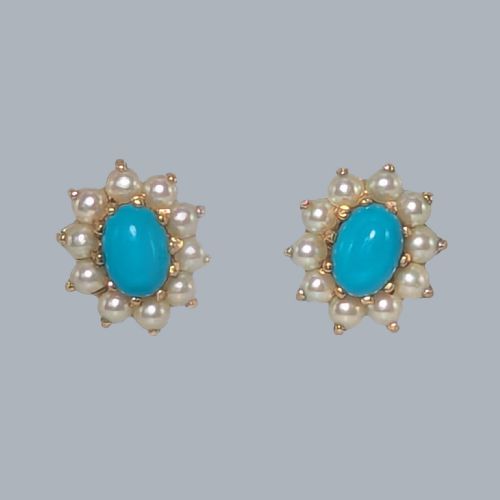


Vintage Cluster Stud Earrings
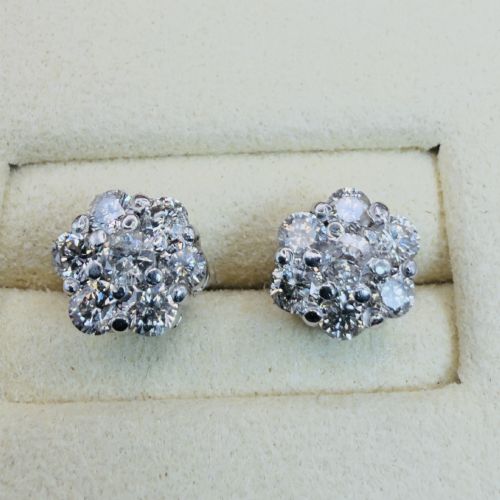
Vintage cluster stud earrings bring together a central gemstone surrounded by smaller stones, offering a timeless floral or geometric silhouette.
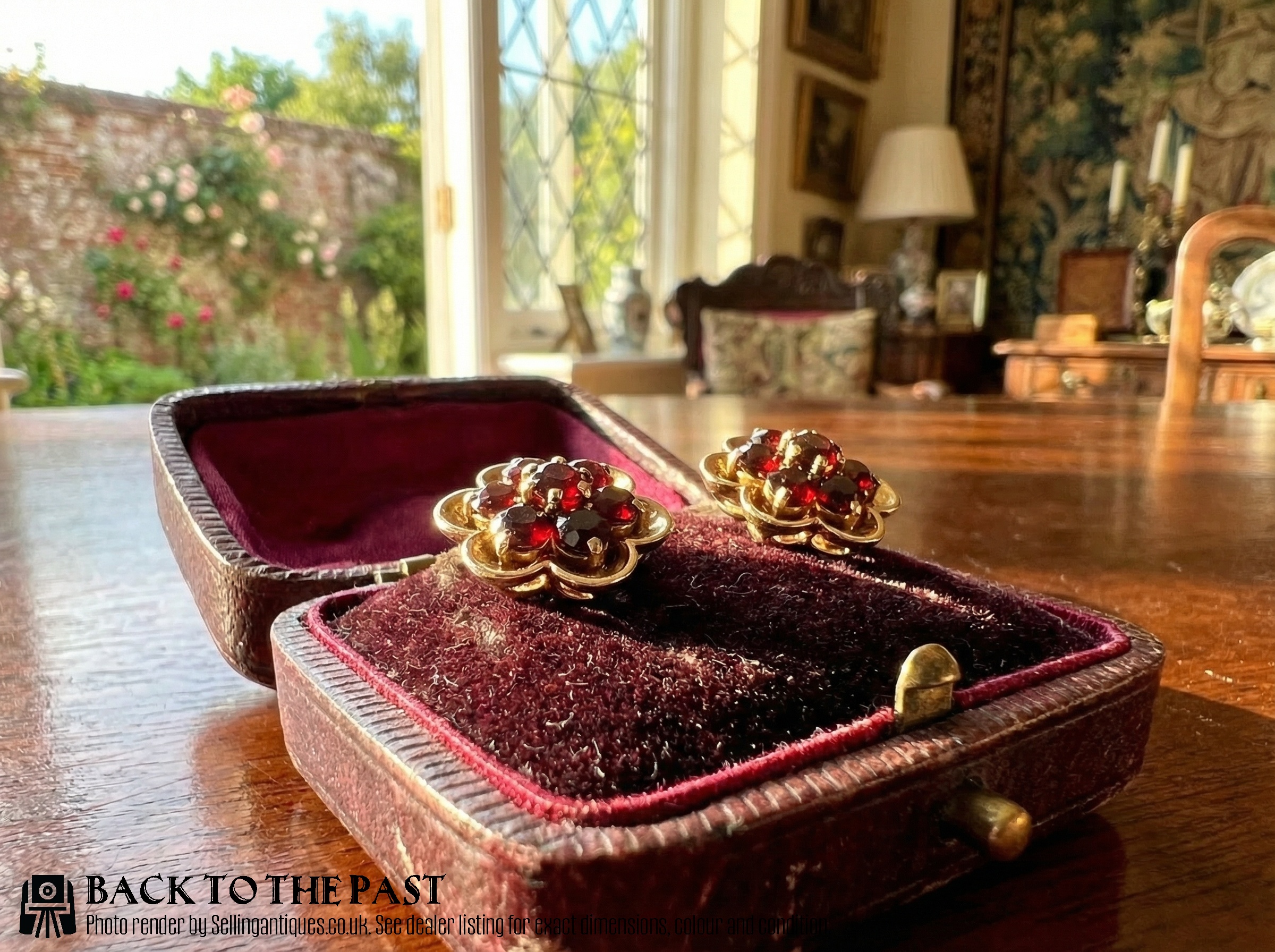
Vintage Cluster Stud Earrings
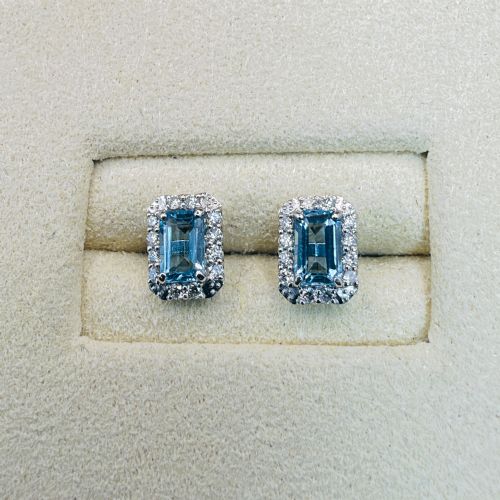
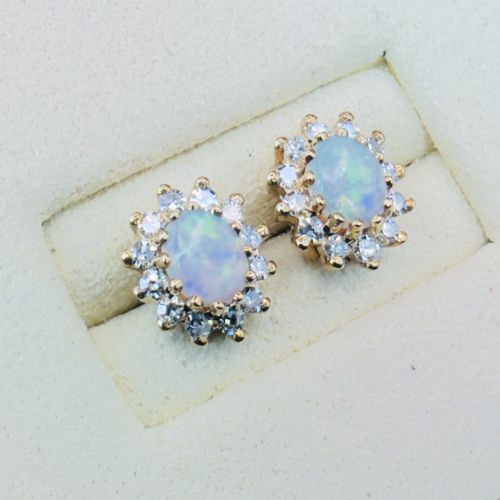
Vintage cluster stud earrings bring together a central gemstone surrounded by smaller accent stones, most often diamonds framing a coloured focal gem. When searching for vintage cluster stud earrings, buyers encounter diverse forms ranging from Victorian floral configurations to geometric Art Deco designs and Mid-Century daisy motifs.
The selections span multiple eras, including Victorian, Edwardian, 1930s, and 1950s periods. Materials encompass platinum, 9ct gold, 18ct white gold, and 18ct yellow gold, holding stones such as sapphires, emeralds, rubies, garnets, and pearls alongside diamonds.
Materials and construction
Goldsmiths utilised precious metals like platinum and various grades of gold, including 9ct and 18ct yellow and white gold, to mount the primary and secondary stones securely. Settings frequently rely on claw or bezel configurations to hold central gems while smaller melee diamonds or pearls form the surrounding halo.
Backings on these pieces vary according to the period, incorporating traditional posts, screw backs, clip-on mechanisms, and screw-on fittings. Silver gilt and silver also appear in older Victorian pieces alongside gold constructions.
Some Victorian earrings pack over twenty-two carats of garnet into a single floral cluster.
Distinguishing quality in cluster studs
Quality rests upon the selection and matching of the central gemstone and surrounding stones, where uniform colour, good clarity, and precise stone cutting elevate a piece. The integration of the metalwork, such as fine platinum claw work or balanced floral symmetry, demonstrates superior goldsmithing.
The Vintage Cluster Stud Earrings Glossary
- Cluster
- A stone setting arrangement where a central gemstone is encircled by a tight ring of smaller accent stones. This layout maximises visual impact and sparkle.
- Halo
- A concentric ring of smaller pavé or prong-set diamonds or gems surrounding a larger centre stone. It enhances the apparent size and brilliance of the middle gem.
- Melee
- Small-cut diamonds or coloured gemstones utilised as accent stones around a focal centrepiece. These tiny elements require precise setting.
- Cabochon
- A gemstone shaped and polished with a smooth, rounded convex surface rather than faceted. This cut is typical for stones like opals and certain garnets.
- Screw back
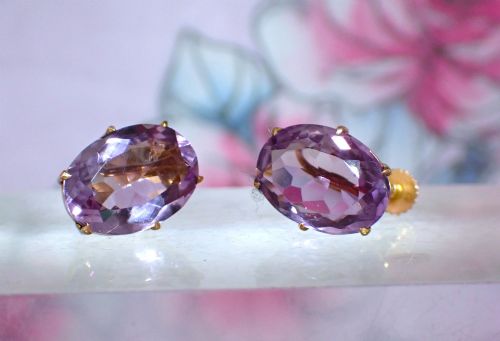
- A threaded earring post fitted with a matching nut that screws down securely against the earlobe. This mechanism provides added security for heavier designs.
Vintage Cluster Stud Earrings: Frequently Asked Questions
How do I secure screw back earrings?
Screw back fasteners utilise a threaded post paired with a rotating backing nut that winds down safely to the lobe. Turn the nut gently until it rests comfortably against the back of the ear without over-tightening.
This vintage fastening method offers dependable security, particularly for heavier cluster designs incorporating multiple stones and precious metals.
What periods do these earrings come from?
The available selection spans several distinct eras, including Victorian, Edwardian, 1930s Art Deco, and 1950s Mid-Century periods. Each era brings characteristic metal choices, such as platinum for the 1930s or 9ct yellow gold for Victorian floral clusters.
Examining the metal type, gemstone cuts, and backing styles helps identify the specific historical period of manufacture.
Are coloured gemstones common in these clusters?
Coloured gemstones frequently serve as the focal point, with sapphires, emeralds, rubies, garnets, opals, and amethysts appearing regularly alongside diamonds. These coloured centres are almost universally framed by white accent diamonds or pearls to enhance contrast.
Such combinations reflect the dominant aesthetic preferences of the Victorian, Edwardian, and mid-century decades.