



Vintage Club Settee
A vintage club settee brings deep leather comfort and traditional tailoring to a room, offering sturdy seating with a distinct historical pedigree.
Vintage Club Settee
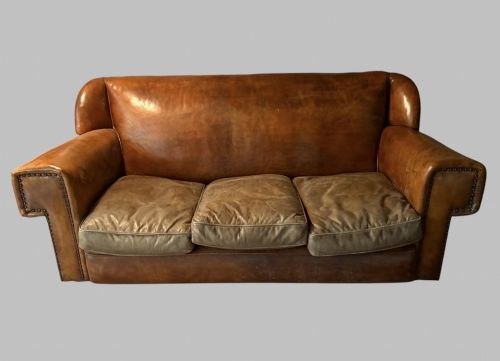
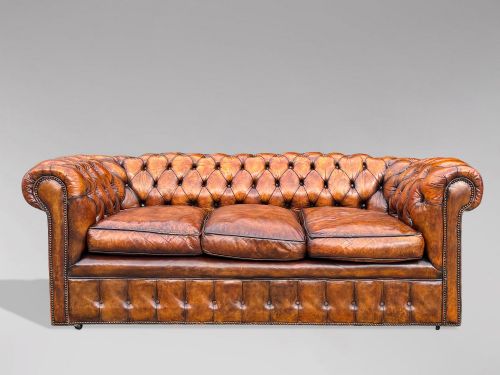
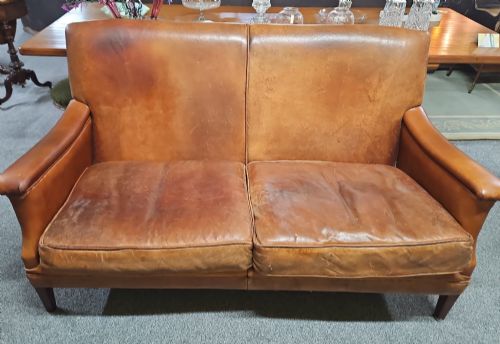
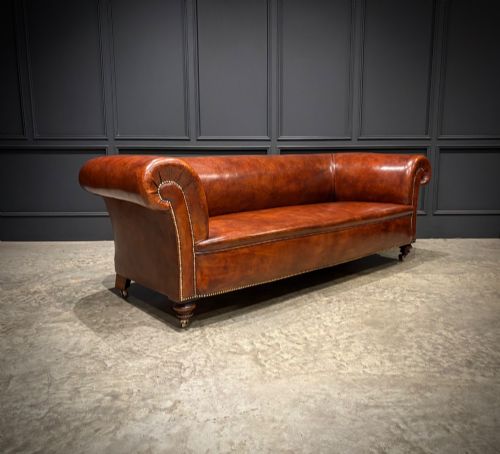
A vintage club settee represents a sturdy form of seating typically upholstered in leather, often found spanning the Victorian era through the Art Deco period. Buyers searching for a vintage club settee encounter various interpretations, from traditional buttoned chesterfields to streamlined 1930s designs and matched lounge suites.
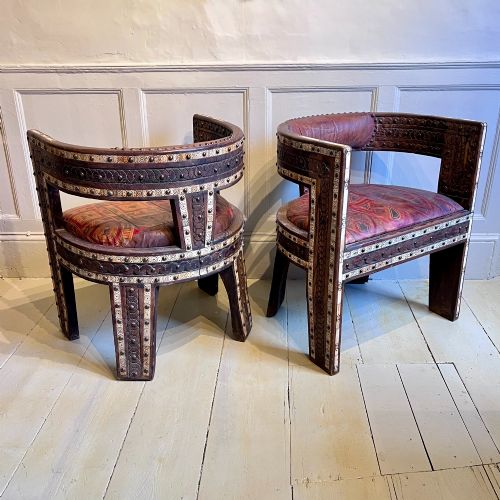
The pieces on this page originate from periods such as the nineteenth century, the Edwardian era, and the 1930s, reflecting diverse regional aesthetics including English country, Moorish, and mid-century styles. The selection frequently includes three-seater sofas, drop-arm chaise lounges, and multi-piece suites paired with matching armchairs.
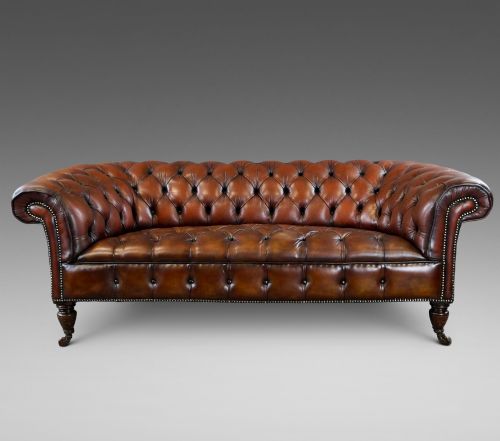
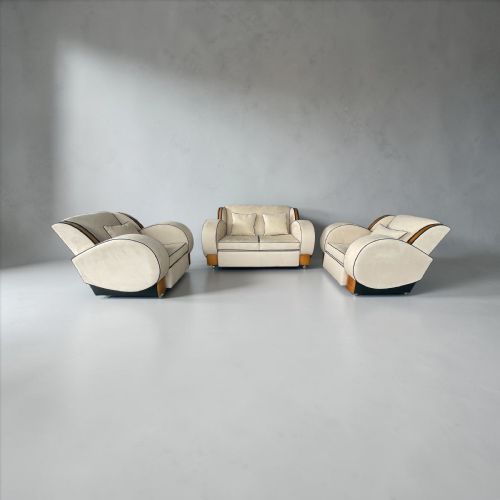
Victorian examples often display deep buttoning, serpentine fronts, or hand-carved wooden details, whereas Art Deco variations utilise walnut framing, zebrano veneers, and geometric silhouettes. Whether structured as a barrel-back settee or a low-slung club sofa, each piece serves as a substantial focal point for a living space.
Materials and construction
Construction relies heavily on robust internal frames built from hardwoods, timber, and walnut, providing a stable skeleton designed to endure decades of daily use. Upholstery is predominantly executed in leather, ranging from un-restored original hides to hand-dyed whiskey brown, green, and aubergine leathers.
Traditional stuffing methods, including horsehair fill, provide the dense support characteristic of nineteenth-century and Edwardian upholstery. Decorative and structural accents incorporate brass studs, carved floral motifs, and hand-carved lion details, while 1930s pieces often integrate polished exotic veneers like zebrano alongside leather elements.
Vintage Club Settee Retail Price Guide 2026
Typical asking prices for vintage club settee among the pieces listed under this phrase on Sellingantiques today, from the lower quarter to the upper quarter. They describe what is for sale here now, not the wider market.
Miniature apprentice pieces appear alongside full-sized sofas, offering the exact same buttoned leather craftsmanship on a diminutive scale.
Evaluating craftsmanship and condition
Quality separates pieces through the integrity of the original timber frame and the depth of character in the leather hide. Hand-carved decorative elements and substantial framing indicate higher levels of original craftsmanship compared to simpler or later interpretations.
The state of the upholstery significantly influences the character of the piece, distinguishing between un-restored hides retaining historical patina and professionally hand-dyed restorations. Superior examples maintain balanced proportions, whether expressed through the generous curves of a Victorian chesterfield or the clean lines of an Art Deco suite.
Hampton and Sons of Pall Mall·Howard and Sons·Maple and Co
The Vintage Club Settee Glossary
- Chesterfield
- A traditional style of sofa characterised by deep button tufting, equal height for the back and arms, and upholstered leather.
- Drop-arm
- A sofa or chaise lounge design featuring a movable or lowerable armrest on one side for adjustable lounging.
- Moustache back
- A decorative upholstery outline resembling an upturned moustache, typically found on Victorian gentleman's club seating.
- Serpentine front
- A furniture front curved in a wave-like shape, convex in the centre and concave at the sides.
- Zebrano
- A distinctive exotic hardwood with pale yellow-brown tones and dark contrasting stripes, utilised during the Art Deco period.
Vintage Club Settee: Frequently Asked Questions
What is a club settee?
A club settee is a heavily upholstered, sturdy seating option traditionally covered in leather and designed for comfort in studies, smoking rooms, or lounges.
These pieces typically feature deep seats and robust internal framing, spanning styles from Victorian chesterfields to 1930s Art Deco suites.
How do I date a leather settee?
Dating relies on examining structural characteristics, wood types, and upholstery styles, such as Victorian buttoning versus Art Deco geometric veneers.
Nineteenth-century examples often use mahogany or hardwood frames with horsehair fill, while 1930s pieces introduce walnut and streamlined silhouettes.
How do I live with antique leather?
Living with antique leather involves placing pieces away from direct heat sources and sunlight to prevent the natural hide from drying out.
Routine conditioning maintains the suppleness of hand-dyed leathers, allowing un-restored patinas or restored finishes to age gracefully in daily use.
Are these settees comfortable?
These settees are built for deep, supportive lounging, utilising traditional stuffing materials like horsehair alongside robust timber frames.
Their generous proportions and padded armrests make them well-suited for extended seating in a living room or study.