


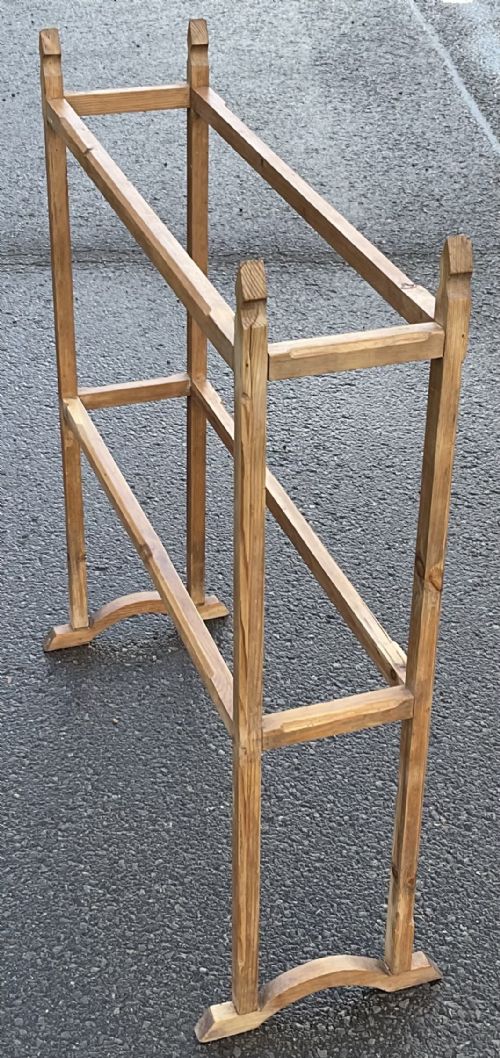


Vintage Clothes Rail
These vintage clothes rail listings bring practical utility to modern rooms through centuries of clever wooden design.
Vintage Clothes Rail
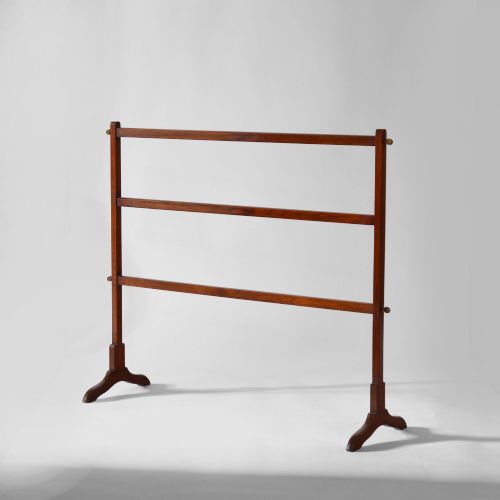
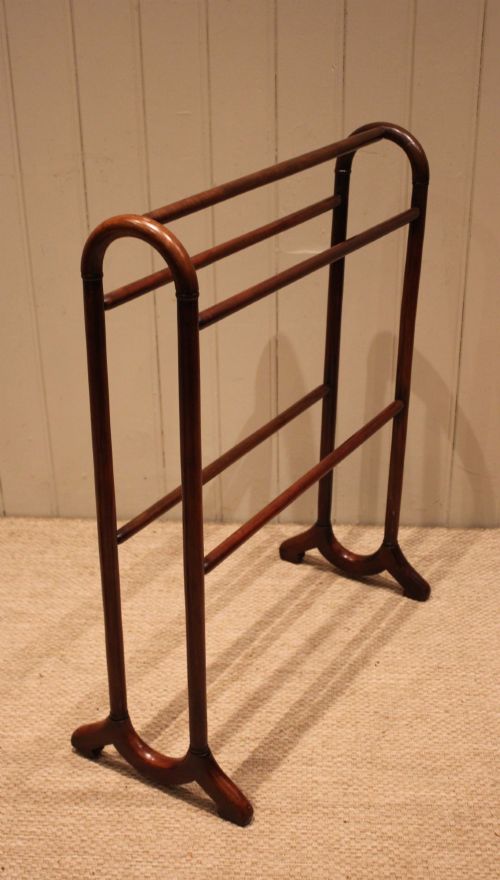
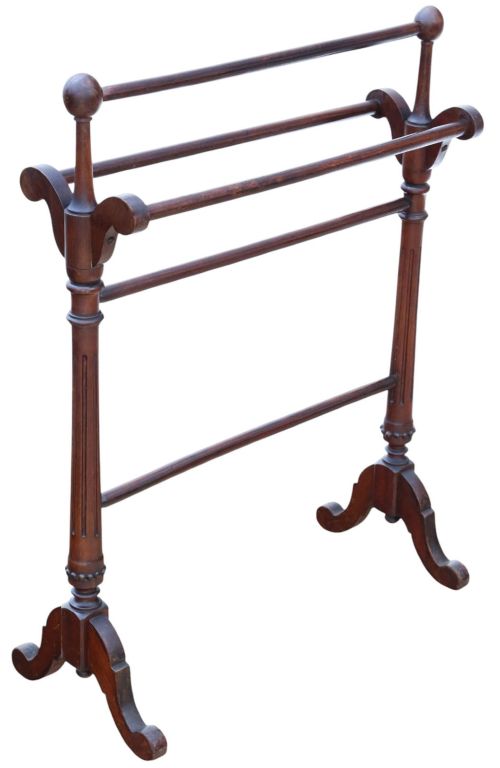
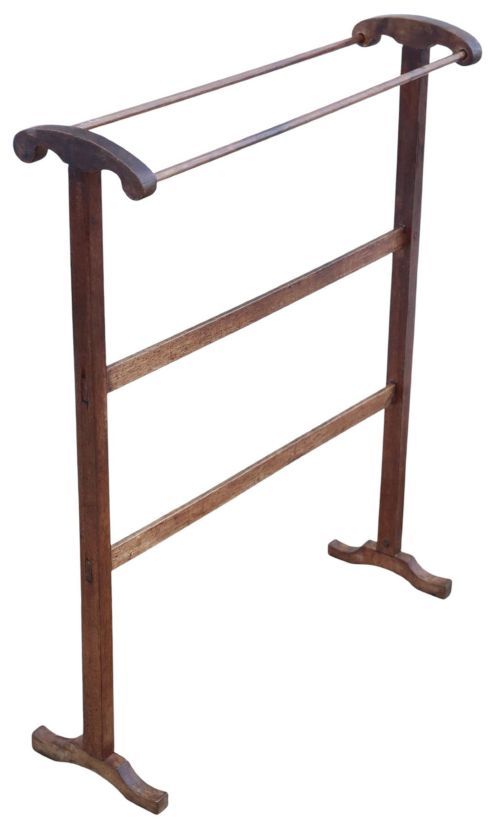
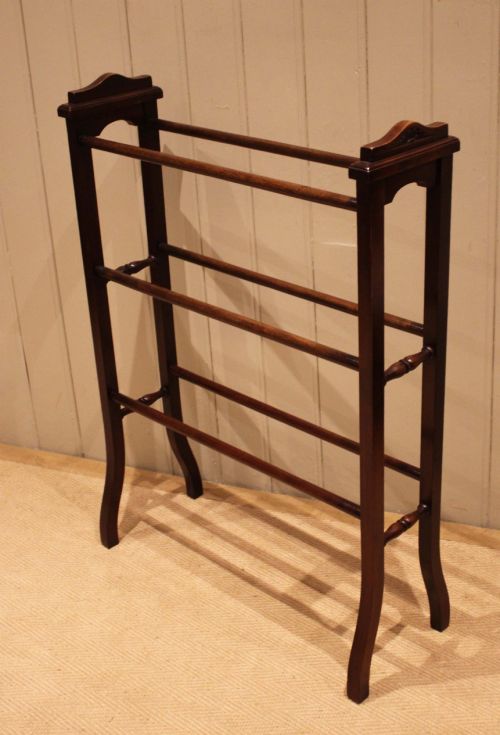
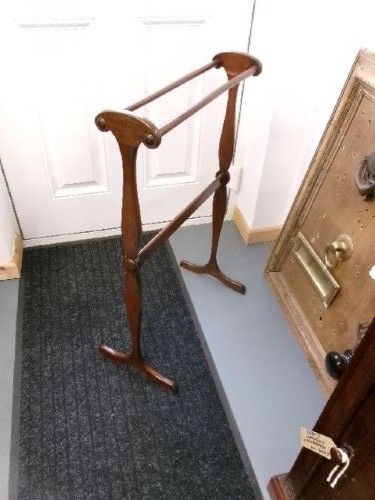
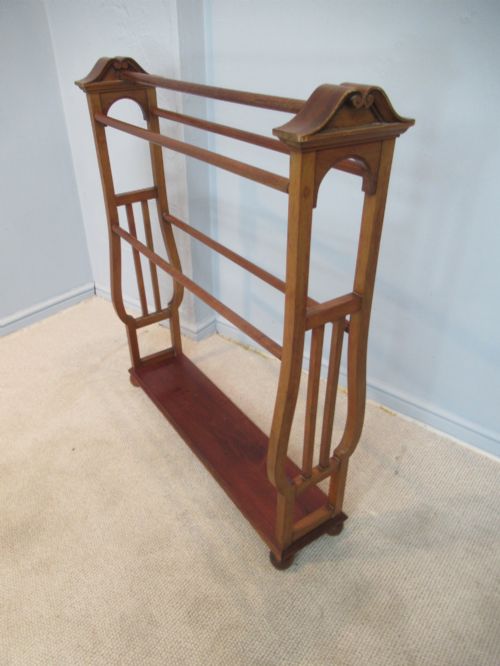
When you search for a vintage clothes rail, you are looking at practical timber furnishings originally built for domestic chores, primarily appearing here as antique towel rails, clothes racks, and robe stands. These pieces span from the Regency period through the Victorian and Edwardian eras, with a strong representation of turn-of-the-century craftsmanship.
Beyond standard European domestic items, you will occasionally encounter grander international pieces such as Chinese lacquered robe stands or carved hall stands. Each variation serves the fundamental purpose of hanging garments or textiles, adapted over decades for daily household use.
How they were made
Construction relies heavily on durable hardwoods like mahogany, walnut, and oak, alongside utilitarian softwoods such as pine and elm. Joinery is traditional and robust, designed to withstand the daily tension of damp textiles or heavy garments.
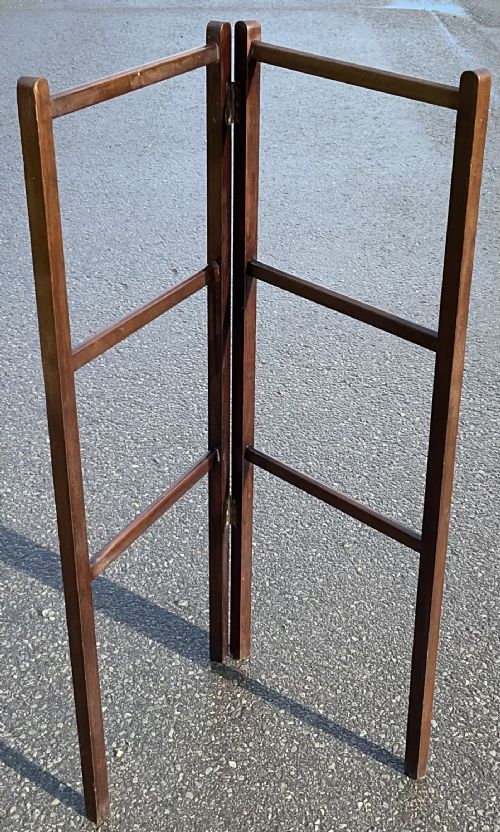
Many examples incorporate clever folding mechanisms using wooden hinges or brass fixings to allow compact storage when not in use. Surface finishes vary from natural polished mahogany and golden pine to black ebonised coatings and intricate lacquerwork.
Vintage Clothes Rail Retail Price Guide 2026
Typical asking prices for vintage clothes rail among the pieces listed under this phrase on Sellingantiques today, from the lower quarter to the upper quarter. They describe what is for sale here now, not the wider market.
Listings feature woods spanning mahogany, oak, pine, walnut, elm, and wire mesh across nineteenth and early twentieth-century eras.
What varies in quality
The distinction between standard utility items and superior examples lies in timber selection, refinement of turned spindles, and the complexity of the frame. Pieces featuring figured mahogany veneers, delicate inlay work, or generous proportions sit at the higher end of the scale.
Structural integrity and original hardware also dictate worth, as sturdy joints and authentic brass fittings ensure the frame remains rigid during use. Simpler country pine items offer rustic charm, while finely carved or larger scale pieces reflect formal cabinet-making standards.
The Vintage Clothes Rail Glossary
- Cheval rail
- A freestanding framed rail that often tilts or pivots on vertical supports, allowing garments or linens to be draped across multiple levels.
- Ebonised
- Timber treated with a dark stain or chemical process to imitate expensive ebony, popular for decorative nineteenth-century furniture.
- Robe stand
- A tall freestanding frame designed for hanging garments, often seen in larger traditional dressing rooms or hallways.
- Inlay
- A decorative technique where contrasting woods or materials are embedded into recesses within the primary surface of the furniture.
- Towel airer
- A slatted wooden frame traditionally placed near a heat source to dry damp household textiles.
Vintage Clothes Rail: Frequently Asked Questions
How were vintage clothes rails originally used?
These items were built primarily for domestic chores, serving in bedrooms, bathrooms, and nurseries to dry laundry, air linens, and drape garments.
Households utilised these movable frames because central heating did not exist, meaning textiles needed positioning near fires or in hallways for proper drying.
Can I use a vintage towel rail for clothes?
Many of these pieces adapt easily to modern wardrobes, providing a practical solution for hanging everyday outfits or displaying garments in a bedroom.
Larger multi-bar designs and robe stands offer ample hanging space, though delicate antique frames require mindful loading to protect old timber joints.
How do I identify an Edwardian clothes rail?
Edwardian examples often feature lighter mahogany or pine construction, sometimes incorporating subtle string inlay or simpler turned uprights compared to earlier heavy styles.
Cabinetmakers of this era favoured cleaner lines while retaining traditional folding mechanisms and functional proportions for middle-class homes.
What is the difference between Victorian and Regency rails?
Regency pieces typically display generous proportions, deep rich mahogany tones, and robust architectural turning influenced by classical design.
Victorian and later nineteenth-century versions often introduce more varied woods, including walnut and ebonised finishes, alongside practical folding cheval formats.