





Vintage Circular Desk
A vintage circular desk brings architectural symmetry to a room, offering a revolving surface or a pedestal base designed for central placement.
Vintage Circular Desk
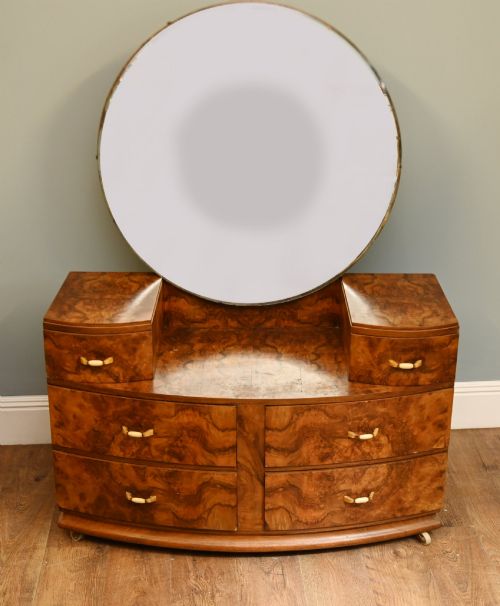
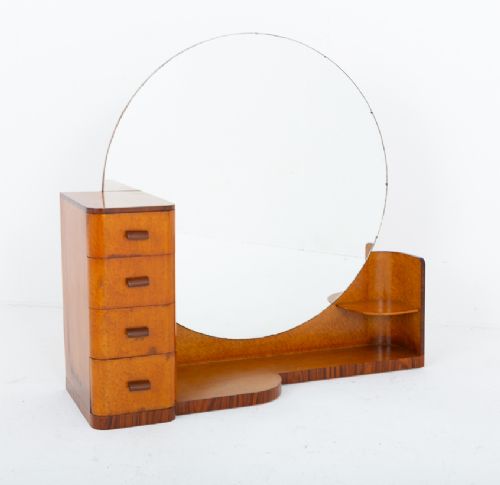
When searching for a vintage circular desk, buyers typically encounter library tables, drum tables, and centre tables spanning the nineteenth and twentieth centuries. These round pieces appear in heavy mahogany from the Victorian era alongside lighter walnut and burr walnut examples from the Art Deco period.
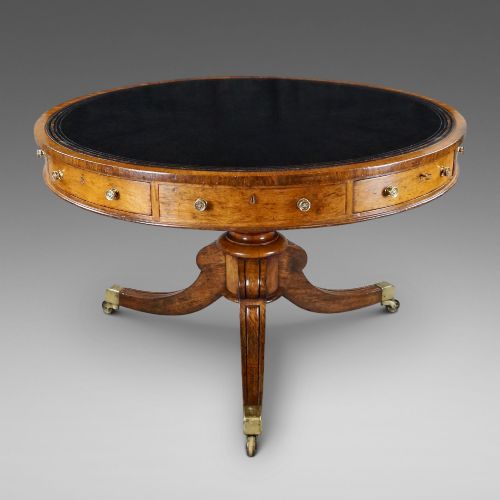
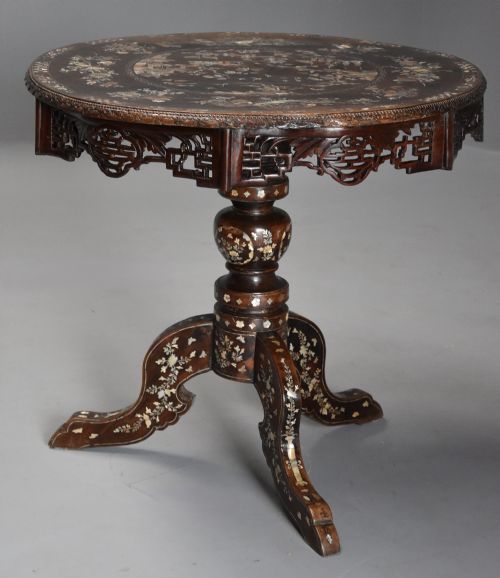
The drum table format dominates the heavier end of the selection, offering a circular top often inset with leather above a ring of frieze drawers. Centre tables provide an alternative expression, stretching from Georgian revival designs to inlaid Vietnamese hardwood and Anglo-Indian forms.
Edwardian and Victorian iterations lean towards traditional timber construction, whilst later twentieth century pieces embrace modernist lines. Each circular table serves as a freestanding unit rather than wall-anchored furniture, designed to occupy the middle of a room.
Materials and construction methods
Makers constructed these circular tables using solid timbers and decorative veneers such as mahogany, walnut, and birds-eye maple over secondary woods. Timber selection dictated how the top responded to movement, with cross-banding frequently applied to the outer edges of the circular surface.
Leather inserts, often tooled with gilt borders, provide the writing surface on drum table variations. Brass fittings appear on handles, casters, and pedestal mounts, anchoring the organic warmth of the wood with metallic contrast.
Vintage Circular Desk Retail Price Guide 2026
Typical asking prices for vintage circular desk among the pieces listed under this phrase on Sellingantiques today, from the lower quarter to the upper quarter. They describe what is for sale here now, not the wider market.
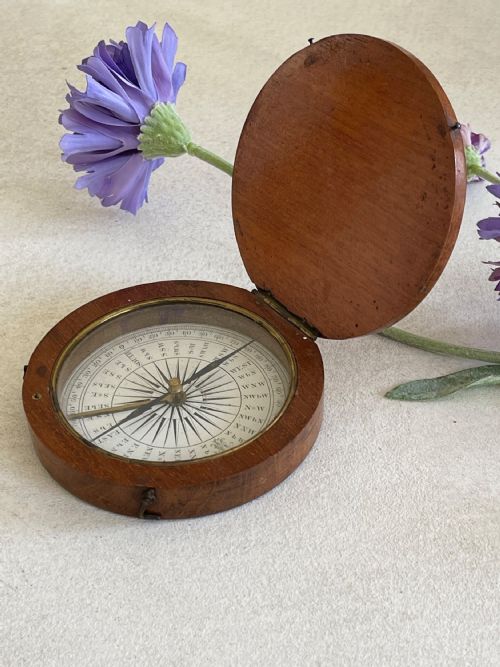
An antique compass occasionally turns up amidst the furniture, offering a sudden nautical detour from the library.
Distinguishing quality across pieces
Quality reveals itself in the handling of the circular geometry, from the precise grain matching on a veneered top to the smooth operation of internal drawer mechanics in a drum table. Superior examples exhibit seamless joints where the curved apron meets the pedestal or leg assembly.
Betty Joel·Negretti and Zambra·Smiths Clock Company·Thomas Rubergall
The Vintage Circular Desk Glossary
- Drum table
- A circular library table with a deep frieze containing drawers, resembling the shape of a drum. It typically stands on a single central pillar supported by tripod legs.
- Centre table
- A freestanding table finished on all sides for placement in the middle of a room rather than against a wall. These often feature elaborate top designs or inlaid decoration.
- Frieze
- The horizontal band situated directly beneath the top surface of the table. In many circular desks, this area houses the operational drawers.
- Cross-banding
- A decorative technique where veneer is applied to the border of a table top so that the grain runs at right angles to the central panel.
- Veneer
- A thin layer of highly figured wood, such as walnut or burr walnut, applied over a stable secondary timber base to create decorative patterns.
Vintage Circular Desk: Frequently Asked Questions
What is the difference between a drum table and a centre table?
A drum table incorporates a deep circular top with built-in drawers arranged around the perimeter, sitting on a sturdy central pedestal. A centre table focuses on decorative impact from all angles, sometimes omitting drawers entirely to display intricate wood veneers or inlay.
Both formats are designed to stand away from walls, but the drum table offers functional enclosed storage whilst the centre table prioritises surface display.
How do I care for the leather top on a circular desk?
Leather writing surfaces require protection from direct sunlight and excessive moisture to prevent cracking and fading. Regular dusting with a soft cloth keeps the surface clear of abrasive particles.
Applying a specialist leather balsam periodically maintains the suppleness of the hide and preserves the gilt tooling around the edges.
Can a circular desk function as a modern workspace?
These tables accommodate laptops and writing materials easily, provided the diameter supplies sufficient knee clearance beneath the frieze. Drum tables with multiple drawers help manage stationery storage whilst maintaining a tidy surface.
Consider the height of the chair relative to the frieze drawers to ensure comfortable seating positions during prolonged use.
How do I identify the period of a wooden circular desk?
Victorian and nineteenth-century examples tend to utilise dense mahogany with heavier structural proportions and traditional hand-cut dovetails in the drawers. Art Deco pieces from the 1930s favour burr walnut, geometric simplicity, and streamlined silhouettes.
Examining the construction methods inside the drawers and beneath the top reveals the technological tools and stylistic preferences of the era.