

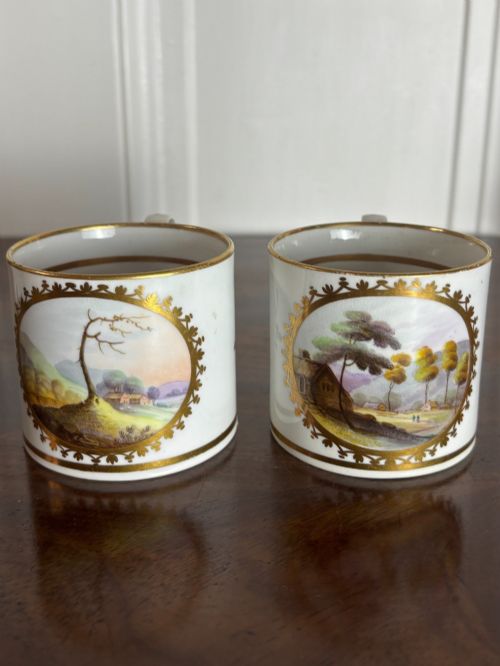
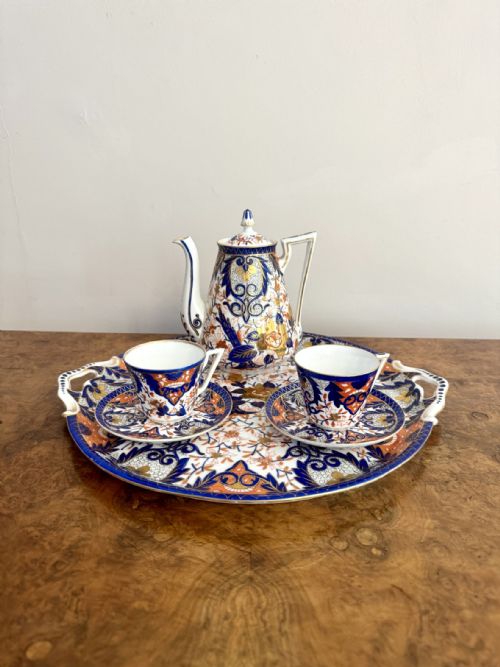
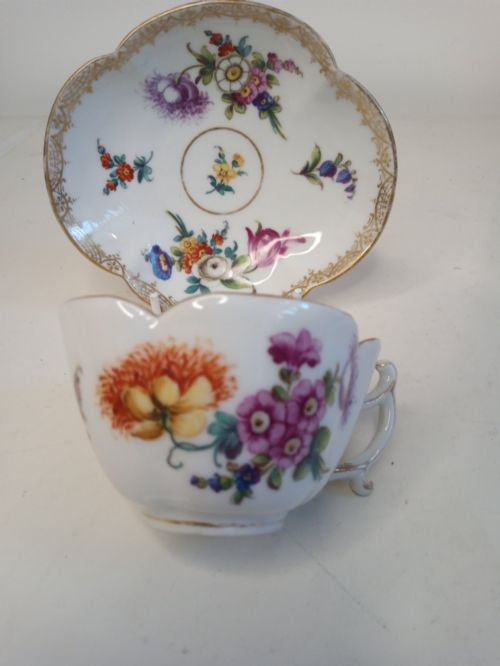


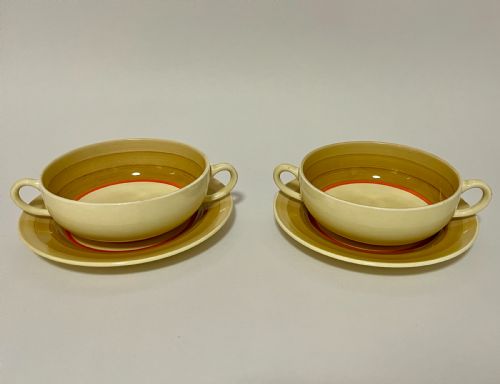


Vintage China Cup
A vintage china cup holds the warmth of daily rituals past, bringing delicate form and painted detail straight to a modern table.
Vintage China Cup
A vintage china cup search encompasses everything from delicate Georgian tea bowls to bold Art Deco coffee sets, reflecting centuries of domestic dining habits. The versions most commonly encountered on this page span the Victorian and Edwardian eras, alongside pieces from the 1920s and 1930s.
Forms range from single teacups and saucers to extensive afternoon tea services, coffee cans, and soup bowls. Makers utilise porcelain, bone china, and earthenware, often finished with enamels and gold leaf.
Origins stretch across English potteries such as Royal Worcester, Coalport, and Lowestoft, as well as Chinese export wares and French porcelain. Buyers find both solo cabinet pieces and complete sets intended for ten or more persons.
Materials and production methods
Potters shaped fine porcelain and bone china on the wheel or in moulds before firing the pieces to achieve a hard, translucent body. Artisans then applied underglaze blue, hand-painted enamel scenes, and intricate landscape paintings directly onto the ceramic surface.
Gilding techniques involved brushing gold leaf or gold gilt onto handles, rims, and borders, which was then fired to fix the metallic lustre. Wares such as Royal Worcester blush ivory utilised specialised grounds and tinted glazes beneath the final gilding.
Vintage China Cup Retail Price Guide 2026
Typical asking prices for vintage china cup among the pieces listed under this phrase on Sellingantiques today, from the lower quarter to the upper quarter. They describe what is for sale here now, not the wider market.
Materials recorded across the inventory include bone china, porcelain, earthenware, gold leaf, and enamel.
The markers of finer execution
Quality rests in the thinness and translucency of the porcelain body, alongside the crispness of the moulding on handles and rims. Finer pieces demonstrate superior control during the high-temperature firing process, resulting in a smooth, unblemished glaze free of warping or kiln grit.
The distinction between standard production and top-tier work lies in the hand-painted decoration, where minute details in bird feathers, landscape miniatures, or gilt borders require exceptional brushwork. Maker reputation also elevates a piece, particularly when verified by factory marks from established English potteries.
Clarice Cliff·Royal Worcester·Coalport·Lowestoft Porcelain·Spode Copeland
The Vintage China Cup Glossary
- Coffee Can
- A straight-sided cylindrical cup designed for drinking strong coffee, popular during the eighteenth and nineteenth centuries. These pieces often lack a handle and sit on a simple foot rim.
- Demıtasse
- A small cup used for serving espresso or Turkish coffee, typically holding about half the volume of a standard teacup. They frequently appear in matched sets alongside small saucers.
- Tea Trio
- A matched set consisting of a teacup, saucer, and a corresponding tea plate for cake or bread. This grouping became a staple of afternoon tea service across the Victorian and Edwardian periods.
- Imari
- A style of ceramic decoration featuring deep underglaze blue combined with iron red, green, and gold accents, inspired by Japanese export porcelain. Victorian interpretations applied this palette to British porcelain bodies.
- Blush Ivory
- A specialised soft cream-coloured ceramic ground developed by Royal Worcester in the late nineteenth century. It provides a muted background for delicate hand-painted floral motifs and raised gold gilding.
Vintage China Cup: Frequently Asked Questions
How do I care for vintage china?
Wash these delicate pieces entirely by hand using warm water and a mild detergent. Avoid dishwashers and harsh scrubbers to protect the hand-painted enamels and gold gilding.
Store cups on secure shelves rather than stacking them too high to prevent rim chips. Use felt spacers between saucers if stacking is unavoidable.
Can I use these cups daily?
Many sturdy Victorian and Edwardian bone china cups handle regular use quite well. However, eighteenth-century porcelain and finely painted cabinet pieces require gentler handling.
Thermal shock can crack old ceramic, so warm the cup slowly before pouring boiling water. Hand washing preserves the metallic gold leaf over years of use.
What is the difference between porcelain and bone china?
True porcelain relies on petuntse and kaolin clay fired at extremely high temperatures to create a hard, translucent material. Bone china incorporates calcined bone ash into the clay mixture, producing a warmer white body.
English potteries favoured bone china for its strength and ability to hold fine handles and intricate moulded details. Both materials appear frequently across nineteenth and twentieth-century listings.
How do I date an unmarked cup?
Examine the handle shape, glaze thickness, and painting style to narrow down the manufacturing period. Georgian pieces often display different foot rims and potting weights compared to Victorian or Art Deco wares.
factory marks, pattern numbers, and registration ciphers stamped underneath offer precise chronological clues. Compare the potting characteristics with documented pieces from known makers.