






Vintage Children Desk
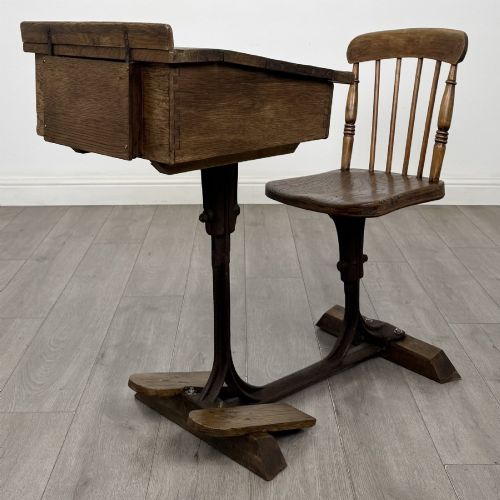
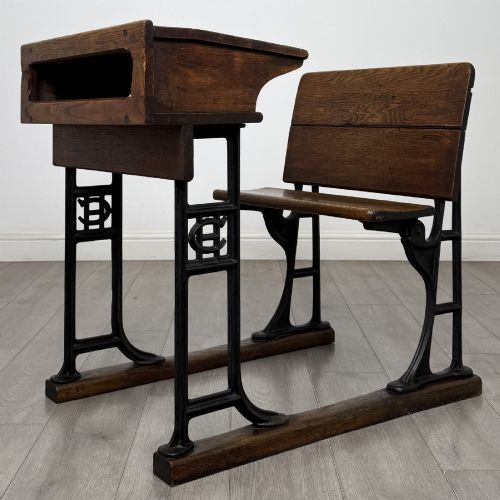
A vintage children desk brings scaled-down craftsmanship and period character into a modern interior.
Vintage Children Desk
A vintage children desk encompasses smaller writing furniture designed for young occupants across various historical eras. The selection on this page ranges from late Georgian elm and Victorian mahogany examples to early twentieth-century oak pieces.
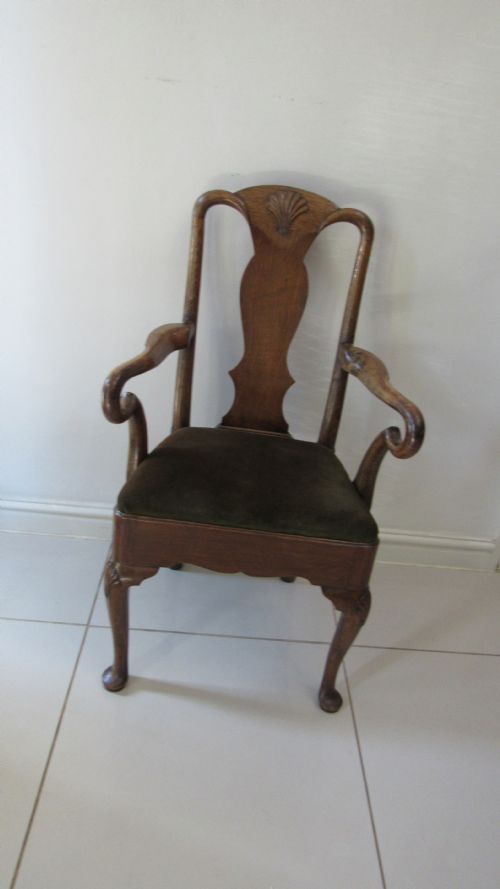
Buyers will encounter compact desks accompanied by matching armchairs, alongside standalone writing tables reflecting styles from Edwardian simplicity to Regency and Art Deco aesthetics.
How they were made
Construction relies heavily on traditional timber working, utilising dense hardwoods like mahogany, oak, walnut, and elm. Joinery is executed by hand to ensure durability in pieces intended for everyday use.
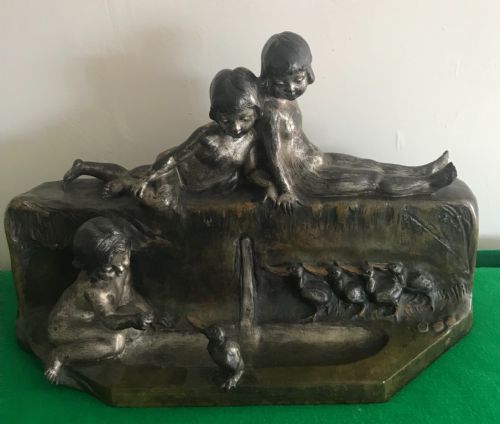
Metal and stone components also appear, with bronze figures, brass hardware, marble bases, and leather inserts integrated into the more elaborate desk designs and associated sculptures.
Vintage Children Desk Retail Price Guide 2026
Typical asking prices for vintage children desk among the pieces listed under this phrase on Sellingantiques today, from the lower quarter to the upper quarter. They describe what is for sale here now, not the wider market.
Several miniature chairs wait patiently for small occupants who grew up a century ago.
What varies in quality
Quality separates simple utilitarian school furniture from bespoke domestic pieces commissioned for affluent households. Finer examples display superior timber selection, careful grain matching, and refined decorative carving.
The integrity of the original surface finish and the retention of period hardware significantly influence the standing of an individual desk within the marketplace.
Pairs MFG Co·P. Sega·H. Chiparus·Heals·Antoine Bofill
The Vintage Children Desk Glossary
- Elm
- A resilient hardwood known for its interlocking grain and resistance to splitting, frequently utilised in regional Georgian furniture.
- Mahogany
- A durable, reddish-brown tropical hardwood prized for its stability and smooth finish during the eighteenth and nineteenth centuries.
- Oak
- A robust timber with prominent medullary rays, commonly employed in sturdy domestic pieces from the Edwardian era and earlier.
- Regency Style
- An aesthetic drawing on classical Greek and Roman motifs, characterised by restrained elegance and clean architectural lines.
Vintage Children Desk: Frequently Asked Questions
What periods do vintage children desks come from?
These items span multiple centuries, with examples originating from the Georgian and Victorian periods as well as the Edwardian era and the nineteen-twenties.
Earlier pieces often feature native timbers like elm or mahogany, while later twentieth-century items reflect shifting domestic styles.
How were children desks used historically?
Such furniture served as dedicated writing and study stations for young members of affluent families.
They provided a scaled workspace for handwriting practice, drawing, and early education before the widespread standardisation of school classrooms.
Can I use a vintage children desk today?
These compact pieces function well as decorative display surfaces or unique writing tables in limited spaces.
Their diminutive scale allows them to fit easily into studies, bedrooms, or hallways as sculptural elements.
How do I identify the age of a desk?
Dating relies on examining the timber species, construction methods, and stylistic details present in the woodwork.
Georgian and Victorian items typically display hand-cut joinery and period-specific mouldings distinct from later twentieth-century manufacturing.