





Vintage Ceramic Mug
A vintage ceramic mug brings centuries of everyday drinking traditions, commemorative vessels and playful earthenware forms straight to your table.
Vintage Ceramic Mug
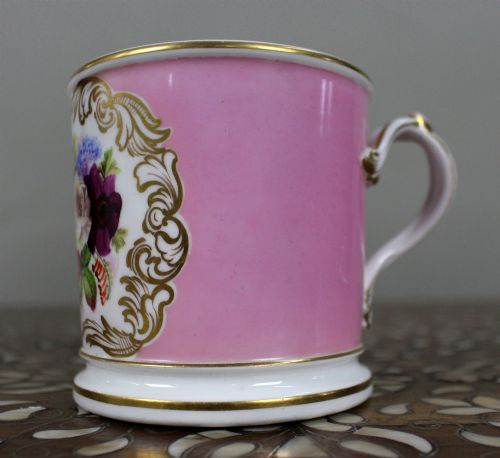
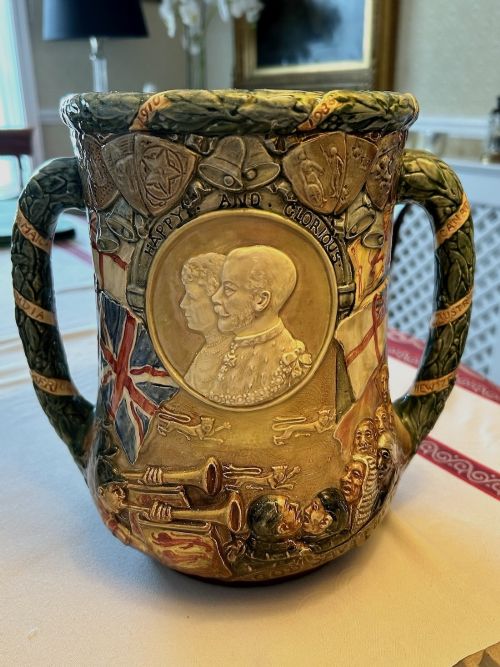
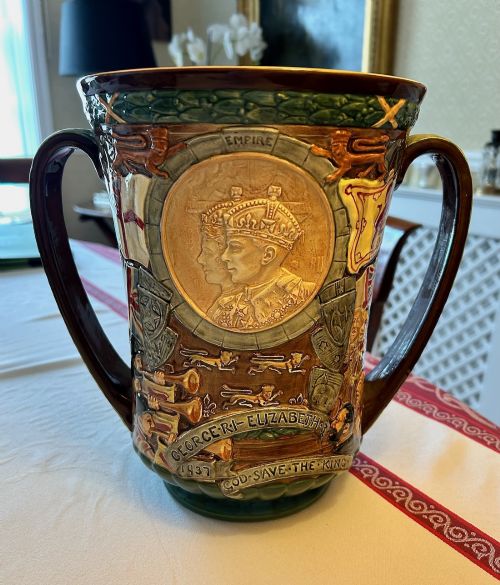
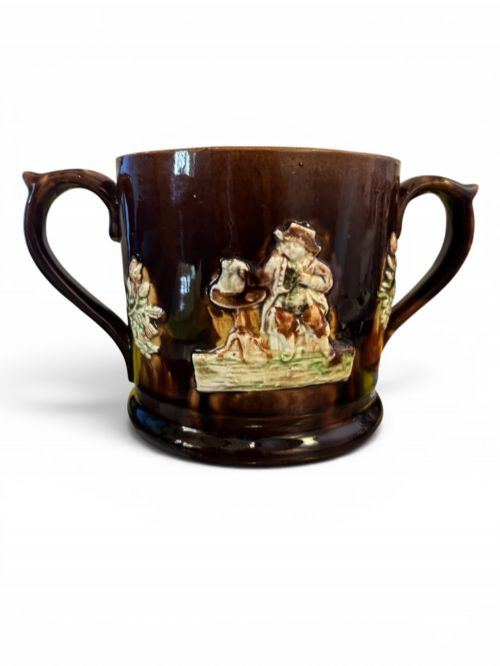
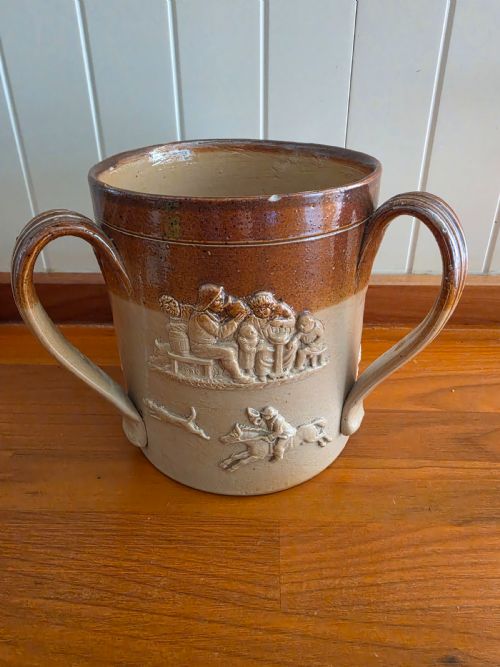
A vintage ceramic mug spans everything from robust country pottery and three-handled tygs to delicate porcelain tankards and characterful Toby jugs. When you search for a vintage ceramic mug, you encounter centuries of shifting domestic habits, from Georgian ale consumption to Edwardian commemorations.
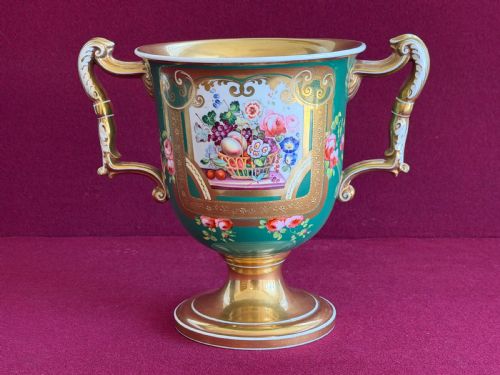
The selection ranges across distinct periods, drawing heavily on nineteenth-century earthenware and stoneware alongside porcelain creations from Worcester and Royal Doulton. Forms often include surprise frog mugs, loving cups and German steins decorated with polychrome glazes or transfer printing.
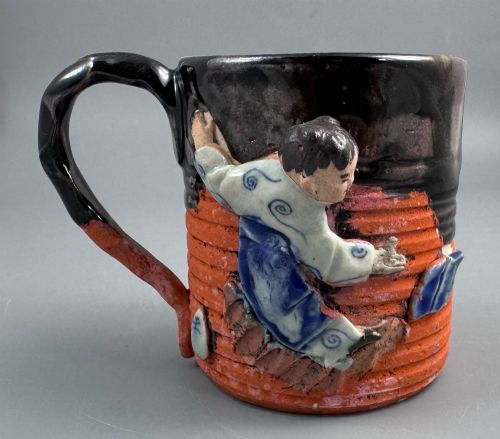
Victorian Staffordshire figures and Art Deco lustre wares sit alongside Japanese Sumida Gawa pieces and German faience tankards. Each object reflects the utilitarian needs and decorative tastes of its original maker, whether intended for festive toasts or quiet fireside tea.
Materials and methods
Potters shaped these vessels using earthenware, stoneware and fine porcelain, applying lead glazes, tin opacifiers or lustres to seal the body. Many pieces rely on hand-painted details, transfer-printed poems or moulded reliefs to build up their visual character.
Stoneware vessels benefited from high-firing temperatures that ensured durability for holding ale and liquor, while porcelain versions received careful overglaze painting in workshops like Worcester and Coalport. Handles were thrown or modelled separately before being securely luted to the main body with slip.
Vintage Ceramic Mug Retail Price Guide 2026
Typical asking prices for vintage ceramic mug among the pieces listed under this phrase on Sellingantiques today, from the lower quarter to the upper quarter. They describe what is for sale here now, not the wider market.
Some nineteenth-century drinkers faced a tiny ceramic newt emerging from their ale.
Assessing quality and execution
Quality reveals itself in the crispness of the moulding, the balance of the applied handles and the control shown in hand-painted or transfer-printed decoration. Finer pieces demonstrate superior kiln management, resulting in smooth glazes and stable forms without excessive warping.
The distinction between standard utility vessels and top-tier collector pieces lies in the precision of the artistic hand and the complexity of the glaze work, such as rich lustre applications or intricate polychrome enamel detailing.
Royal Doulton·Grainger Worcester·H & R Daniel·Hadley Worcester·Mettlach·Wedgwood
The Vintage Ceramic Mug Glossary
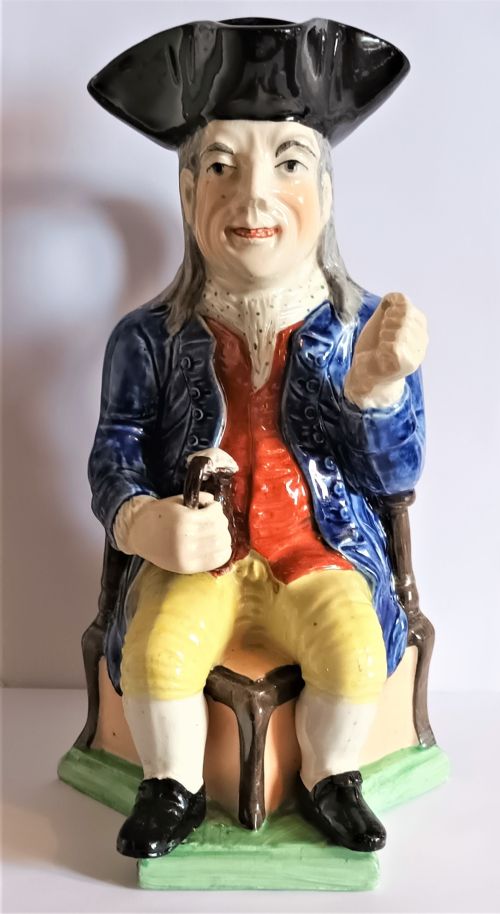
- Toby jug
- A pottery jug shaped as a stout, jovial person, usually seated and wearing a tricorn hat. These figures often hold a mug of beer or a pipe.
- Frog mug
- A drinking vessel featuring a small ceramic frog or newt modelled inside the base, designed to surprise the drinker as the liquid lowers. They were popular in eighteenth and nineteenth-century taverns.
- Tyg
- A large drinking vessel with three or more handles, intended to be passed around a group of people. Multiple handles allowed drinkers to hold the cup securely without spilling.
- Pearlware
- A refined earthenware developed by Josiah Wedgwood in the late eighteenth century, featuring a thin glaze with a slight bluish tinge over a white body. It successfully imitated Chinese porcelain.
- Faience
- Tin-glazed earthenware produced in continental Europe, known for its opaque white surface and painted polychrome decoration. Pieces often depict historical or pastoral scenes.
Vintage Ceramic Mug: Frequently Asked Questions
What is a frog mug?
A frog mug is a traditional drinking vessel featuring a small ceramic frog or newt fixed inside the bottom. As the drinker finishes their beverage, the hidden amphibian appears as a surprise.
These pieces were common in British taverns during the eighteenth and nineteenth centuries, often decorated with transfer-printed poems or comic verses.
How do I use a three-handled tyg?
A three-handled tyg was designed for communal drinking at celebrations and gatherings. Each person held a different handle so the vessel could be passed safely around the table without spilling.
Today, these substantial ceramic pieces serve primarily as decorative displays or flower vases due to their historic importance and unique form.
What distinguishes stoneware from earthenware?
Stoneware is fired at higher temperatures than earthenware, which vitrifies the clay body and makes it naturally waterproof without needing a heavy glaze. This property made stoneware ideal for storing and drinking ale.
Earthenware remains more porous and typically requires a complete glaze coating to hold liquids effectively, resulting in a different surface texture.
Are character jugs the same as Toby jugs?
While both depict human faces or figures, a traditional Toby jug shows a full-seated person, whereas character jugs usually display only the head and shoulders of a specific historical or fictional individual.
Both forms served as functional drinking vessels or decorative items in British households, particularly during the Victorian and Edwardian eras.