


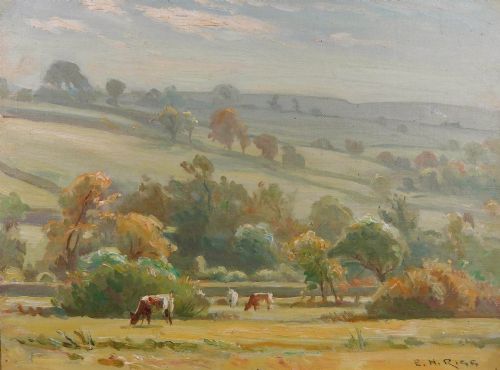
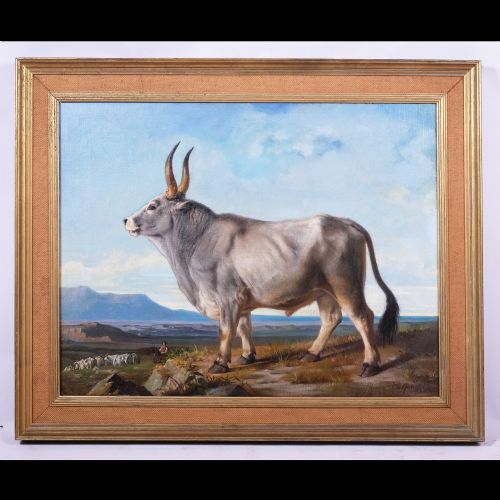


Vintage Cattle Landscape
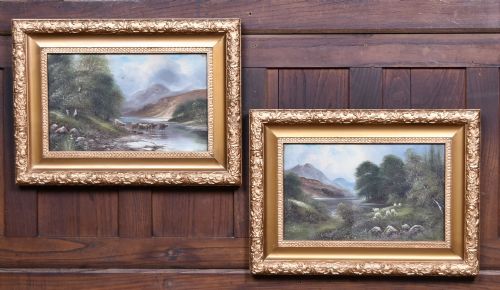
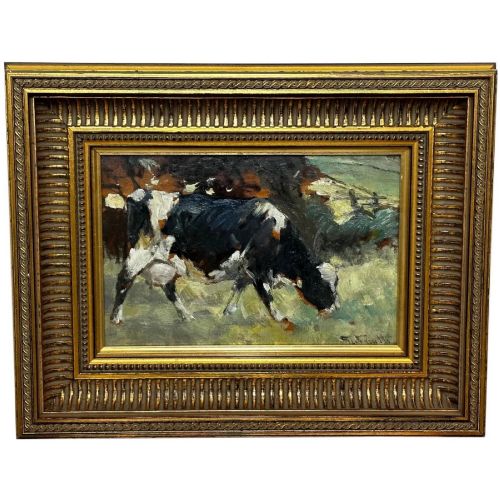
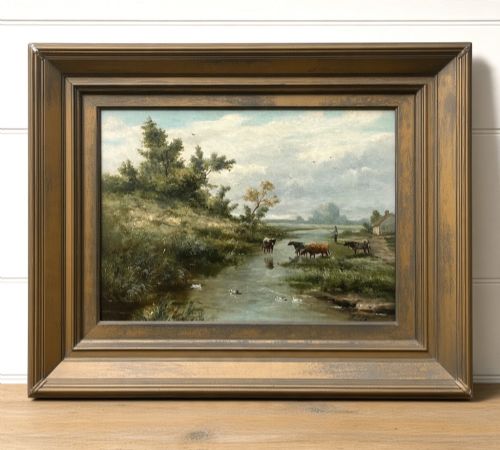
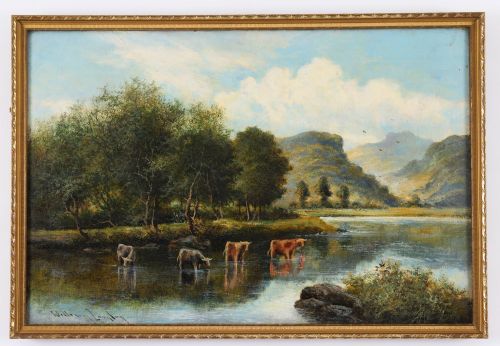
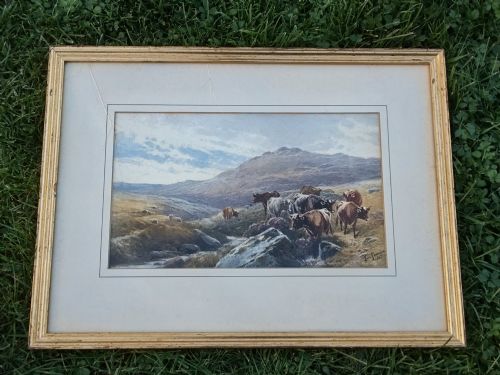
A vintage cattle landscape captures pastoral quiet, depicting herds grazing in fields or beside lochs within period frames.
Vintage Cattle Landscape
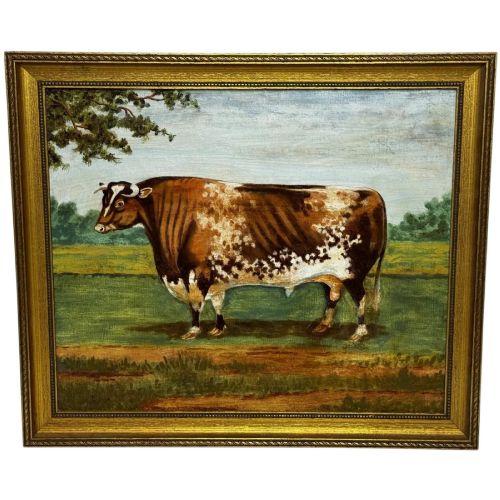
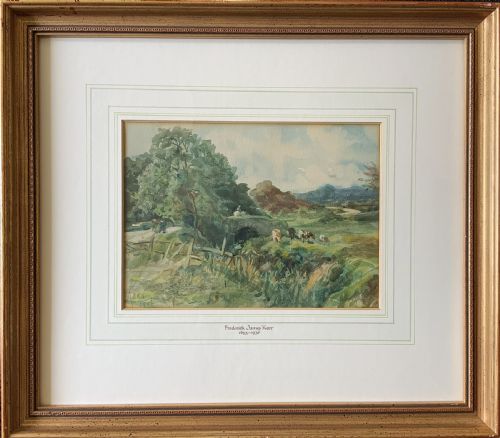
A vintage cattle landscape portrays pastoral scenes featuring cows, bulls, and calves in rural settings, often framed in giltwood or wood. These works span from the Victorian period through the Edwardian era into the early twentieth century.
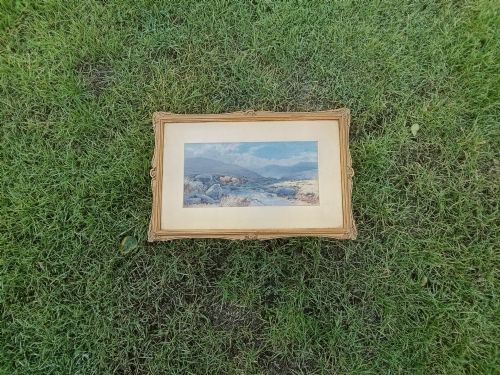
Most examples found here take the form of oil paintings on canvas or watercolour paintings on paper. Ceramic pieces such as spill vases also appear, decorated with painted cattle scenes.
British and Irish artists dominate the selection, producing works within styles ranging from realism and pastoral realism to British Impressionism.
How they were made
Artists applied oil paint to stretched canvas or watercolour and gouache to paper, employing brushwork that varied from tight academic detail to looser impressionistic strokes.
Many works retain their original wooden frames, frequently enhanced with gilt ornamentation or constructed from burr wood.
Vintage Cattle Landscape Retail Price Guide 2026
Typical asking prices for vintage cattle landscape among the pieces listed under this phrase on Sellingantiques today, from the lower quarter to the upper quarter. They describe what is for sale here now, not the wider market.
Materials recorded across these listings include canvas, wood, paper, oil paint, glass, and gilt.
What varies in quality
The anatomical accuracy of the cattle and the atmospheric depth of the surrounding landscape distinguish finer compositions from simpler decorative works.
The handling of light, particularly in watercolours and oil paintings depicting rivers or mountain lochs, elevates the visual presence of the piece.
William Langley·Thomas Rowden·William H Myers·Ernest Higgins Rigg·Frederick James Kerr·A M Gauci·Henry Robinson Hall·Frederick Septimus Lewis·Ernest Pile Bucknall·Frederick James Knowles·Royal Worcester·Eugene Verboeckhoven·Alfred Grey·William Greaves·John Inigo Richards·Claude Cardon·George Turner·William Traies·John R K Duff·John Percy Cooke·Frederick William Jackson·William Sidney Cooper·Walter J Watson·Alfred de Breanski Sr·Owen Bowen
The Vintage Cattle Landscape Glossary
- Giltwood
- Wood carved and coated with a thin layer of gold leaf or metallic paint. This finish commonly appears on nineteenth-century picture frames.
- Gouache
- An opaque water-based medium that produces a heavier, more saturated colour than traditional watercolour. It offers solid coverage on paper surfaces.
- Pastoral Realism
- An artistic approach focusing on rural life and farm animals with attention to naturalistic detail. This style gained popularity during the Victorian and Edwardian periods.
- Stretcher
- A wooden frame that holds a canvas taut behind a painting. Inscriptions regarding the title or artist often appear on this wooden component.
Vintage Cattle Landscape: Frequently Asked Questions
What periods do these paintings come from?
The works originate largely from the nineteenth century, the Victorian era, the Edwardian period, and the early twentieth century up to the 1930s.
Specific dates are frequently indicated by artist signatures, gallery labels, or inscriptions on the stretchers and frames.
How were these artworks framed originally?
Many pieces utilise wooden frames finished with gilt or constructed from burr wood. These surrounds often date to the same period as the canvas or paper within.
Original framing helps preserve the structural integrity of the artwork and provides historical context for the piece.
Which mediums are most common?
Oil paint on canvas and watercolour on paper represent the predominant mediums used by the artists in these pastoral scenes. Gouache and ceramic decoration also occur.
Each medium creates a distinct visual texture, from the luminous washes of watercolours to the rich impasto of oils.
How do I care for a vintage painting?
Keep framed paintings away from direct sunlight and damp environments to protect the canvas, paper, and giltwood frames. Gentle dusting with a dry cloth is generally sufficient for maintenance.
Avoid using liquid cleaners on the painted surface or the surrounding frame to prevent permanent damage.