
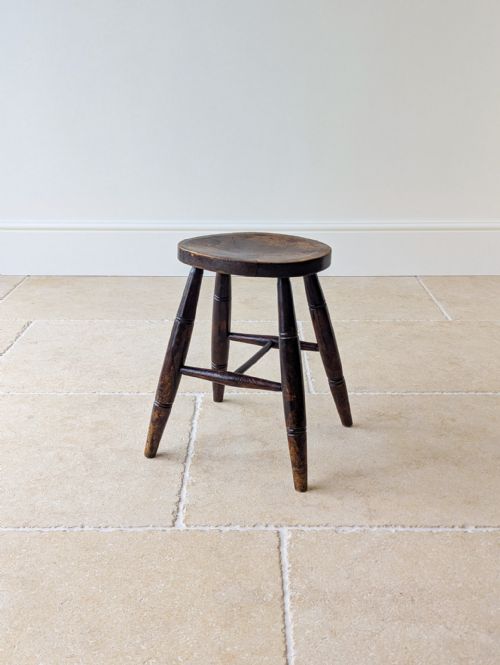
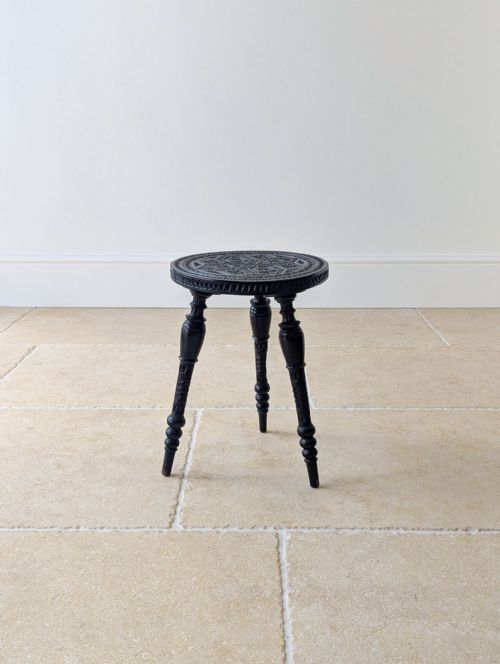
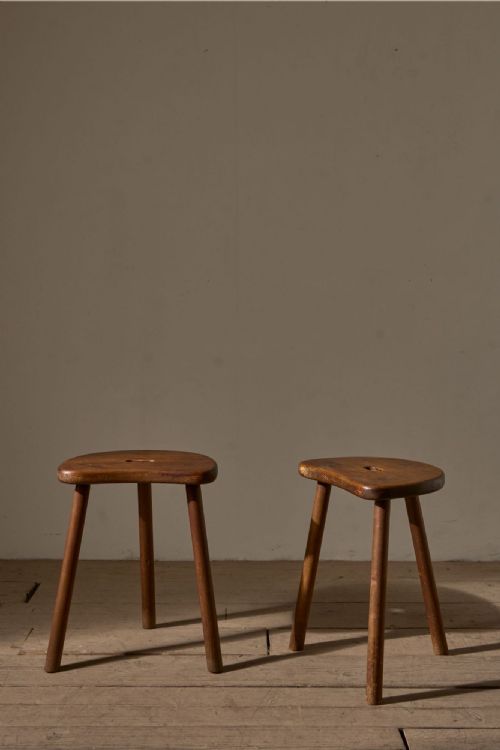
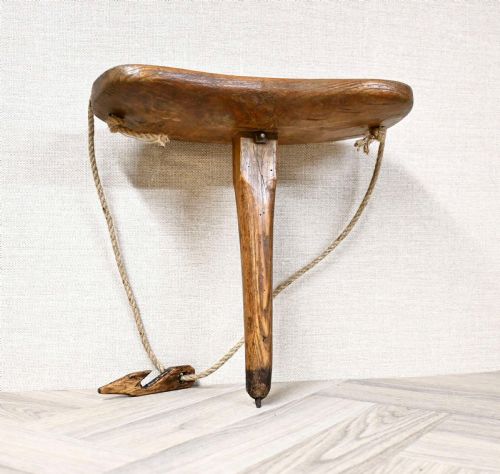
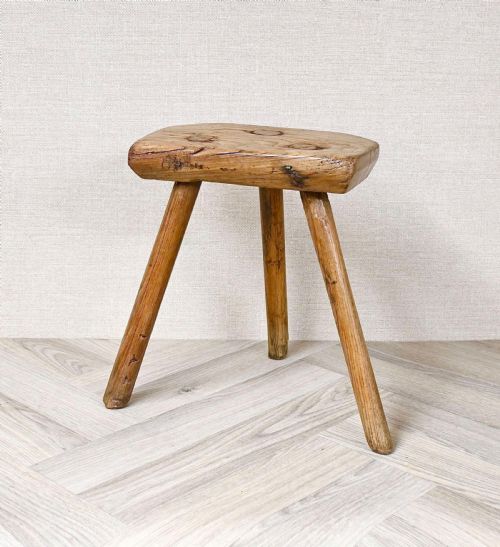


Vintage Carved Tripod Stool
These vintage carved tripod stools bring rugged character to a room, offering compact seating and display surfaces crafted from solid timber.
Vintage Carved Tripod Stool
When you search for a vintage carved tripod stool, you are looking at sturdy, three-legged seats and small tables shaped by hand from traditional timbers. These pieces range from rustic country examples to formal Victorian designs with turned supports.
The selections on this page span several centuries, featuring utilitarian 18th century primitive milking stools alongside ornate 19th century piano stools and occasional tables. Oak and pine appear frequently, often paired with carved details or turned legs that reflect domestic and vernacular traditions.
How they were made
Maker-joiners constructed these items using solid hardwoods like oak and rosewood, as well as softer pine and ebonised timber. Construction relied on traditional pegged joints and turned wooden components to create stable three-legged bases.
Surface ornamentation involved chip-carving, pokerwork decoration, and occasional bone inlay to adorn circular tops and aprons. Some variants also incorporated adjustable height mechanisms or revolving seats engineered for musical performance.
What varies in quality
Quality rests in the integrity of the timber and the depth of the hand-carved detail on the seat or top. Sturdiness in the three-legged frame separates utilitarian pieces from those intended for formal drawing rooms.
The complexity of the turning on the legs and the presence of specialised elements, such as revolving mechanisms or intricate pokerwork, distinguish finer examples from plain, functional items.
The Vintage Carved Tripod Stool Glossary
- Tripod stool
- A seat supported by three legs, offering natural stability on uneven floors without rocking. This configuration appears frequently across both rustic and formal vernacular seating.
- Milking stool
- A low, functional seat traditionally used by agricultural workers during milking tasks. These pieces usually feature a simple slab top fitted with three splayed legs.
- Chip-carving
- A wood-carving technique where small chips are removed from a flat surface to create geometric patterns. This method decorates several of the occasional tables and stools on this page.
- Pokerwork
- The art of burning designs into wood using heated metal points to create dark, contrasting illustrations. Examples include inscribed Scottish mottoes on nineteenth-century pieces.
- Vernacular
- Everyday objects made by local craftspeople to serve practical purposes rather than following high-style academic designs. These items utilise regional materials and straightforward construction methods.
Vintage Carved Tripod Stool: Frequently Asked Questions
How were tripod stools used originally?
These items served functional roles in homes, farms, and music rooms, acting as seating for milking, piano practice, or general household tasks. Their compact footprint made them easy to move around tight domestic spaces.
Over time, many of these utilitarian forms transitioned into decorative occasional tables or plant stands within Victorian parlours and country houses.
Are these stools comfortable for daily seating?
Most pieces were built for specific tasks rather than long periods of relaxation, often featuring rigid wooden saddle seats or flat circular tops. Some Victorian variants include upholstery or revolving mechanisms for added convenience.
Buyers usually place them in hallways or corners where their sculptural form and minimal size provide a practical surface or quick perch.
How do I date a wooden tripod stool?
Dating relies on identifying the timber species, tool marks, joinery techniques, and the style of turning on the legs. Georgian and early nineteenth-century examples often display primitive adze marks and hand-rived wood.
Later Victorian and early twentieth-century pieces incorporate machine-turned components, ebonised finishes, or complex mechanical adjustments for piano use.
What is the difference between a stool and a table?
While many items on this page function strictly as seats, some pieces with flat carved surfaces double as occasional tables or stands. Height and top diameter often distinguish a small stool from a side table.
Adjustable mechanisms on piano stools also separate seating from static display surfaces, though both share the defining three-legged tripod base.