

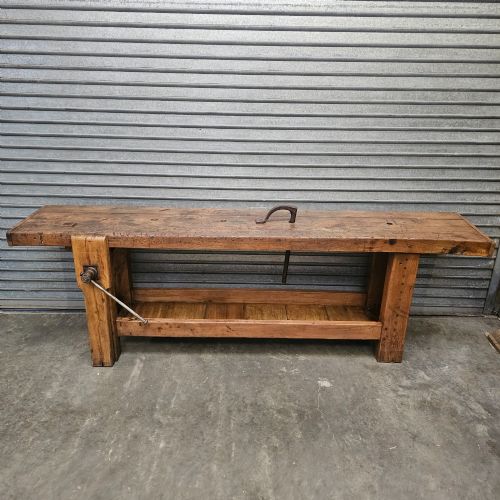
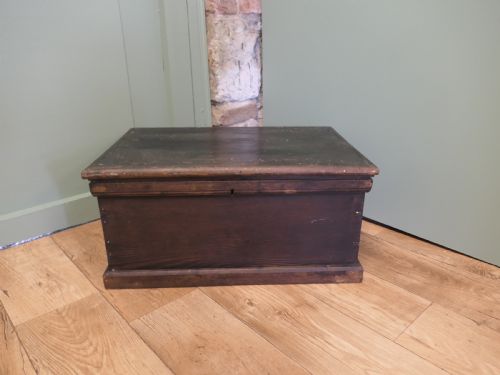
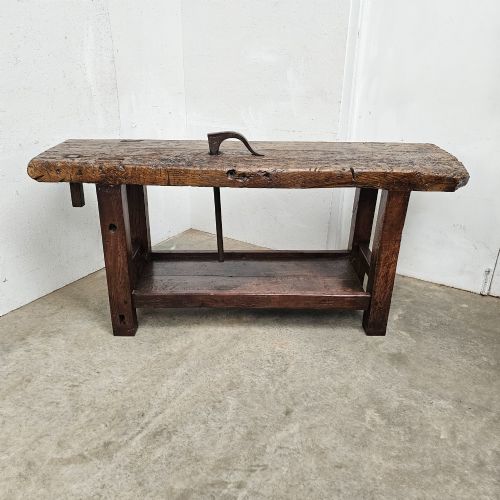
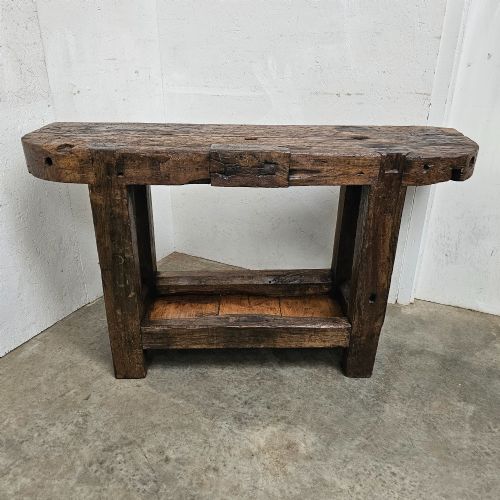


Vintage Carpenter Table
These vintage carpenter table examples bring honest utility and robust timber presence to any room, offering centuries of practical craftsmanship.
Vintage Carpenter Table
A vintage carpenter table serves as a sturdy workspace built for heavy manual tasks, now repurposed for interiors requiring character and presence. These pieces emerge predominantly from the nineteenth century, including examples dated around 1800, 1870, 1880, and 1900.
The version most frequently encountered on this page is the French artisans workbench, alongside English pine tool chests and rustic farmhouse variants. They span forms such as workbenches, work benches, trunks, and chests.
Makers shaped these surfaces in styles encompassing French primitive, Victorian country, rustic farmhouse, industrial utilitarian, and French provincial. Each object bears the marks of actual workshop use, from timber indentations to integrated vices.
How they were made
Workshops constructed these tables using dense timbers including oak, pine, elm, beech, and general timber, combined with structural elements of iron, forged iron, and cast iron. Carpenters relied on robust joinery to withstand heavy planing and hammering.
Many examples incorporate functional mechanisms like clamping bars and vices, integrated directly into the wooden framework. Surfaces often show plain timber alongside painted wood finishes resulting from decades of workshop exposure.
Vintage Carpenter Table Retail Price Guide 2026
Typical asking prices for vintage carpenter table among the pieces listed under this phrase on Sellingantiques today, from the lower quarter to the upper quarter. They describe what is for sale here now, not the wider market.
Listings feature nineteenth-century pieces constructed from oak, pine, elm, beech, and painted wood, alongside iron and forged iron elements.
What varies in quality
Subtle variations in regional style, such as French provincial framing versus English Victorian construction, define the character of each piece. The depth of patination accumulated across nineteenth-century usage separates well-preserved examples from simpler utilitarian survivors.
The Vintage Carpenter Table Glossary
- Workbench
- A heavy table used by artisans for woodworking, typically fitted with a vice and clamping mechanism. These pieces form the primary focus of this category.
- Clamping bar
- A wooden or metal beam integrated into a workbench to secure materials during cutting or shaping. This feature aids in identifying functional workshop furniture.
- Primitive
- A descriptive term for furniture constructed with basic tools and straightforward joinery, often predating industrial standardisation. Such pieces display unpretentious local designs.
- Patina
- The surface sheen and colour acquired by wood and metal through age, wear, and regular handling. It serves as a key indicator of authenticity on nineteenth-century surfaces.
Vintage Carpenter Table: Frequently Asked Questions
What is a vintage carpenter table?
A vintage carpenter table is a heavy-duty workbench originally designed for manual trades and woodworking tasks. They are built from robust timbers and frequently include integrated vices or clamping bars.
Today, buyers repurpose these functional objects as striking kitchen islands, console tables, or coffee tables. Their utilitarian history brings genuine character and enduring strength to modern interiors.
How do I date a carpenter table?
Dating relies on examining the construction methods, timber species, and overall design characteristics visible in the piece. Nineteenth-century examples often display hand-cut joinery and heavy oak, pine, or elm framing.
Hardware elements such as forged iron or cast iron components also provide chronological clues. Documentation from the period or specific regional styles helps narrow down the origin.
How do I clean a workbench top?
Maintaining the surface requires preserving the aged patina rather than stripping away its history. Gentle dusting and occasional applications of neutral wax protect the timber without removing marks of use.
Harsh chemical solvents should be avoided entirely to protect original painted wood finishes and raw elm or oak surfaces. Regular care ensures the wood remains stable within a home environment.
Can I use one as a desk?
These tables adapt well to office environments provided the height and knee clearance suit your seating requirements. Their expansive timber surfaces offer ample room for workspace activities.
Consider the presence of integrated vices or clamping bars underneath, as these may affect legroom. Selecting a suitably proportioned French provincial or rustic farmhouse variant ensures comfortable daily use.