


Vintage Cage Pendant
These vintage cage pendant lights and chandeliers bring striking framework and brilliant crystal illumination directly into period rooms.
Vintage Cage Pendant
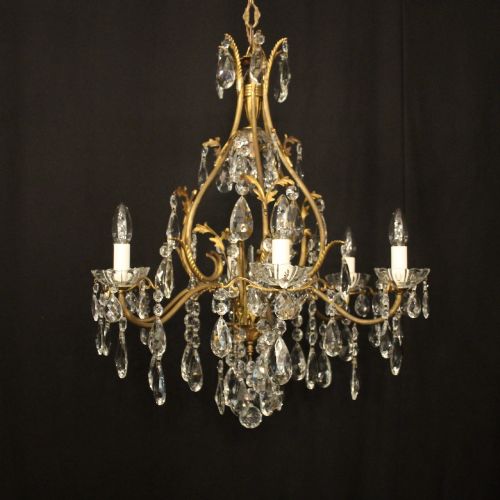
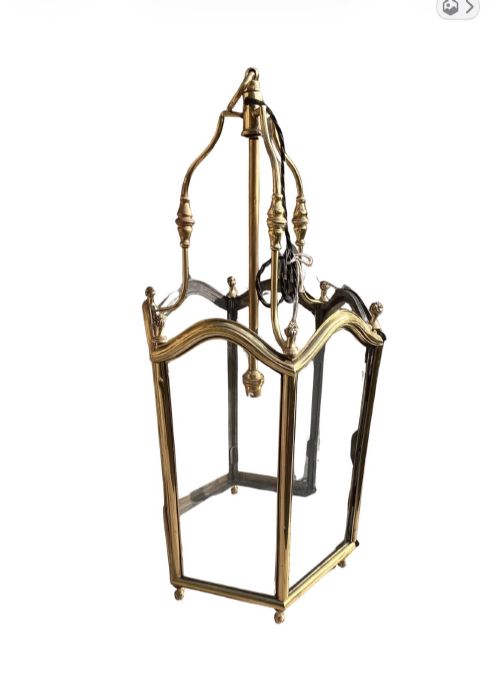
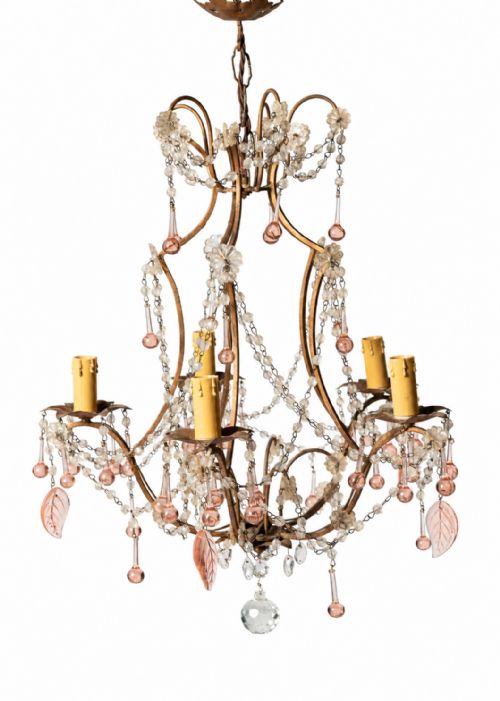
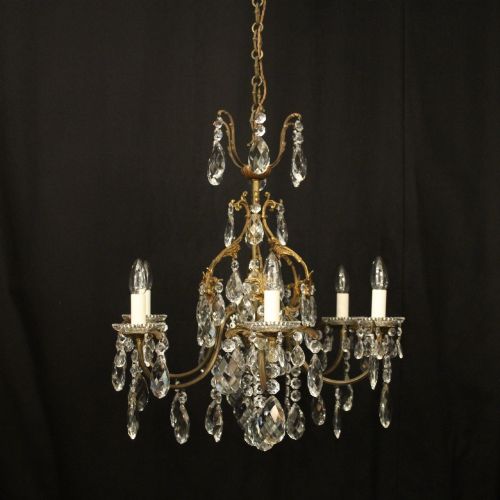
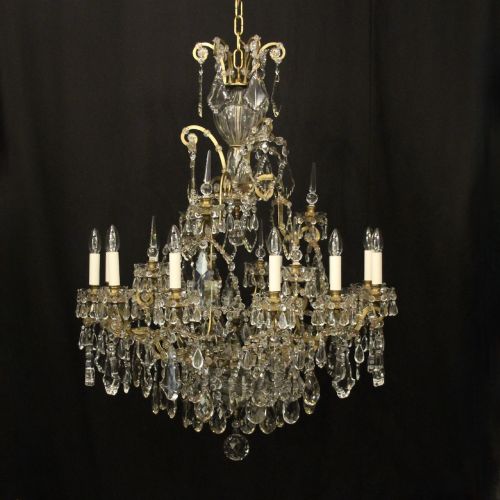
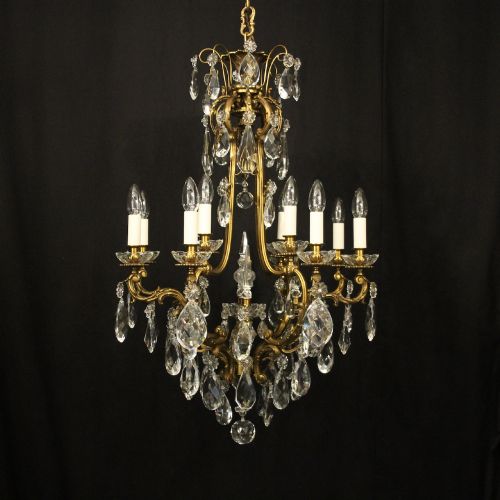
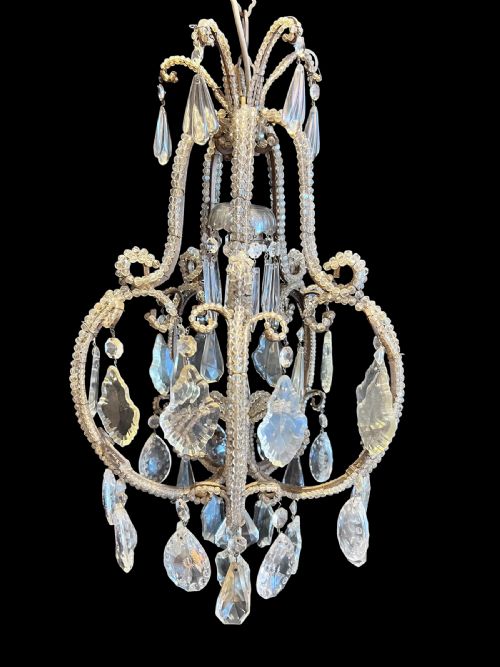
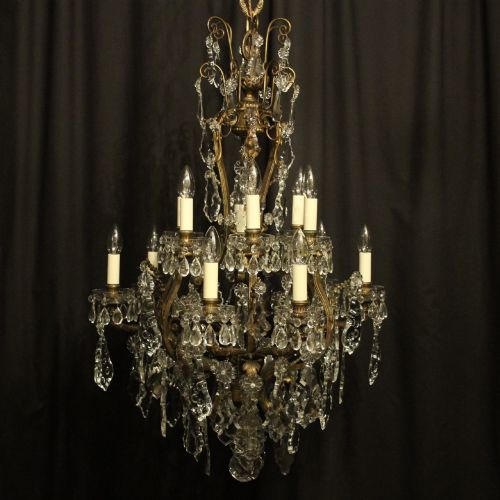
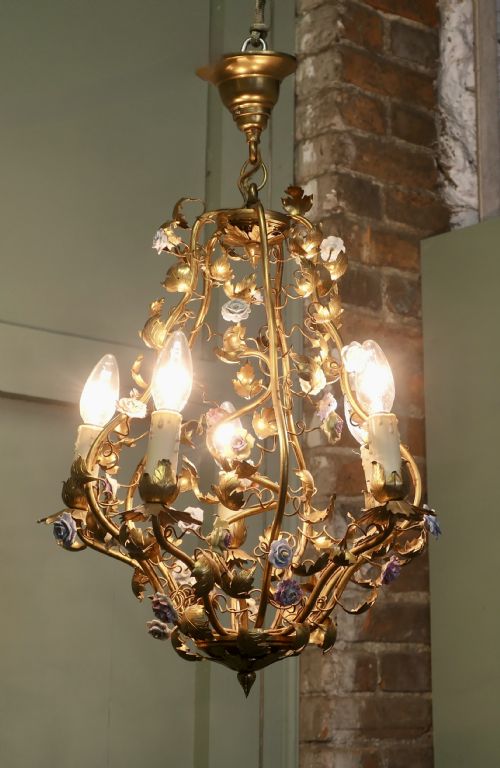
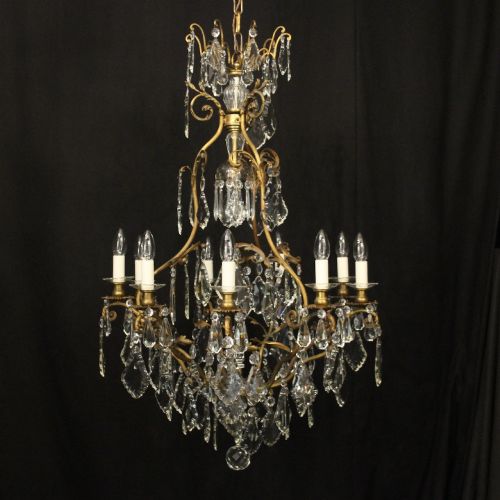
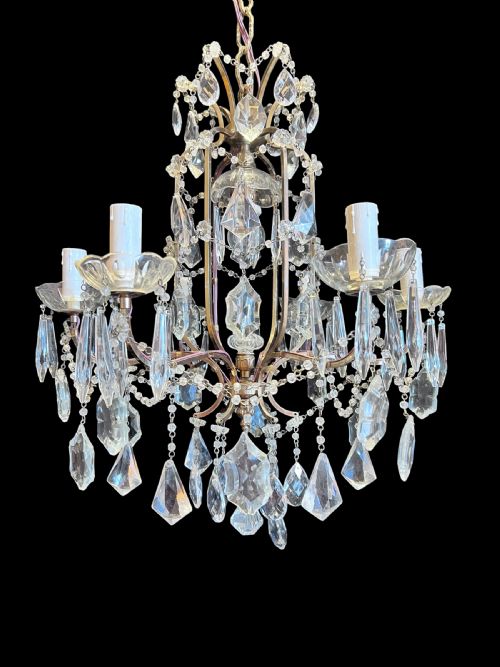
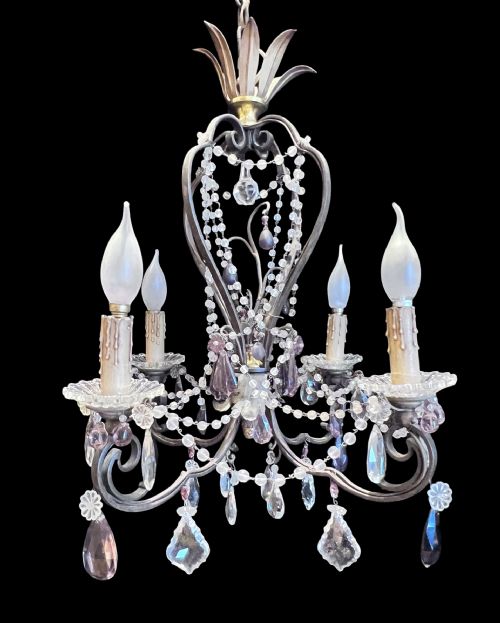
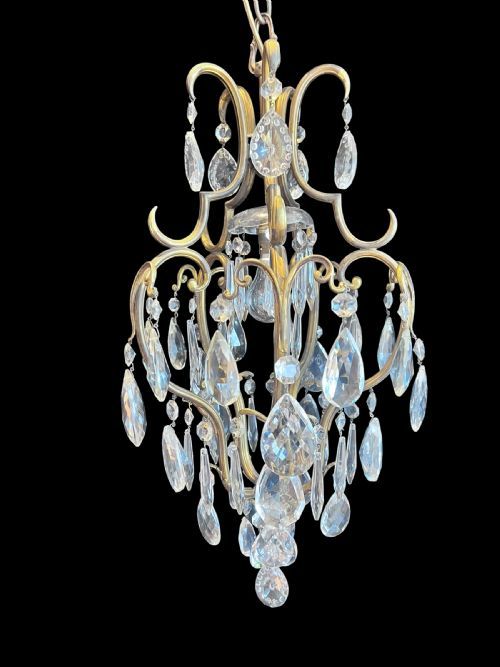
A vintage cage pendant or cage chandelier takes a distinctive skeletal metal frame, often described as a birdcage, and fills it with drops of glass and crystal. These pieces emerge predominantly from French and Italian workshops active between the late nineteenth century and the 1930s. The listings show forms ranging from compact single-light lanterns to multi-armed chandeliers housing up to twelve lights.
Within this selection, French gilded brass and bronze designs dominate alongside Italian rococo revival pieces. Buyers frequently encounter open framework structures shaped from gilt metal, brass, and toleware, populated with amethyst or clear crystals. The silhouette remains distinct through its enclosed metal armature, separating it from standard drop chandeliers.
Materials and construction methods
Maker workshops built these fixtures using cast bronze, brass, and gilt metal to form the structural skeleton, often integrating hand-finished toleware or ceramic floral elements. The metal armatures provide rigid support for tiered arrangements of glass and crystal drops.
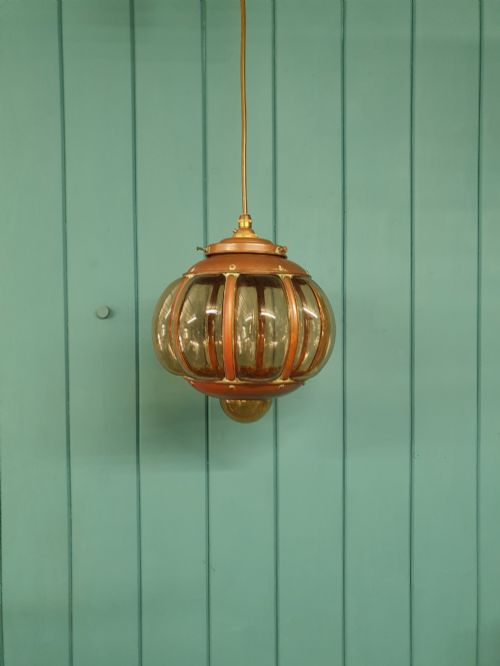
Cut crystal prisms and pendants hang from wire connections within the framework, catching and dispersing light from internal bulbs or historical candle sockets. Iron, copper, and smoked glass also appear in specific nautical or regional variants.
Vintage Cage Pendant Retail Price Guide 2026
Typical asking prices for vintage cage pendant among the pieces listed under this phrase on Sellingantiques today, from the lower quarter to the upper quarter. They describe what is for sale here now, not the wider market.
The listings encompass brass, gilt bronze, and cut crystal materials across Victorian, Edwardian, and 1930s periods.
Quality factors in cage pendants
The sophistication of the cast metal framework and the precision of the crystal cutting determine the tier of a piece. Fine examples exhibit crisp chasing on the bronze or brass mounts, balanced proportions in the cage silhouette, and high-purity glass that refracts light cleanly.
Lower tiers rely on simpler pressed metal structures with minimal hand-finishing and standard moulded glass drops rather than hand-cut crystals. The density of the crystal dressing and the integrity of the original gilding further separate standard utility lighting from superior decorative work.
The Vintage Cage Pendant Glossary
- Cage chandelier
- A lighting fixture featuring an open metal framework enclosing a central light source and draped with crystal beads. This construction style protects the internal components while maximising light refraction.
- Gilt bronze
- Copper alloy coated with a thin layer of gold or gold-coloured finish. This technique provides a durable, lustrous surface popular in French decorative arts.
- Toleware
- Lacquered or enamelled painted metal items popular in period decorative objects. It frequently appears in floral accents and painted brackets on twentieth-century lighting.
- Ormolu
- Gilded bronze mounts and decorative details cast and chased by hand. It brings a bright metallic sheen to nineteenth-century and Edwardian frames.
- Prism
- A cut glass or crystal pendant designed to refract light into spectral colours. These elements dangle from the metal framework in various geometric shapes.
Vintage Cage Pendant: Frequently Asked Questions
How do I hang a vintage cage pendant?
Suspension requires assessing the weight of the metal frame and crystal dressing against your ceiling capacity. Most pieces hang from a matching chain and ceiling rose secured to a structural joist.
Professional electrical installation is recommended to adapt older wiring to modern safety standards while maintaining the original hanging height.
Where should I place a cage pendant?
These fixtures suit hallways, dining spaces, and high-ceilinged rooms where the skeletal framework can be viewed from multiple angles. Their enclosed profile works well in vertical spaces needing focused downward and refracted illumination.
Ensure adequate clearance beneath the lowest crystal drop for foot traffic or furniture placement.
How do I clean the crystal drops?
Maintenance involves gentle cleaning of individual glass and crystal elements using a mild solution and soft cloth while the pieces remain attached to the frame. Removing delicate drops requires care to avoid damaging historical wire fixings.
Regular dusting preserves the reflective quality of the glass without risking moisture damage to the antique metal finish.
What period do most cage pendants come from?
The majority of pieces date from the Edwardian era through the 1930s, with notable examples spanning the late nineteenth century. French and Italian workshops produced the vast majority of these designs during those decades.
Stylistic cues such as rococo revival motifs help narrow down the manufacturing era of individual frames.