



Vintage Butterfly Art
Vintage butterfly art spans delicate enamel brooches, iridescent wing panels and intricate porcelain bowls from the late nineteenth century to the mid-twentieth century.
Vintage Butterfly Art
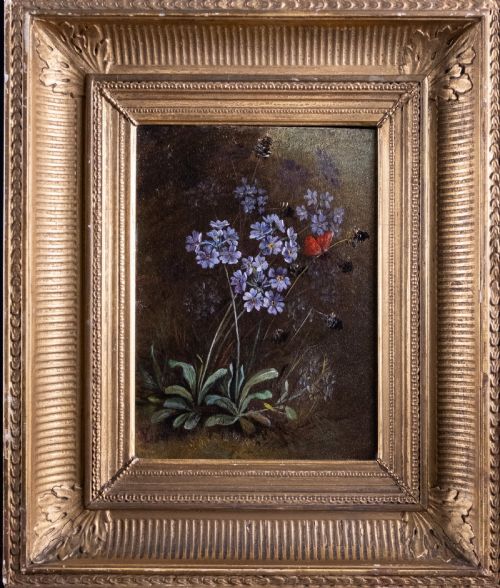
Vintage butterfly art encompasses a diverse range of decorative objects, wearable accessories and framed works celebrating lepidopteran motifs. Pieces span from nineteenth-century natural history prints and oil paintings to early twentieth-century jewellery and ceramics.
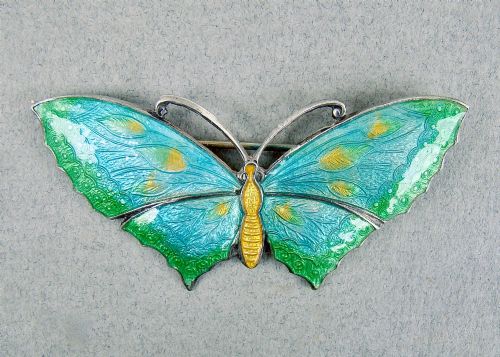
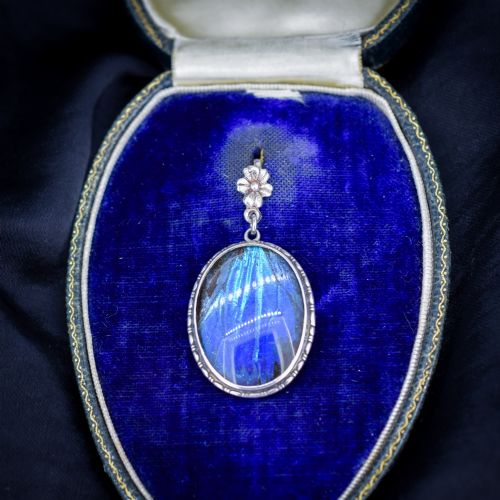
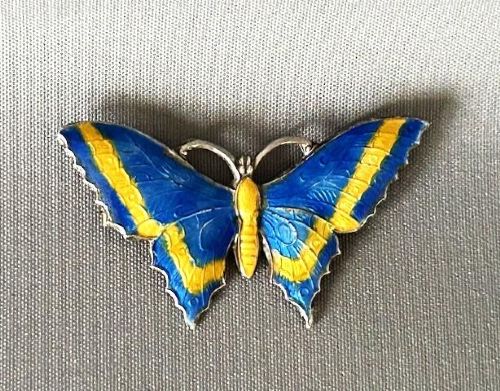
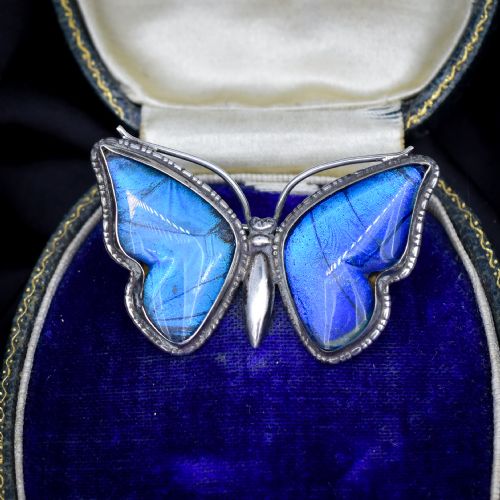
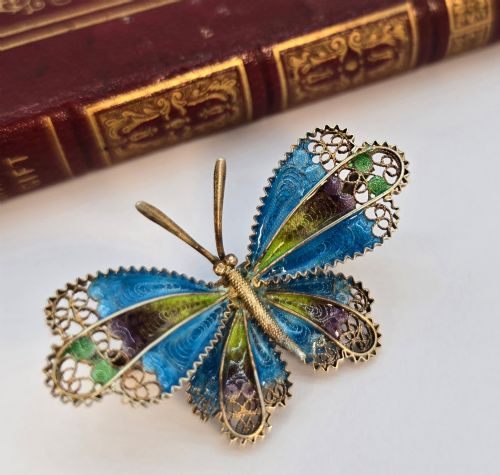
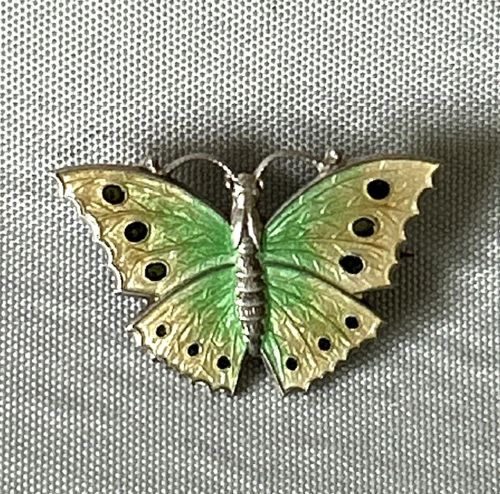
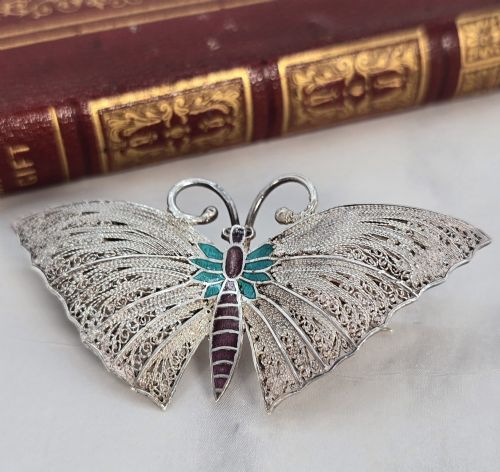
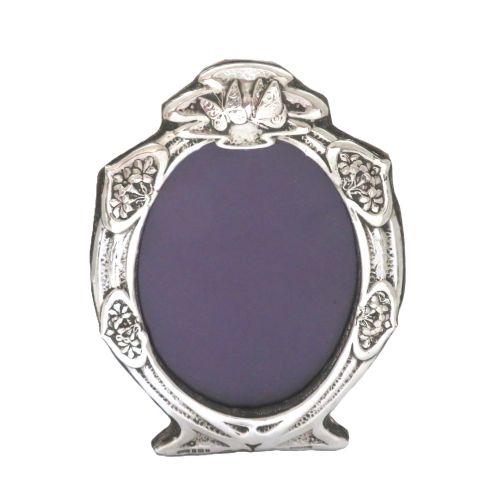
Wearable pieces dominate the selection, particularly silver and enamel brooches alongside pendants and hatpins from the Art Deco and Art Nouveau periods. These items frequently utilise butterfly wing panels or detailed metalwork to capture the insect form.
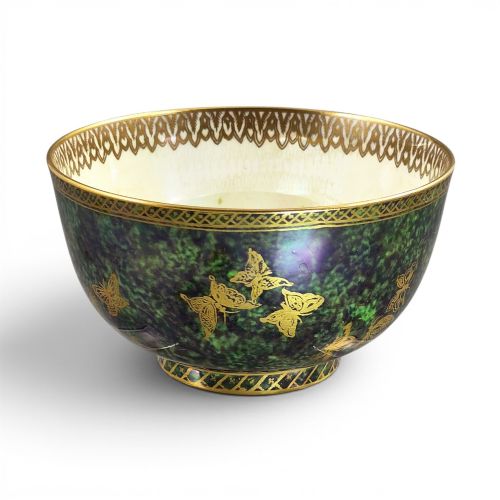
Decorative vessels and furnishings also appear, including lustre bowls, glass perfume bottles and wooden trays incorporating preserved specimens. Makers applied these motifs across multiple disciplines, uniting natural specimens with skilled craftsmanship.
Materials and Techniques
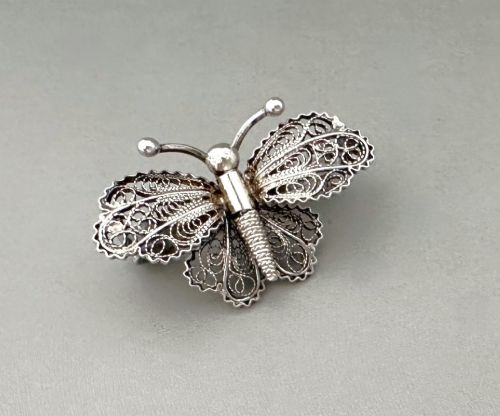
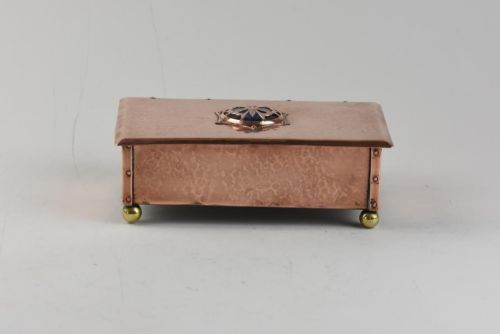
Metalsmithing and enamel work form the foundation of many wearable pieces, using sterling silver, silver gilt and copper alongside guilloche and plique-a-jour enamel. Artisans shaped filigree wire and cast frames to support glass, stones or actual butterfly wings.
Ceramic production relied on specialised glazing techniques, notably lustre glazes applied to porcelain bowls and mugs. Glass objects involved moulding and opalescent finishes, seen in French perfume bottles and decorative stoppers.
Paper and textile works employed traditional graphic and needlecraft methods, including hand-coloured engravings, watercolours, oil on canvas and silk panel embroidery. Natural specimens were carefully mounted within framed wall art and specialised trays.
Vintage Butterfly Art Retail Price Guide 2026
Typical asking prices for vintage butterfly art among the pieces listed under this phrase on Sellingantiques today, from the lower quarter to the upper quarter. They describe what is for sale here now, not the wider market.
Listings feature items from the 19th Century through the 1940s, spanning Art Nouveau, Art Deco, and Arts and Crafts styles.
Assessing Quality and Execution
The refinement of the enamel work and the precision of the metal filigree distinguish finer pieces from standard production. Artisans who achieved smooth translucent enamel layers or intricate silver wire patterns created objects of lasting distinction.
In ceramic and glass items, the depth of the glaze and the crispness of the moulding dictate the standard of execution. Lustre finishes that display rich iridescent colours and well-defined motifs reflect superior kiln control.
The preservation of delicate organic materials, such as butterfly wings or silk threads, influences the overall integrity of the piece. Intact framing, secure mountings and well-preserved pigments ensure the visual impact remains undiminished.
Daisy Makeig-Jones·Thomas L Mott·Rene Lalique·Martin Mayer·Argy Rousseau·John Curtis
The Vintage Butterfly Art Glossary
- Guilloche enamel
- A decorative technique where transparent enamel is layered over engine-turned metal engraving. This creates geometric patterns that shine through the translucent coloured glass surface.
- Filigree
- Delicate jewellery-making work consisting of twisted fine metal threads soldered together. Artisans arrange these threads into openwork patterns resembling lace.
- Lustre glaze
- A type of pottery glaze containing metallic salts that produce an iridescent sheen upon firing. This technique creates a shimmering surface that changes colour in the light.
- Plique-a-jour
- An enamelling technique where the enamel is fired in open cells without a backing metal. This allows light to shine through the translucent coloured glass like stained glass.
- Butterfly wing art
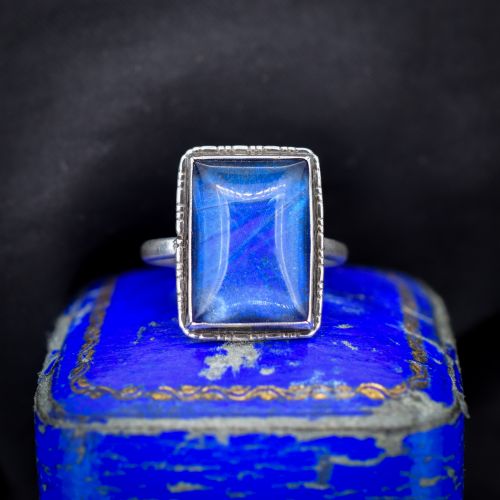
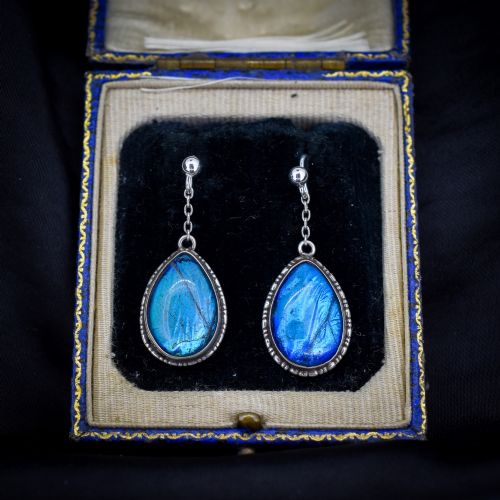
- A decorative craft popular in the early twentieth century using iridescent Morpho butterfly wings. The wings are sealed under glass to create pictures and jewellery panels.
Vintage Butterfly Art: Frequently Asked Questions
How do I care for vintage butterfly wing jewellery?
Keep these pieces away from moisture, direct sunlight and harsh chemical cleaners to protect the delicate organic material sealed beneath the glass.
Store them in a dry jewellery box and gently wipe the metal surfaces with a soft dry cloth when needed.
How can I distinguish Art Deco pieces from Art Nouveau items?
Art Nouveau items, dating from the turn of the twentieth century, typically feature flowing asymmetrical lines, organic plant motifs and female figures. Enamel work from this era often uses plique-a-jour techniques.
Art Deco pieces from the 1920s and 1930s favour geometric symmetry, streamlined shapes and bold contrasting colours in silver and enamel.
Were butterfly specimens used in nineteenth-century art?
Nineteenth-century natural history art incorporated actual specimens and detailed scientific illustrations into framed prints and botanical studies. Artists and naturalists documented species through hand-coloured engravings and oil paintings.
These works combined rigorous scientific observation with aesthetic presentation for home display.