
Vintage Brown Armchairs
Vintage brown armchairs bring deep leather and warm timber into a room, offering solid seating built for a library, office, or fireside.
Vintage Brown Armchairs
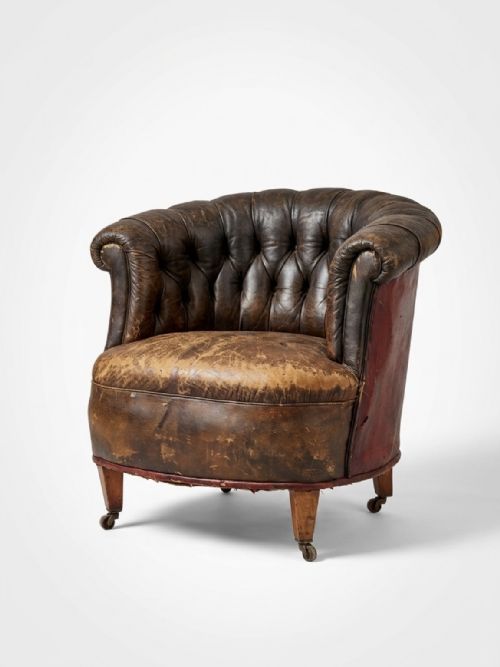
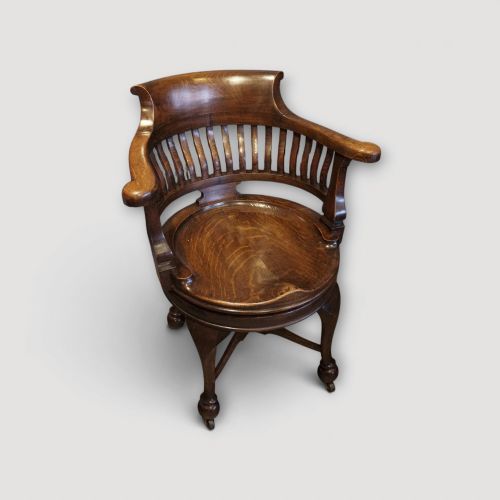
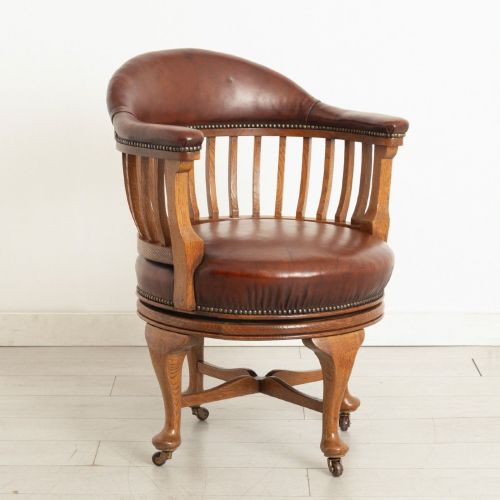
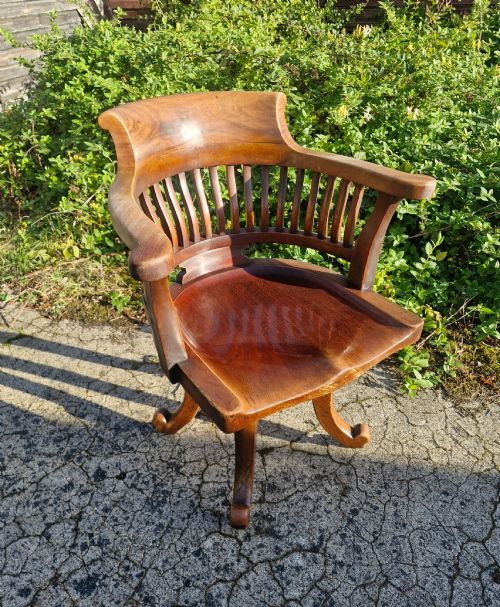
The version most commonly met on this page is the swivel or revolving desk chair in oak or mahogany, often fitted with leather upholstery. Library armchairs and tub chairs also appear frequently, alongside Windsor chairs in elm and yew.
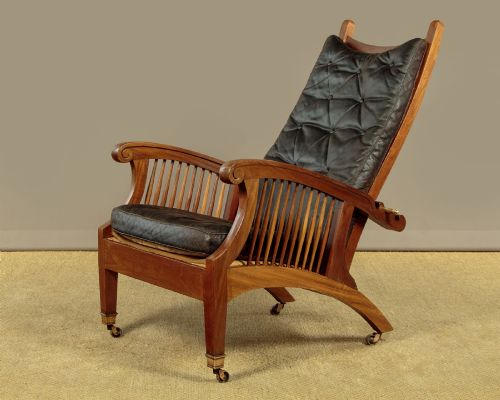
Construction forms include heavy wood frames, buttoned leather squabs, and cane panels. Many feature brass castors or turning mechanisms suited to studies and morning rooms.
Materials and Construction
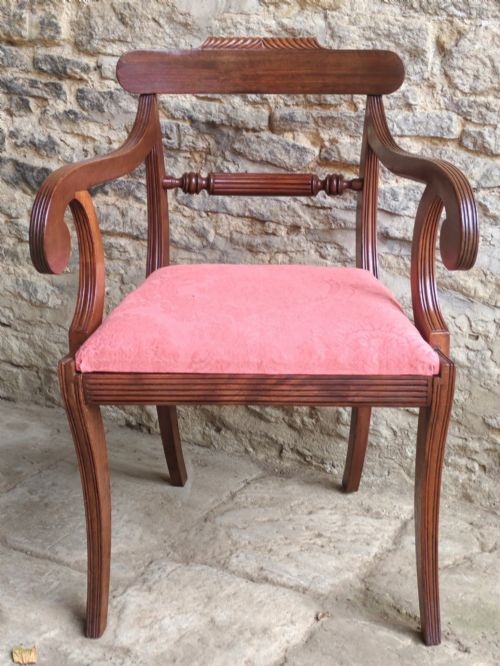
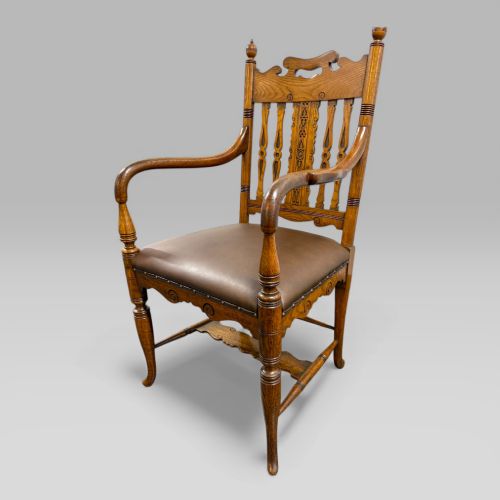
Makers utilised solid timbers such as mahogany, oak, elm, and beech to build the structural frames of these armchairs. Wood was frequently turned, carved, or bent using traditional woodworking techniques to form robust carvers, tub chairs, and office seating.
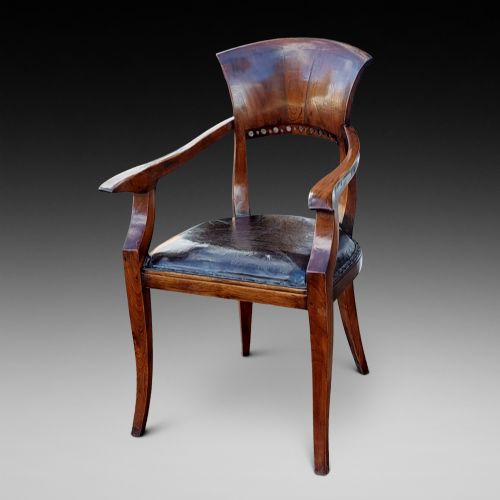
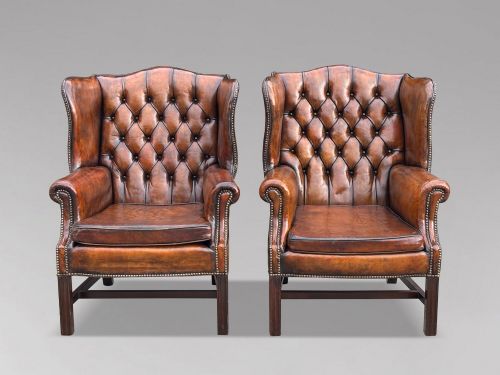
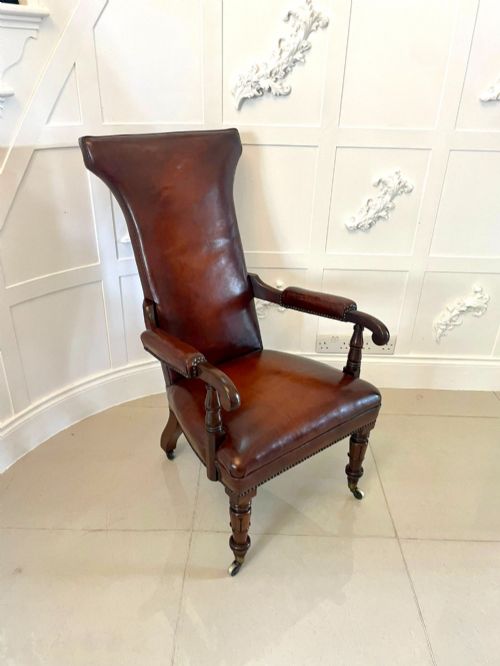
Leather forms the primary upholstery for many library and desk armchairs, often secured with brass nail heads and finished with buttoning. Rush seating, cane panels, and hessian also appear on specific chairs from the Arts and Crafts and Edwardian periods.
Metal hardware such as cast brass castors and swivel mechanisms integrate into desk and library chairs from the 19th century onwards, providing mobility and adjustable height.
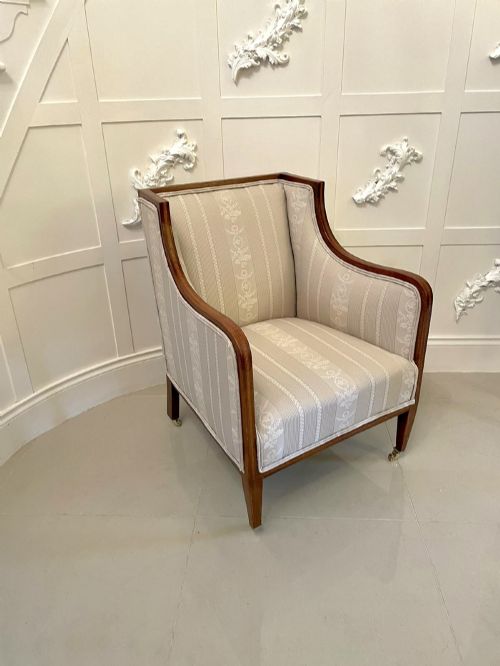
Seating forms range from wingback library armchairs and swivel desk chairs to Windsor elbow chairs and rush-seated low chairs.
Distinctions in Quality
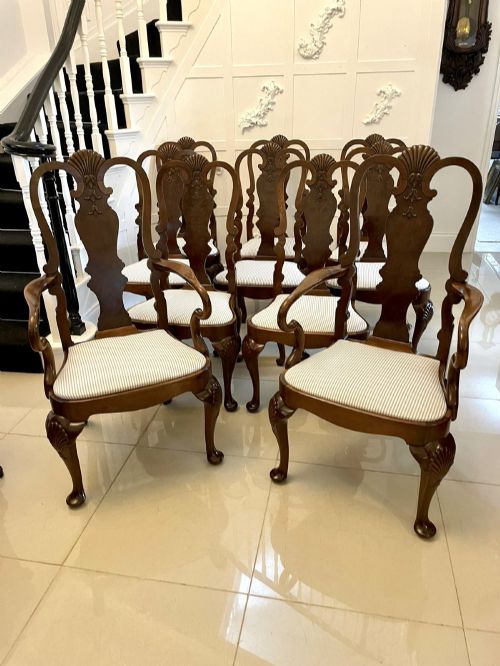
The refinement of the timber carving and the choice of secondary woods set superior library and dining chairs apart from simpler utility seating. Finer examples display careful hand-carving on mahogany and golden oak frames, alongside well-figured grain.
Upholstery materials and execution dictate the standard of leather armchairs, where deep buttoning, hand-finished hides, and quality interior stuffing provide longevity. The integration of functional hardware, such as smooth-running brass castors and sturdy swivel mechanisms, also marks better workshop output.
Gillows·Bruce James Talbert·Philip Webb·Liberty·Morris & Co·Thonet
The Vintage Brown Armchairs Glossary
- Bergere
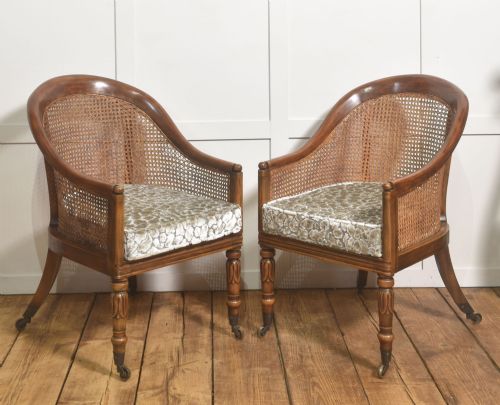
- An upholstered armchair with an enclosed cane or wicker back and sides. These frames are typically made from beech or mahogany and date from the 19th century.
- Carver
- An armchair designed to match a set of dining chairs, usually placed at the head of the table. They feature open arms and sturdy wooden frames.
- Captains Chair
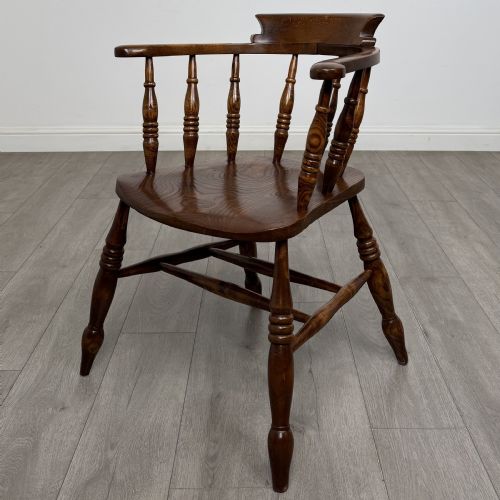
- A low-backed wooden armchair with a rounded top rail supported by spindles. They frequently feature elm or oak seats suited for office use.
- Tub Chair
- An armchair with a rounded, enclosed back that curves continuously into the arms. They often appear in leather or cane variations.
- Smoker's Bow
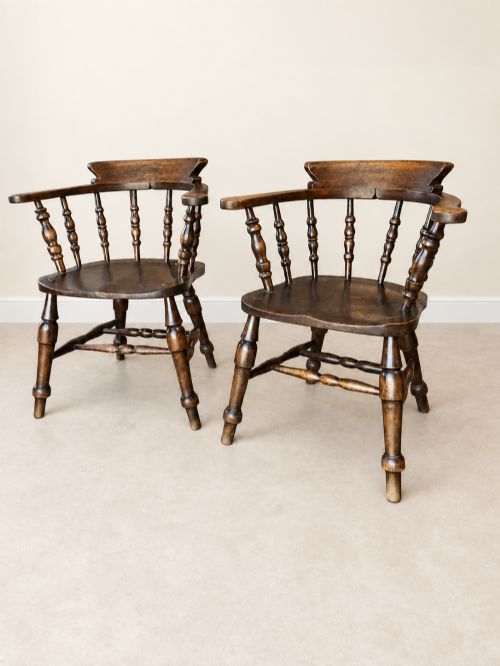
- A sturdy Windsor-style armchair with a low back and turned spindles, commonly built from elm and beech. These chairs were widely used in 19th-century offices and smoking rooms.
Vintage Brown Armchairs: Frequently Asked Questions
How do I care for vintage leather armchairs?
Keep leather armchairs away from direct heat sources and strong sunlight to prevent the hide from drying out. Apply a suitable leather conditioner periodically to maintain flexibility and colour.
Dust wooden frames with a soft cloth and avoid chemical polishes that leave a residue. Regular, gentle maintenance preserves the natural patina built up over decades.
Are revolving desk chairs sturdy enough for daily use?
Nineteenth and early 20th-century revolving desk chairs in oak and mahogany were built for heavy commercial and domestic office work. Their mechanical pivots and wooden spindles are generally robust.
Check that the central screw or swivel mechanism moves freely without excessive wobble. Most well-made examples handle daily modern seating without issue.
What is the difference between a library chair and a desk chair?
Library armchairs are typically wider, lower, and upholstered in deep leather with buttoning for reading and relaxation. They prioritise comfort and heavy padding over mobility.
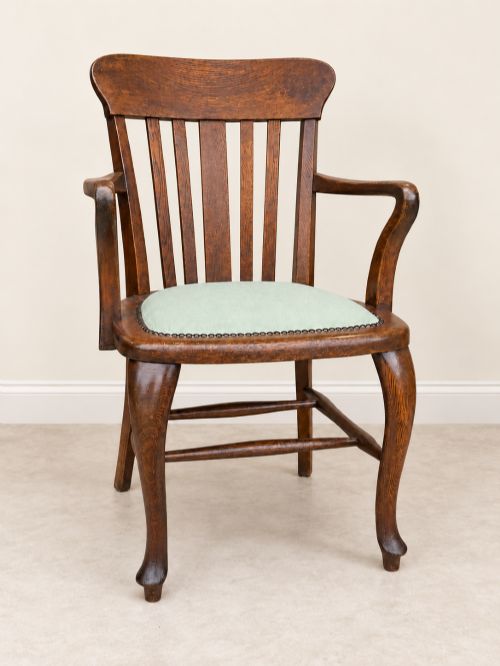
Desk chairs often feature narrower wooden or cane backs, revolving mechanisms, and brass castors. They are designed for upright posture at a writing table or bureau.
How can I tell a Victorian chair from an Edwardian one?
Victorian chairs generally feature heavier carved mahogany or oak frames, dark leather upholstery, and elaborate buttoning. The silhouettes tend to be solid and ornate.
Edwardian pieces often display lighter construction, simpler lines, and occasional influences from earlier Regency or Arts and Crafts styles. Elm, beech, and lighter oak are common in this later period.