
Vintage Brass Fixture
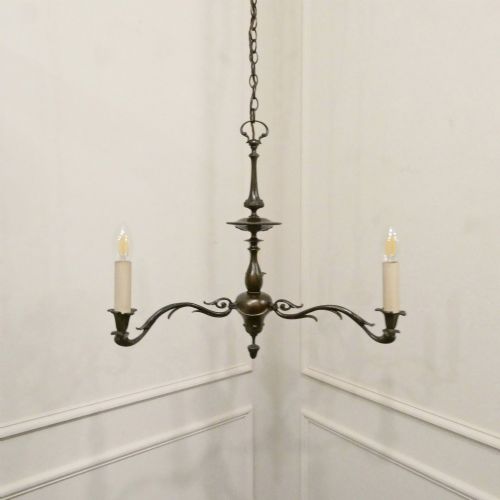
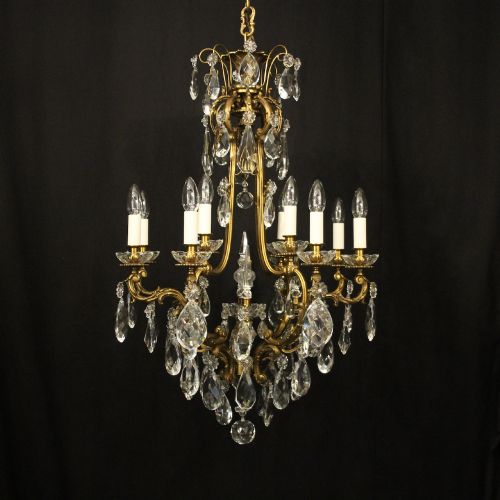
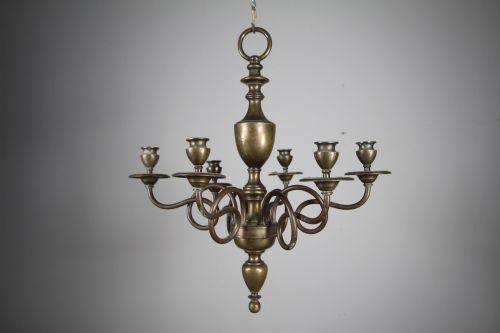
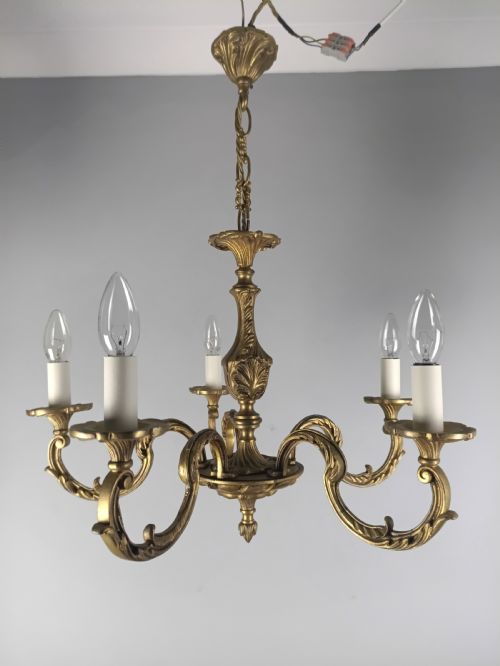
A vintage brass fixture brings period illumination to a room, ranging from small candle chandeliers to grand crystal ceiling lights.
Vintage Brass Fixture
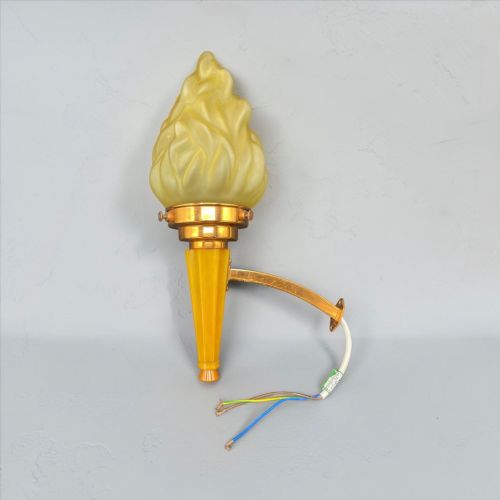
When searching for a vintage brass fixture, buyers encounter a diverse selection of lighting forms spanning the nineteenth and early twentieth centuries. Chandeliers, wall sconces, ceiling lights, and hall lanterns dominate the inventory, with French designs appearing frequently alongside Italian and English examples.
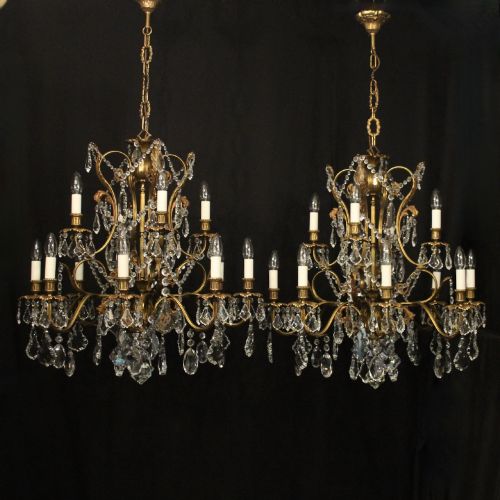
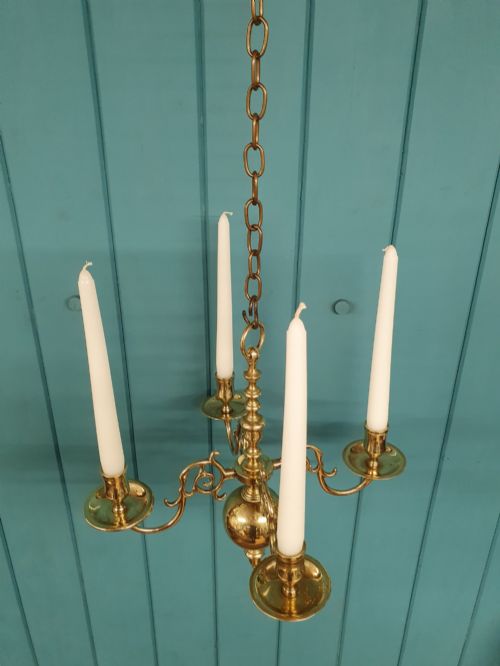
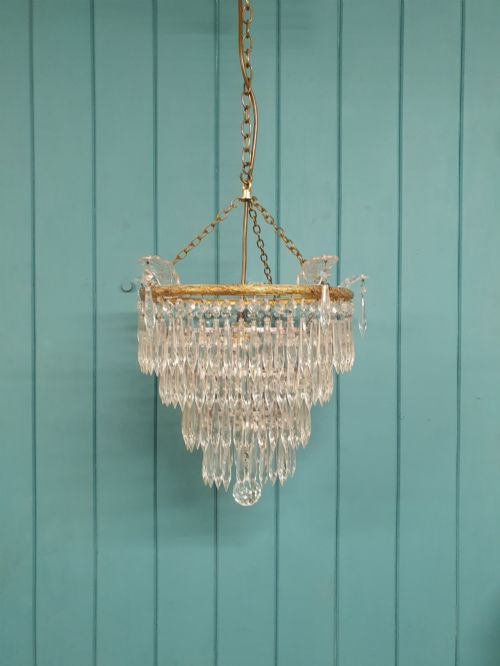
The most common pieces on this page date from the 1920s and 1930s, often reflecting Art Deco sensibilities or earlier revival styles. These items range from compact four-arm candle chandeliers to large twelve-light configurations adorned with cut glass.
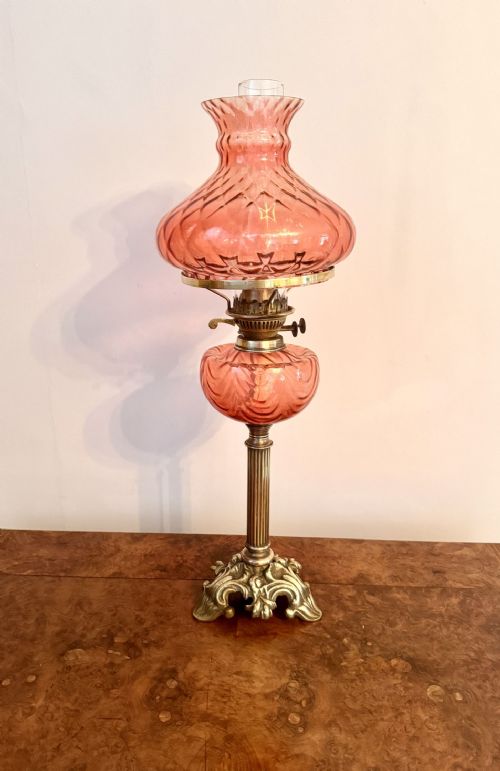
Makers and designers drew upon established aesthetics such as French Rococo, Empire, and Gothic Revival to shape metal frames. Buyers also find specialised lighting types, including cranberry glass oil lamps and porcelain flower-embellished pendants.
Materials and construction methods
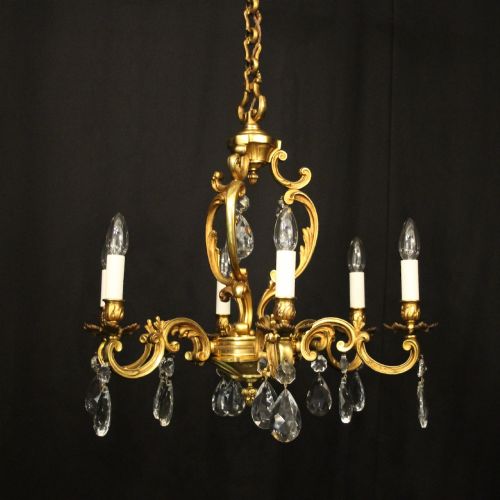
Makers utilised brass, gilt bronze, and ormolu to form the structural framework of each fixture, casting and hammering metal into intricate scrollwork and rigid tiers. Gilded surfaces often received a fine layer of gold leaf or wash to enhance warmth and reflection.
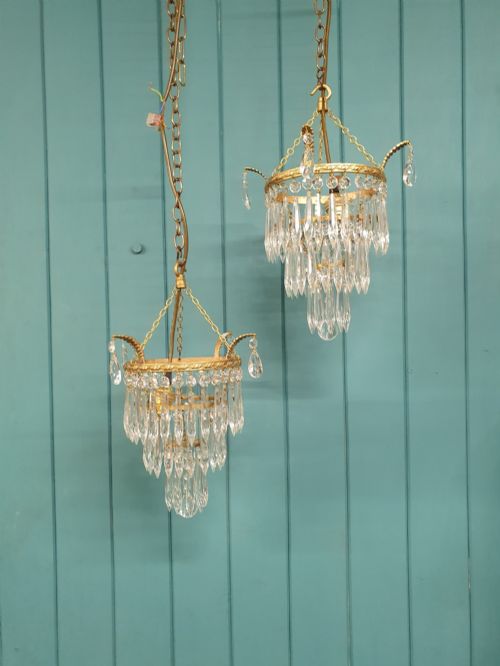
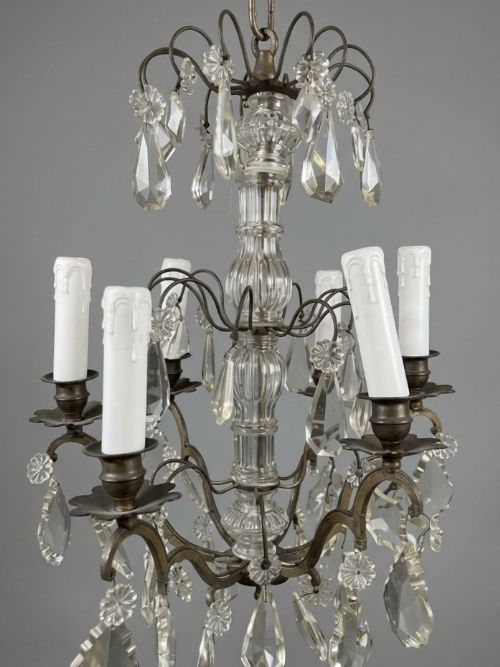
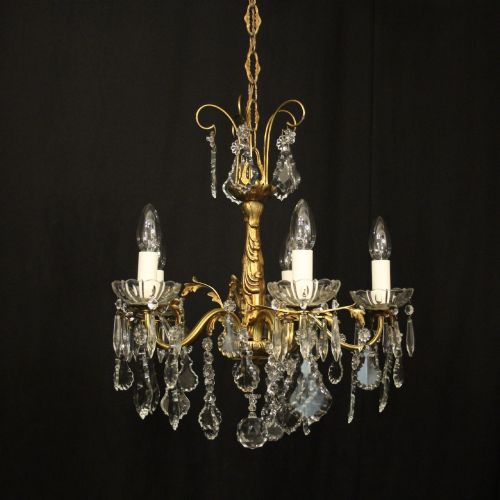
Pendants and chandeliers incorporate cut glass and crystal drops, spikes, and waterfalls that refract light across ceilings and walls. Skilled artisans wired or pinned these glass elements onto metal frames using delicate brass pins and bindings.
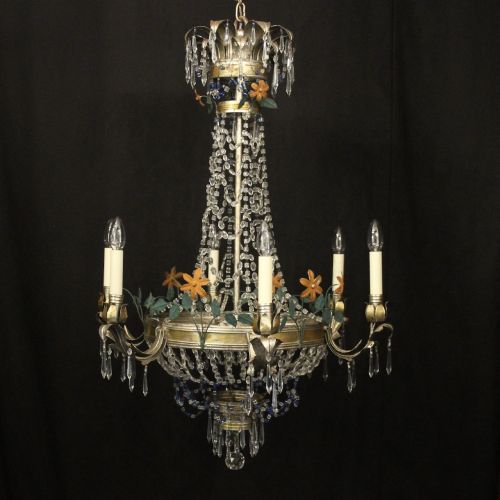
Several chandeliers hide delicate porcelain flowers among their metal leaves, adding a subtle botanical charm to the illumination.
Judging the quality of brass lighting
The distinction between ordinary and superior pieces rests on the crispness of the metal casting and the complexity of the arm configurations. Finely cast ormolu and gilt bronze display sharp, deep chasing rather than soft, smoothed contours.
Higher-grade fixtures employ heavy cut crystal and glass elements with precise faceting that catches ambient light effectively. The integration of structural components, such as multi-tiered frames and balanced candle arms, demonstrates the maker's architectural precision.
The Vintage Brass Fixture Glossary
- Ormolu
- Gilded bronze or brass used for decorative mounts and furniture trim. It requires careful cleaning to preserve the historic metallic finish.
- Tent and waterfall
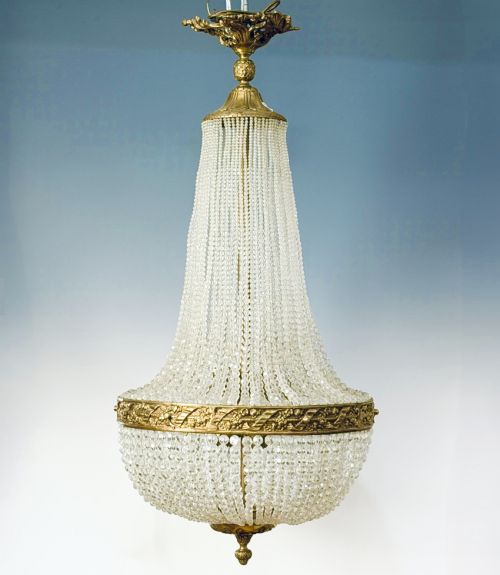
- A lighting configuration featuring strings of crystal beads draped in a tent shape above a cascading waterfall effect of drops. This design maximises light reflection in formal rooms.
- Gilt bronze
- Copper and tin alloy treated with a gold finish to resemble solid gold. It provides durability and a rich appearance.
- Birdcage chandelier
- A metal frame construction shaped like an avian enclosure, densely hung with crystal drops and vertical brass members. This style became popular in French lighting design.
- Cut glass
- Glass shaped and faceted on a wheel to produce sharp geometric patterns. It scatters illumination from internal light sources.
Vintage Brass Fixture: Frequently Asked Questions
What periods do these vintage brass fixtures represent?
The pieces span the nineteenth century through the early twentieth century, encompassing the Edwardian era, the 1920s, and the 1930s.
Art Deco designs and revival styles from France, Italy, and England dominate the selection.
How were these antique chandeliers used historically?
These fixtures provided central or ambient illumination in domestic drawing rooms, halls, and dining spaces.
Candles initially served as the light source in older models before electrical conversion took place during later twentieth-century updates.
How do I distinguish between different design styles?
French Rococo and Empire revival pieces feature ornate floral motifs, lyres, and gilt bronze scrollwork.
Art Deco fixtures favor geometric simplicity, streamlined metal tiers, and minimalist hanging structures.
What is the difference between brass and gilt bronze?
Brass is an alloy of copper and zinc, often utilised for structural frames and simpler pendant bodies.
Gilt bronze, or ormolu, contains copper and tin with an applied gold surface, offering a heavier weight and finer detail.