




Vintage Brass Corner Tables
These vintage brass corner tables bring utilitarian metalwork and clever spatial design together to anchor an awkward room.
Vintage Brass Corner Tables
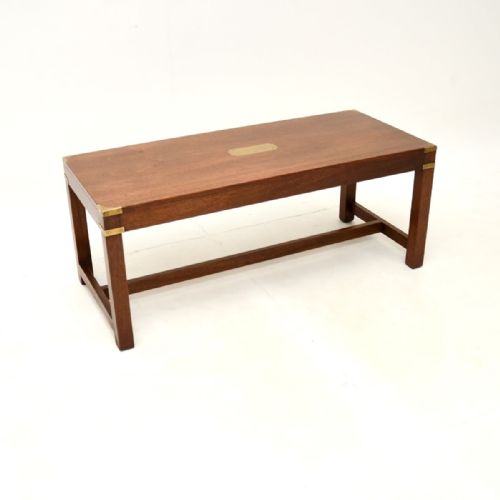
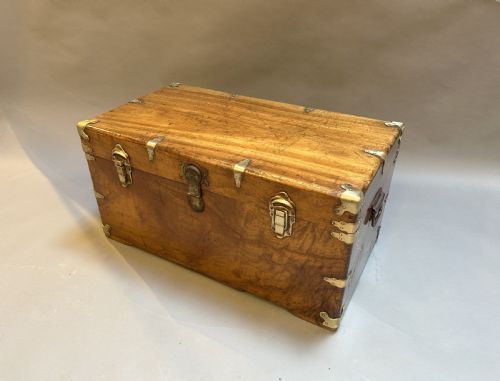
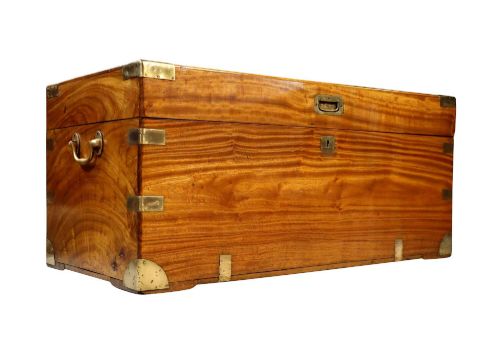
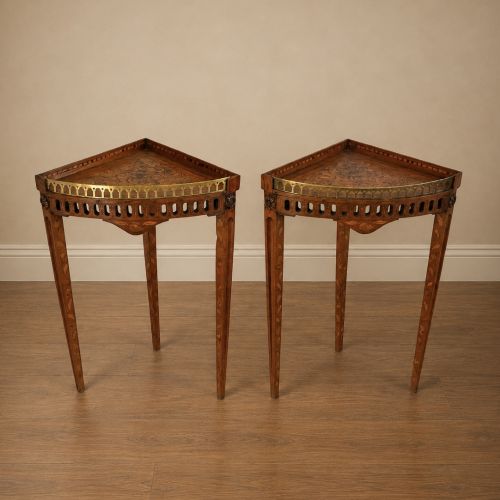
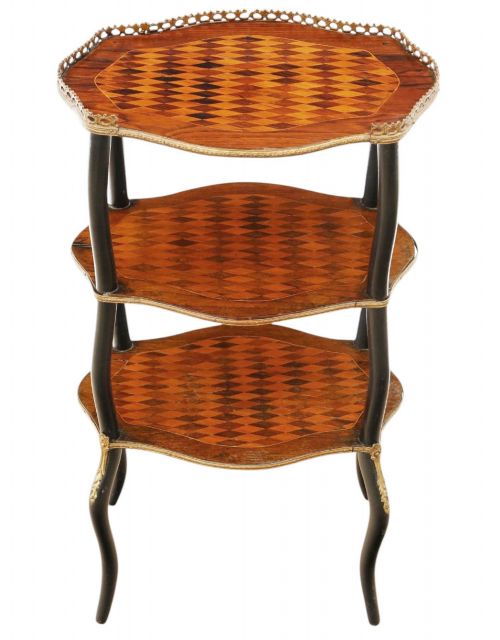
Vintage brass corner tables encompass architectural furniture designed to fit snug against intersecting walls, often incorporating metal trim or framing. The selection shows that buyers searching this phrase encounter related forms like Georgian marquetry inlaid corner tables with brass galleries alongside campaign trunks, side tables, and display shelves.
The evidence spans multiple eras, taking in pieces from the eighteenth century, the Victorian period, and the 1920s. This mix of periods means the forms shift from neoclassical geometry to campaign styling and Edwardian fitted work.
Most items appearing under this classification lean towards timber structures strengthened with metal mounts, reflecting a practical approach to domestic and travelling utility. Buyers find everything from low tables to display furniture sharing a common lineage in brass-bound construction.
Materials and construction methods
Makers utilised dense timbers including mahogany, walnut, camphor wood, and satinwood as the primary chassis for these pieces. These woods provided the necessary structural integrity for furniture subjected to regular handling or military transport.
Brass formed the protective binding, corner caps, and galleries that shielded vulnerable edges from impact. Artisans combined this metalwork with leather inserts, parquetry, and engraved copper to finish the surfaces.
The listings on this page span the Georgian period, the Victorian era, and the 1920s, featuring woods such as mahogany, walnut, and camphor wood.
Factors of quality and execution
Quality reveals itself in the precision of the timber joints and the flush integration of brass mounts into the wood. Superior examples display careful parquetry, consistent patination, and robust structural framing without excessive modern intervention.
The sophistication of auxiliary details, such as engraved copper trays or fine gallery rails, distinguishes standard utilitarian output from finer decorative pieces. Original hardware and intact internal fittings carry significant weight in the assessment of a piece.
The Vintage Brass Corner Tables Glossary
- Brass gallery
- A low decorative railing, usually pierced or turned metal, fitted around the top edge of a table to prevent items from sliding off.
- Campaign trunk
- A robust storage chest made in sections with recessed brass handles and corner brackets, built for military officers on the move.
- Parquetry
- Geometric mosaic woodwork made by fitting small veneer tiles together on a surface to create patterned decorative designs.
- Lowboy
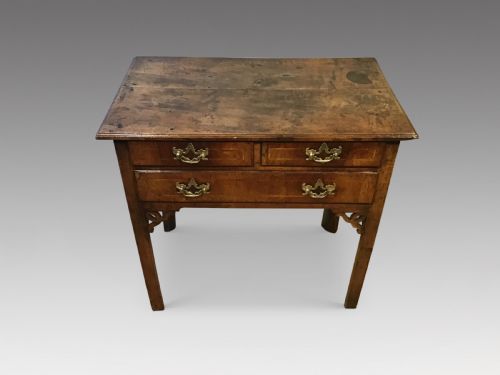
- A small side table with drawers, typically raised on four tall legs and originating in the eighteenth century.
- Etagere
- An open tiered piece of furniture designed for displaying small objects, ornaments, or books.
Vintage Brass Corner Tables: Frequently Asked Questions
What defines a campaign trunk?
Campaign trunks are heavy storage chests constructed from timbers like camphor wood or mahogany, reinforced with brass corners and recessed handles for military transport.
These pieces were built to withstand rough travel while maintaining a practical surface and secure storage for an officer's belongings.
How do I spot an eighteenth century piece?
Eighteenth century furniture often relies on formal neoclassical proportions, fine timber veneers, and hand-cut joinery rather than mass-produced hardware.
Examining the underside, drawer linings, and the nature of the timber grain helps confirm the age and construction methods of the period.
What is camphor wood used for?
Camphor wood provides a dense, aromatic timber that naturally resists insects, making it ideal for travel chests and trunks destined for maritime use.
The distinct scent remains present in many surviving examples, helping identify the material alongside its characteristic grain pattern.
Where should I place a corner table?
Corner tables fit naturally into unused junctions between walls, making them practical additions to hallways, studies, or compact living spaces.
They utilise neglected floor space while offering a display surface for lamps, books, or decorative objects.