

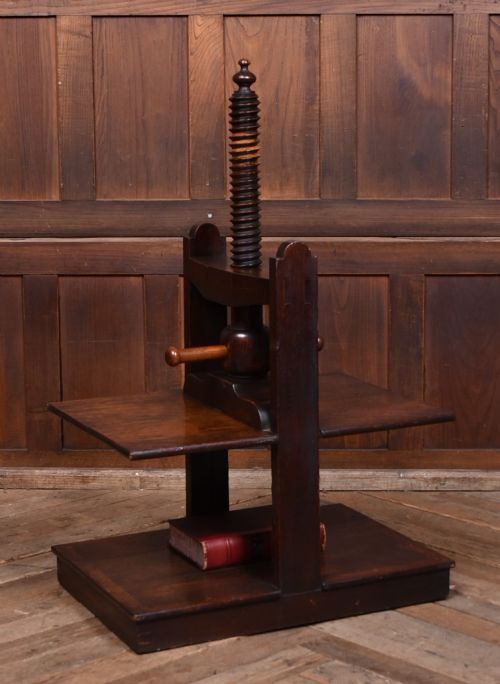


Vintage Book Press
These heavy presses are built to flatten paper or bind leaves, offering a solid mechanical presence that anchors a study.
Vintage Book Press
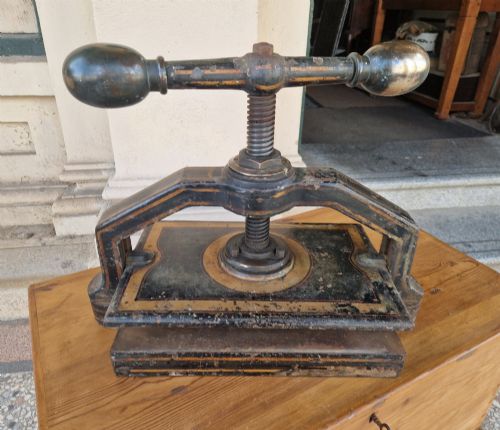
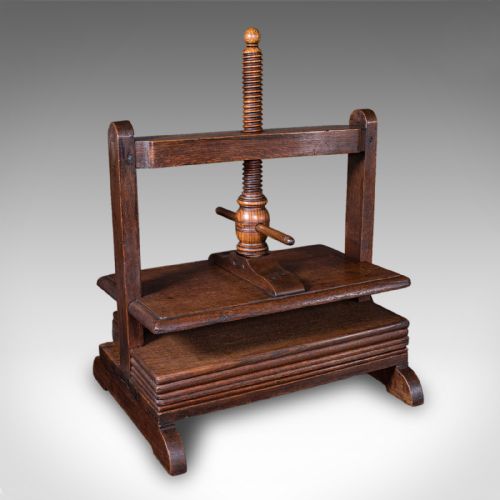
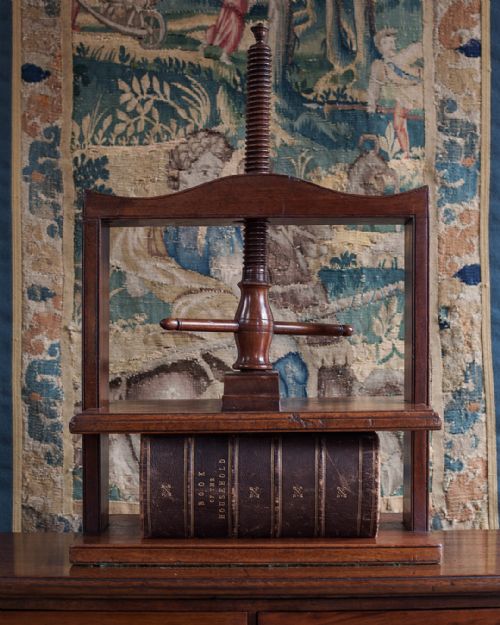
A vintage book press is a heavy apparatus designed to apply steady, powerful pressure to paper and bindings. Buyers seeking this phrase usually find robust timber frames with metal screws or dense all-metal construction intended for bookbinding and pressing flowers.
The versions most commonly met on this page span the Georgian and Victorian eras, alongside mid-nineteenth-century examples. These pieces typically combine oak, elm, or mahogany woodwork with substantial iron or brass working parts.
How they were made
Construction relies on thick timbers like oak, mahogany, and elm for stability under pressure. Wood components are joined with traditional methods to withstand the heavy torque applied by the screw mechanisms.
Metal elements such as cast iron and bronze form the screws, plates, and handles that drive the pressing action. These materials are selected for their sheer weight and structural resilience.
Vintage Book Press Retail Price Guide 2026
Typical asking prices for vintage book press among the pieces listed under this phrase on Sellingantiques today, from the lower quarter to the upper quarter. They describe what is for sale here now, not the wider market.
Materials recorded across the inventory include oak, mahogany, elm, cast iron, and bronze.
What varies in quality
Quality rests in the precision of the screw thread and the integrity of the casting or joinery. A smoother action and tighter alignment between the heavy plates distinguish superior examples from rougher utility pieces.
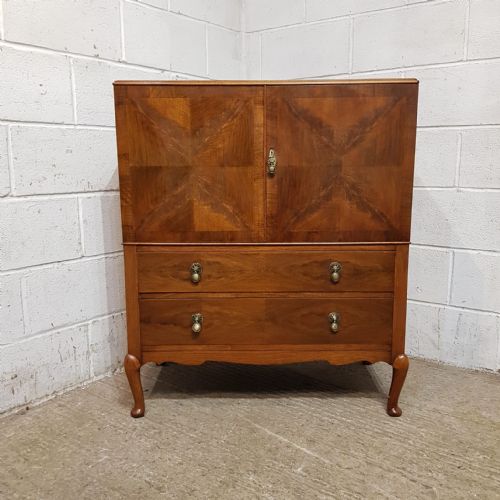
The choice of secondary timbers and decorative finishes also marks the tier of a piece. Finer items incorporate burr walnut or carefully selected mahogany alongside polished bronze fittings, rather than plain functional iron and deal.
The Vintage Book Press Glossary
- Platen
- The flat plate that moves down to compress the material placed within the press. It must remain perfectly parallel to the base to ensure even pressure.
- Cast iron
- A sturdy, heavy alloy poured into moulds to create rigid machine parts and frames. It provides the immense mass needed to resist flexing under load.
- Burr walnut
- A highly figured wood veneer sliced from walnut tree growths, prized for its swirling patterns. It is found on decorative furniture forms associated with these presses.
Vintage Book Press: Frequently Asked Questions
What is a vintage book press used for?
These presses were originally employed by binders and stationers to flatten pages, set glues, and dry newly bound volumes under immense pressure.
Today, collectors use them for book arts, pressing botanical specimens, or simply as sculptural decorative objects in a library.
How do I tell a Georgian press from a Victorian one?
Georgian examples often display simpler, cleaner lines in native hardwoods like oak and mahogany, sometimes with plain table-top bases.
Victorian presses frequently introduce heavier cast iron components, industrial ornamentation, and more robust mechanisms designed for heavier output.
Can I still use a vintage book press?
Most surviving presses remain entirely functional if the screw threads are clean and well-maintained. The heavy cast iron and dense timber are built to handle real mechanical work.
Check that the platens meet evenly across the surface before applying heavy torque to paper or botanical specimens.
Are flower presses different from book presses?
Flower presses and book presses share a similar mechanical principle of applying flat, parallel pressure to delicate items.
Dedicated flower presses often utilise lighter wooden frames, whereas book presses rely on heavy metal screws and solid timber bases to exert much greater force.