





Vintage Bone China Teacup
A vintage bone china teacup brings cabinet elegance to the table, offering tactile porcelain weight and hand-painted detail from eras past.
Vintage Bone China Teacup
A vintage bone china teacup represents a tradition of fine British ceramic manufacturing, spanning single trio sets to complete afternoon tea services. Buyers searching for a vintage bone china teacup encounter forms ranging from late Victorian cabinet pieces to bright Art Deco patterns.
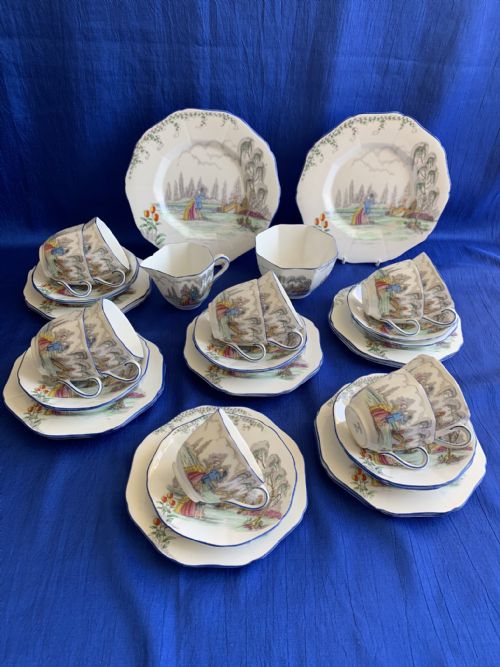
The objects listed under this heading include individual teacups and saucers, trios with matching side plates, and large twenty-one piece tea sets. Many items combine a teacup, saucer and bowl, whilst others form part of extensive cased coffee sets.
Origins stretch from the eighteenth century through Victorian and Edwardian periods into the nineteen-thirties, showing how domestic hospitality evolved. The standard survivor on this page is a nineteenth or early twentieth-century English vessel designed for social gathering.
Materials and production methods
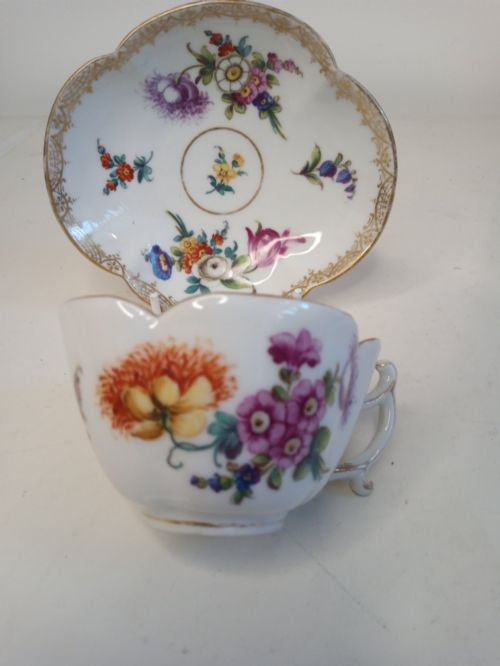
Makers utilised bone china and porcelain as the primary body for these vessels, fired to achieve a translucent and resilient finish. Enamel paints were then applied by hand to decorate the ceramic surface with floral or geometric motifs.
Gilding, gold leaf, and gold gilt add metallic brilliance to rims, handles, and internal borders. Glaze seals the decorated surface, protecting the underlying pigment from daily wear.
Vintage Bone China Teacup Retail Price Guide 2026
Typical asking prices for vintage bone china teacup among the pieces listed under this phrase on Sellingantiques today, from the lower quarter to the upper quarter. They describe what is for sale here now, not the wider market.
Some cups are painted with patterns named after bats, proving that nineteenth-century ceramic decorators found inspiration in unexpected flying mammals.
Distinctions in craftsmanship and design
Quality rests in the precision of the hand-painting and the delicacy of the ceramic body, where finer potting yields thinner walls and greater translucency. Superior examples display crisp brushwork rather than mechanical transfer printing.
The application of gold leaf and gilding marks the distinction between standard commercial output and high-grade studio work. Intricate patterns such as bat wing designs or hand-painted naturalist motifs require advanced skill from the decorator.
Coalport·Royal Worcester·Royal Albert Crown China·Doric China Longton Stafford·Wileman Foley Shelley·Sutherland·Gladstone Potteries
The Vintage Bone China Teacup Glossary
- Bone china
- A type of porcelain incorporating bone ash, producing a strong, milky-white ceramic body. It allows for thinner walls than standard hard-paste porcelain.
- Trio
- A matched set consisting of a teacup, saucer, and matching side plate. This grouping became a staple of British afternoon tea culture.
- Demitasse
- A small cup used for serving strong coffee or espresso. These companions to tea services often feature delicate handles and matched saucers.
- Gilding
- The application of gold leaf or gold paint to ceramic edges and handles. This decorative layer highlights the contours of the vessel.
- Enamel
- Opaque glass-like paint fused to the ceramic body during a secondary firing. It provides vibrant colour to hand-painted floral and abstract patterns.
Vintage Bone China Teacup: Frequently Asked Questions
How do I date a teacup?
Dating relies on maker marks stamped or painted on the underside, combined with stylistic clues from the handle shape and floral motifs. Victorian pieces often display heavier gilding and robust proportions compared to lighter twentieth-century versions.
Changes in registration numbers and factory names provide precise chronological brackets for British ceramics. Comparing the potting style with documented patterns helps narrow the decade of manufacture.
Can I use these cups daily?
Using these vessels requires care due to the presence of delicate hand-painting and gold leaf decoration. Modern dishwashers and harsh detergents will erode the enamel pigments and strip the metallic gilding over time.
Hand washing in lukewarm water with mild soap preserves the integrity of the porcelain. Gentle handling prevents chipping on the thin rims typical of fine bone china.
What is the difference between porcelain and bone china?
Bone china includes calcified animal bone within the clay mixture, which increases strength and creates a warmer, whiter appearance. Traditional porcelain relies on kaolin and petuntse, yielding a different translucency.
British manufacturers favoured bone china for its ability to support thinner, more refined potting without sacrificing structural durability.
Why do some sets include a bowl?
The accompanying bowl in a tea service functioned as a slop basin for discarded tea leaves or dregs. As hosts brewed fresh infusions from a central pot, guests emptied their cups into this vessel.
This practice kept the table tidy and allowed for successive rounds of tea during formal afternoon gatherings.