

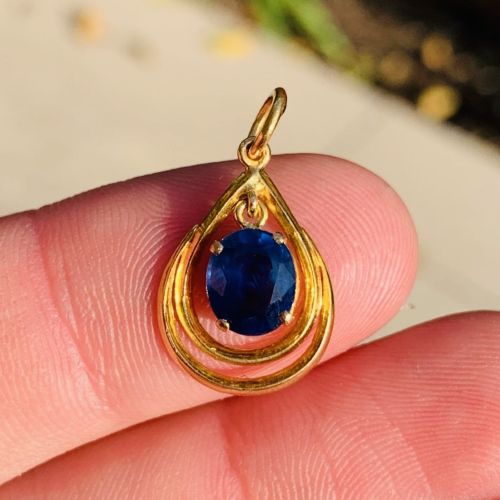
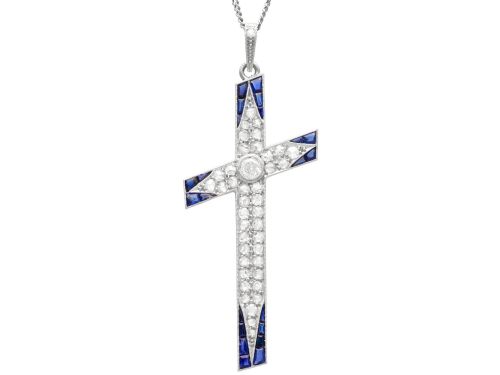
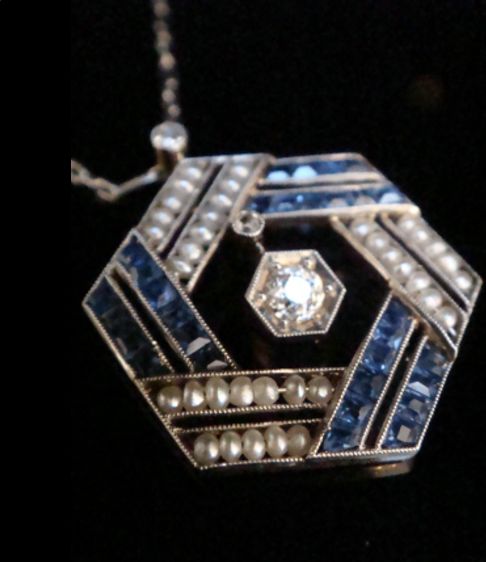
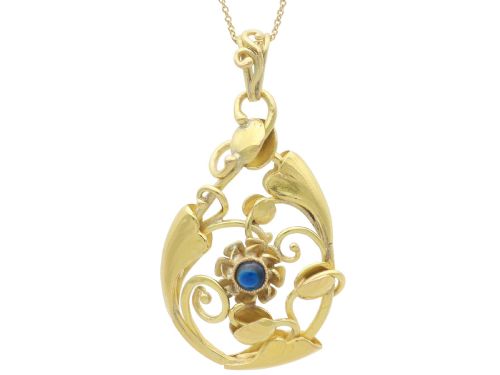


Vintage Blue Sapphire Necklace
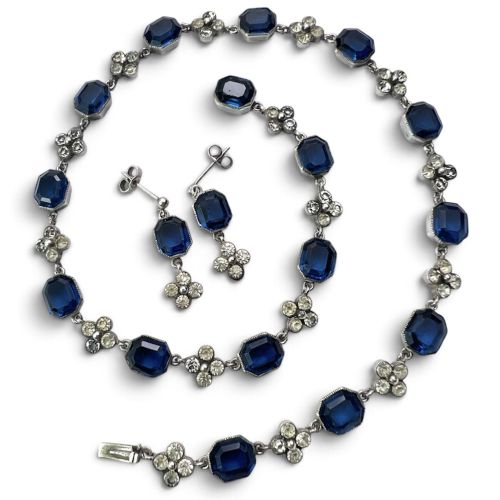
A vintage blue sapphire necklace brings together deep blue stones and precious metals across Edwardian, Art Deco and mid-century designs.
Vintage Blue Sapphire Necklace
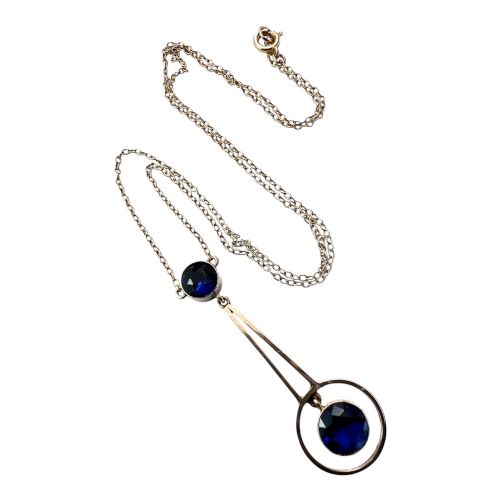
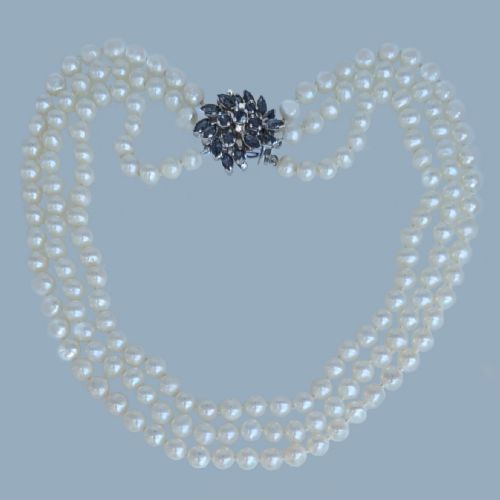
A vintage blue sapphire necklace encompasses pendant designs, drop necklaces and pearl strands secured with gem-set clasps. These pieces span multiple decades, drawing on Edwardian elegance, Art Deco geometry and mid-century styling.
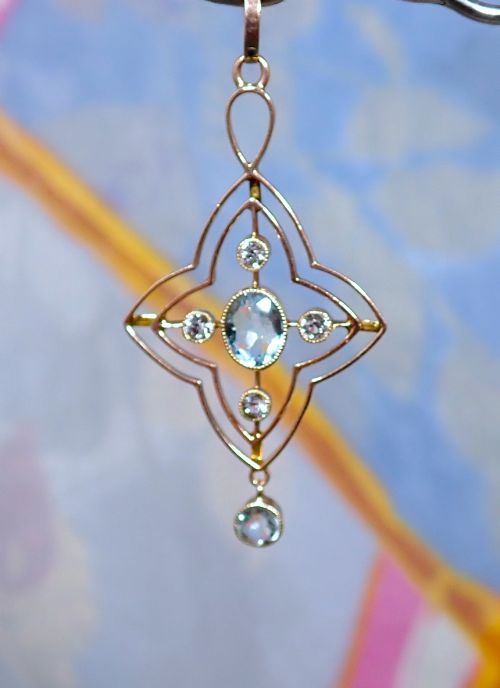
The selections here frequently pair central sapphires with diamonds, pearls or white zircons. Metals range from platinum and 14ct white gold to 9ct and 18ct yellow gold, reflecting the shifting preferences of past makers.
Buyers seeking a vintage blue sapphire necklace will encounter distinct regional stones and cut types, from oval-cut Ceylon gems to cabochons and natural single stones. Each iteration displays the specific aesthetic priorities of its decade of origin.
Materials and construction
Craftsmen utilised platinum, silver and various carats of gold to set natural sapphires alongside diamonds, pearls and paste stones. Metalwork techniques evolved from intricate Edwardian wirework and platinum settings to robust mid-century casting.
Pendants and necklaces incorporate secure claw settings, bezel mounts and cluster arrangements to showcase the central blue stones. Delicate details such as seed pearls, rose-cut diamonds and trombone clasps demonstrate period-specific bench skills.
Vintage Blue Sapphire Necklace Retail Price Guide 2026
Typical asking prices for vintage blue sapphire necklace among the pieces listed under this phrase on Sellingantiques today, from the lower quarter to the upper quarter. They describe what is for sale here now, not the wider market.
Materials span platinum, silver, cultured pearls and gold from 9ct to 18ct.
Evaluating quality and execution
Quality rests upon the stone's saturation, clarity and provenance, particularly when dealing with natural Ceylon sapphires or significant carat weights. Superior examples feature balanced proportions between the central sapphire and surrounding diamond or pearl clusters.
The integrity of the metalwork and the originality of the setting distinguish finer pieces. Expert stone cutting and secure, flush mountings ensure the longevity of these delicate Edwardian and mid-century jewels.
The Vintage Blue Sapphire Necklace Glossary
- Cabochon
- A gemstone shaped and polished with a smooth convex surface rather than faceted. This style highlights the deep tone of the sapphire.
- Negligee pendant
- A pendant style featuring two drops suspended at different lengths from a central connector, popular during the Edwardian era.
- Paste
- Hand-cut lead glass used historically to imitate gemstones. In period pieces, paste is set with the same care as genuine stones.
- Trombone clasp
- A tubular mechanical clasp commonly found on fine antique and Edwardian necklaces and brooches for secure fastening.
Vintage Blue Sapphire Necklace: Frequently Asked Questions
How do I care for a vintage sapphire necklace?
Clean your piece gently using warm water, mild soap and a soft brush, taking care around pearls or seed pearls. Store the necklace flat in a lined box to prevent scratching against other jewellery.
Avoid exposing antique settings to harsh chemicals, ultrasonic cleaners or prolonged direct sunlight. Regular checks by a jeweller will ensure claws and mountings remain secure.
What periods are common for these necklaces?
Pieces frequently date from the Edwardian and Victorian eras through to Art Deco, 1950s and 1960s mid-century designs. Each period brings distinct metal choices, from platinum and yellow gold to white gold.
Early pieces often feature delicate lace-like platinum work, while mid-century designs favour bolder cluster pendants and pearl strands with gemstone clasps.
Are the sapphires usually natural?
Many listings feature natural sapphires, occasionally accompanied by gem reports detailing origin such as Ceylon. Some period pieces also incorporate paste stones as decorative accents.
Examining the listing details will clarify whether the stones are natural gems or alternative materials like paste and white zircon.
What metals were used in these pieces?
Jewellery from these periods utilises platinum, silver and multiple carats of yellow and white gold. Platinum and white gold dominate Edwardian and Art Deco settings.
Victorian and later mid-century items frequently employ 9ct, 14ct, 15ct and 18ct yellow gold to support the sapphire and diamond clusters.