
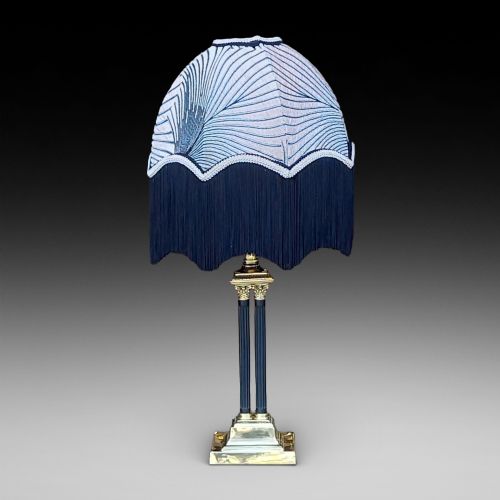
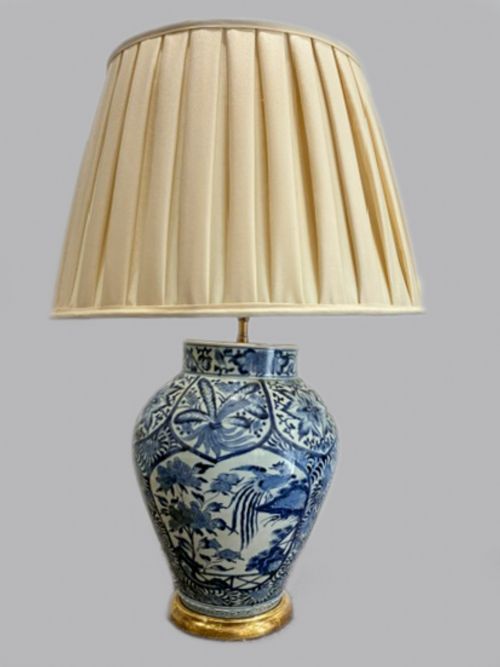
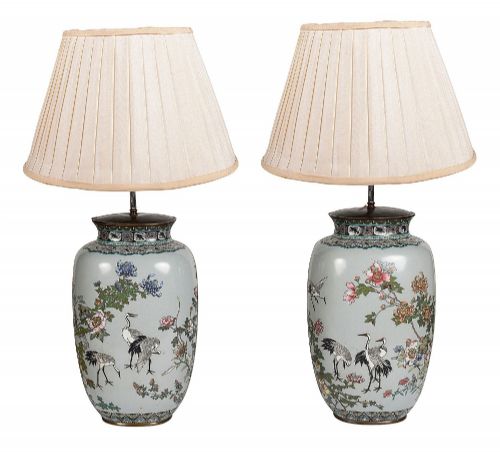
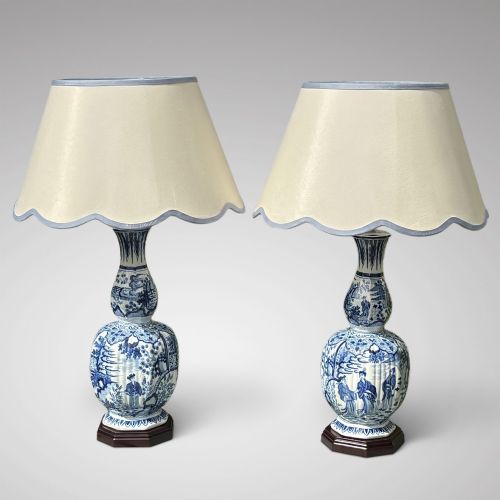

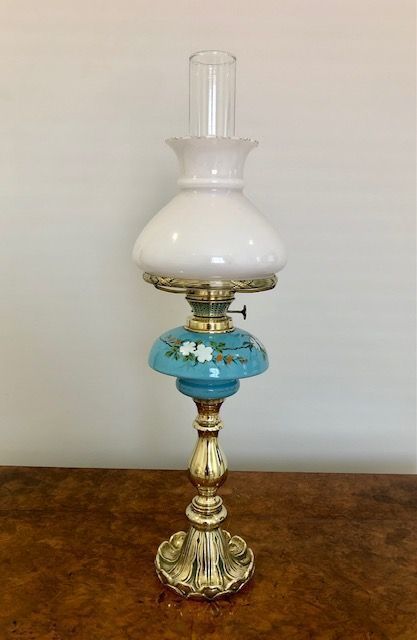


Vintage Blue Light Shade
These vintage blue light shade options bring together brass, porcelain, and glass across centuries of lighting design.
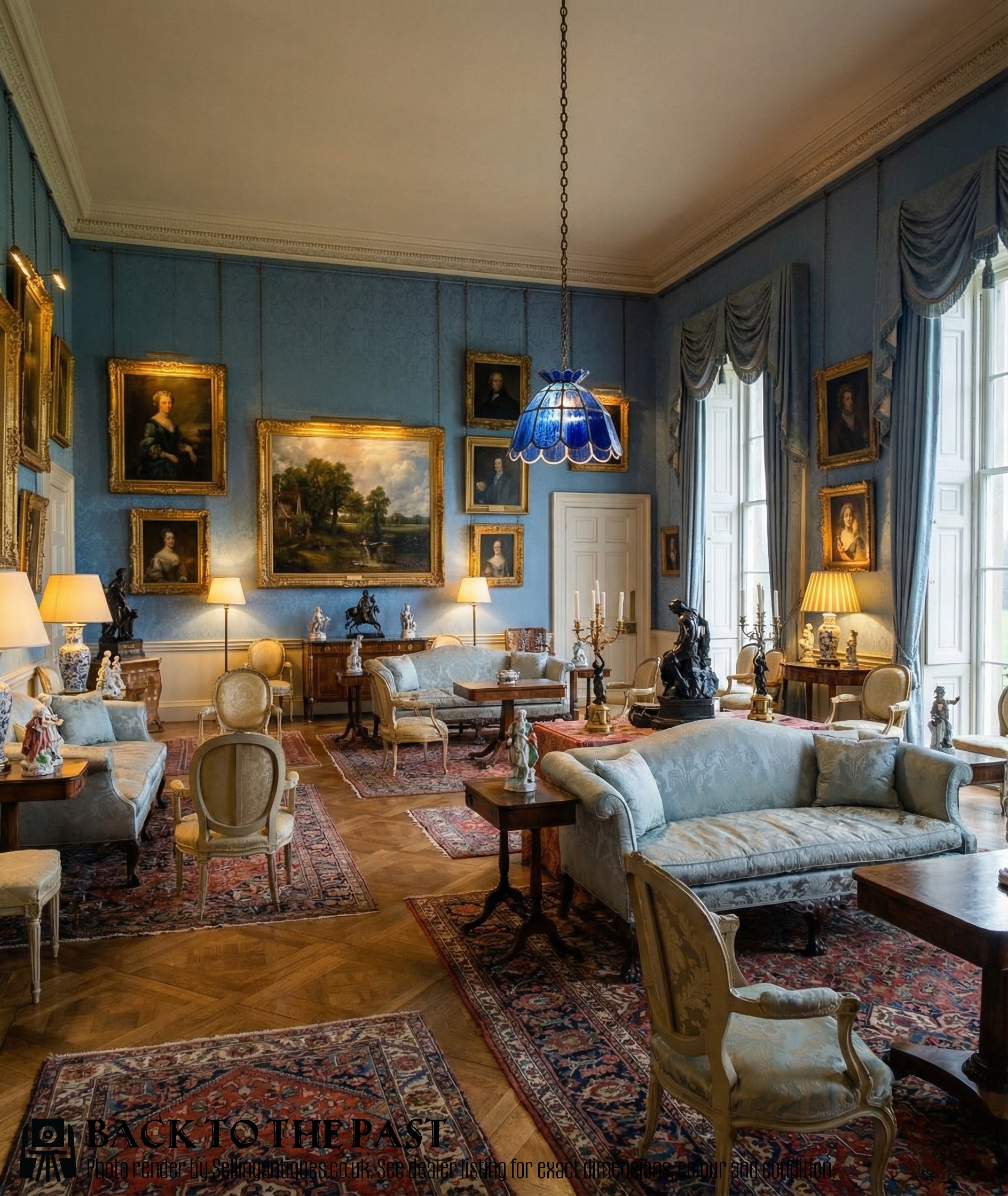
Vintage Blue Light Shade
A vintage blue light shade encompasses various forms of lighting fixtures and converted vessels originating from periods spanning the 17th century to the 1930s. Buyers searching this phrase encounter an assortment of table lamps, oil lamps, ceiling lights, and pendants that utilise blue ceramic, glass, and enamel surfaces.
The selections on this page lean heavily toward Chinese and Japanese blue and white porcelain vases converted into lamps, alongside Victorian oil lamps featuring blue fonts and Edwardian brass fittings. Alongside these, buyers find French art glass, cloisonné enamel, and leaded glass pendant lights representing styles from Art Deco to Arts and Crafts.
How They Were Made
Metalwork forms a structural foundation across many pieces, utilising cast brass, silver plating, and iron paired with ceramic or glass components. Makers combined turned brass columns, detailed oil lamp burners, and weighted bases to support heavier porcelain and glass bodies.
Ceramic and glass elements involve traditional firing, glazing, and enamel techniques. Artisans produced blue and white porcelain, crackleware, and cloisonné enamel work, whilst glassmakers utilised frosted finishes, bead assemblies, and leaded construction to shape the coloured light diffusion.
Listings feature materials spanning brass, fabric, porcelain, glass, silk, wood, ceramic, and metal across multiple centuries.
What Varies in Quality
Quality reveals itself in the crispness of the casting on brass columns and the fidelity of hand-painted blue and white porcelain details. Finer examples display precise joinery, original burners on oil lamps, and intact enamel work without losses to the decorative surface.
The distinction between standard production and superior examples rests on the depth of the materials and the integrity of the conversion. Older ceramic vases adapted into lamps show careful mounting that respects the original vessel, whilst glass and bead components demonstrate clarity and secure assembly.
The Vintage Blue Light Shade Glossary
- Cloisonné
- Enamelwork where thin metal wires are soldered to a metal base to create compartments filled with coloured paste and fired. This technique produces detailed decorative patterns across vase lamps.
- Font
- The oil reservoir portion of an oil lamp, frequently rendered in coloured glass or ceramic. On Victorian models, these sit atop metal bases or columns.
- Plafonnier
- A ceiling-mounted bowl light fixture sitting flush or close to the ceiling surface. Art Deco examples in this category direct light downward through patterned glass.
- Crackware
- Ceramic featuring a network of fine intentional cracks in the glaze finish. This style appears frequently on 19th-century blue and white vase lamps.
- Gimbal
- A pivoted ring mounting that allows a lamp to remain level regardless of movement or ship motion. Naval gimbal lamps utilise this mechanical adaptation.
Vintage Blue Light Shade: Frequently Asked Questions
How are old vases converted into lamps?
Converted vase lamps generally retain their original ceramic or metal bodies from periods like the 18th or 19th century. Technicians drilled the bases or fitted mounts securely to run electrical wiring without damaging the antique vessel integrity.
Buyers find Japanese Imari, Chinese blue and white, and cloisonne pieces adapted this way. The conversion allows traditional decorative objects to function safely as modern table lighting.
What periods do these blue lamps represent?
The lighting options span from the 17th century through to the 1930s Art Deco era. Victorian and Edwardian examples sit alongside earlier Asian ceramics and later 20th-century glass pendants.
Stylistic influences range from French Empire and Arts and Crafts to Chinoiserie and Meiji period Japanese design. Each era contributes distinct manufacturing methods and aesthetic choices to the selection.
How do I identify a Victorian oil lamp?
Victorian oil lamps typically feature a brass or ceramic column supporting a coloured glass font. Many retain burner mechanisms marked by makers of the period, such as Hinks.
These fixtures often pair heavy metal bases with detailed burners designed for paraffin oil. Over time, many underwent conversion to electricity whilst retaining their original silhouettes.
What is cloisonne enamel work?
Cloisonne involves soldering fine metal wires onto a bronze, copper, or brass base to outline decorative motifs. Artisans then fill the resulting cells with vitreous enamel before firing and polishing the surface.
On this page, cloisonne appears primarily on Japanese and Chinese vases adapted into lamp bases. The technique creates rich blue colouration and intricate surface patterns.