
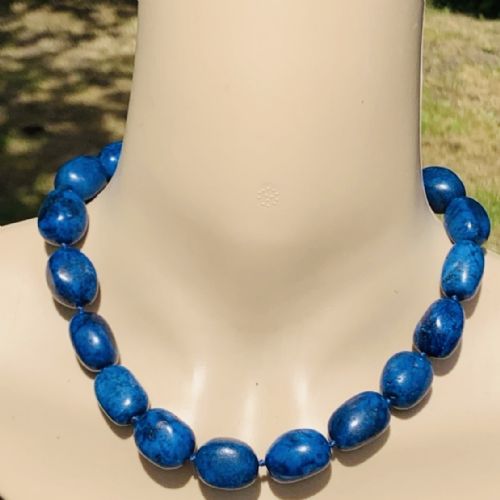
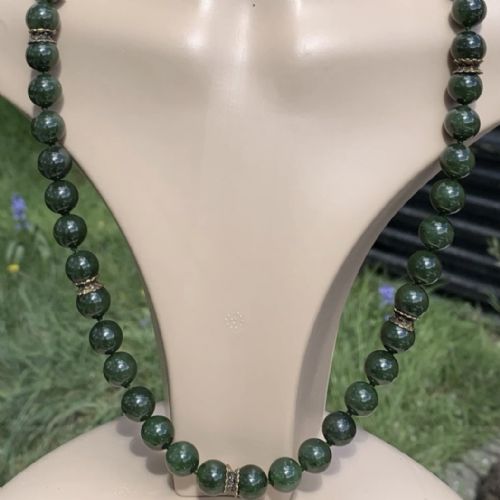


Vintage Beaded Necklace
These vintage beaded necklaces span periods from the Victorian era through the mid-twentieth century, offering distinctive materials from coral to amber.
Vintage Beaded Necklace
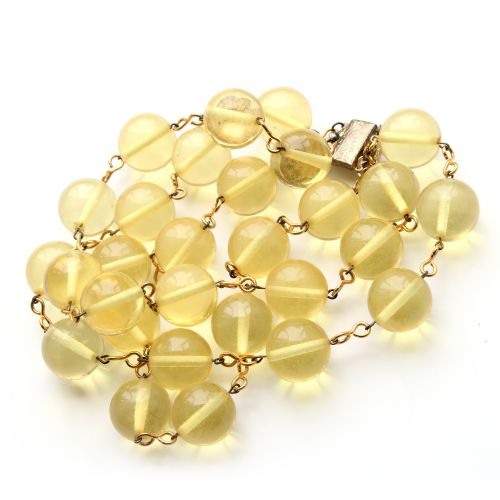
A vintage beaded necklace is a strand of strung organic, mineral or synthetic elements designed to be worn around the neck. The selection available ranges from early nineteenth-century coral and Victorian pieces to Edwardian amber, Art Deco rock crystal, and mid-century modern designs.
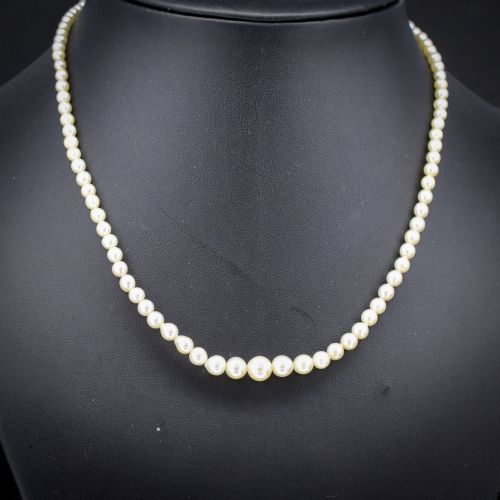
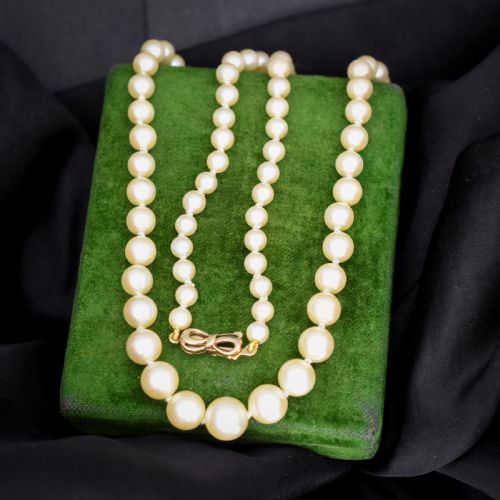
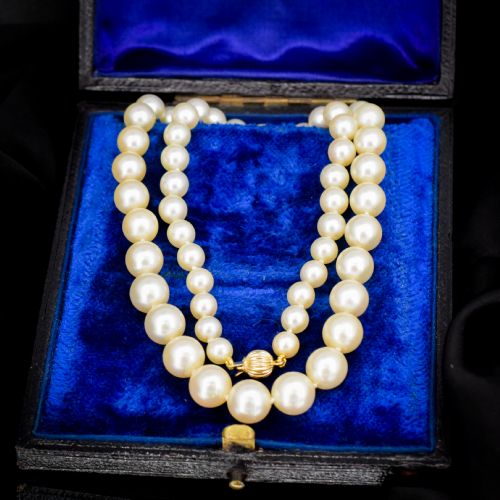
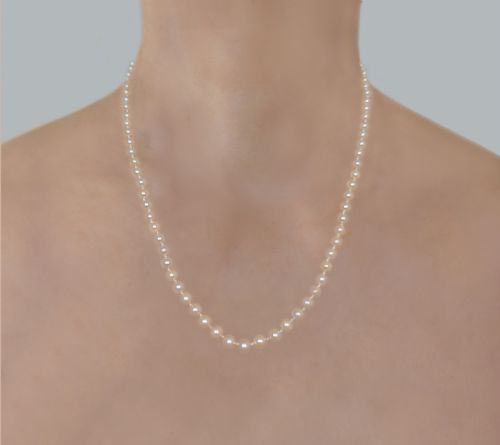
Pearls paired with precious metal clasps form a major part of the selection, alongside long amber strands and coral branches. Shorter graduated pearl strands sit alongside multi-foot lengths of Mediterranean red coral.
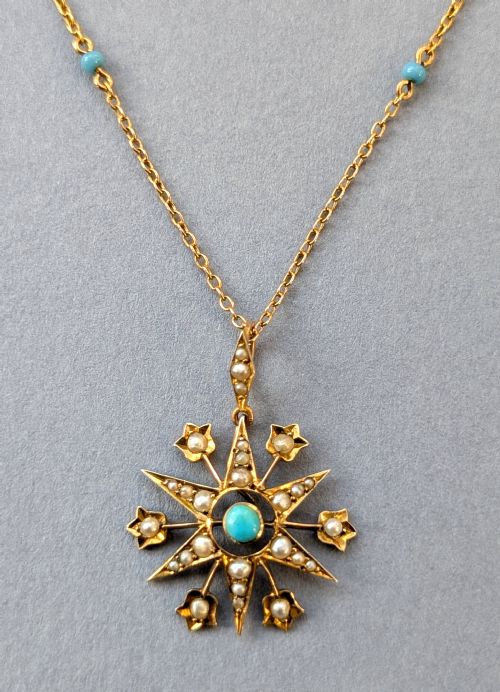
Pieces frequently feature precious metal fastenings in gold, white gold, platinum, and silver, sometimes incorporating diamonds, sapphires, or amethyst. The variety encompasses both delicate twentieth-century fine jewellery and substantial ethnographic or provincial items.
How they were made
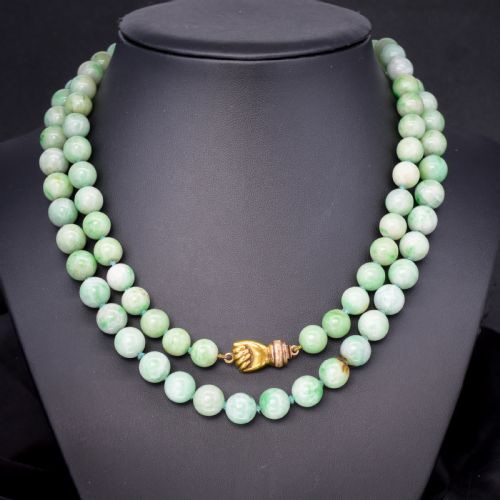
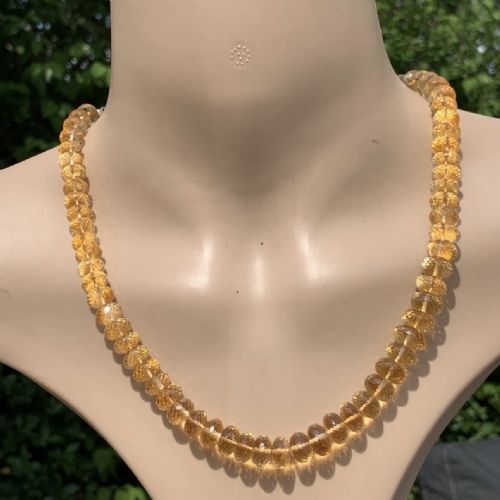
Materials utilised across the range include natural stones and organic matter such as Baltic amber, jade, nephrite, lapis lazuli, citrine, turquoise, and coral. Early synthetics such as Bakelite and lucite also appear alongside glass and chrome elements.
Strands are constructed using traditional stringing and knotting techniques, often finished with bespoke silver, nine-carat or eighteen-carat gold, and platinum clasps. Fastening mechanisms include barrel clasps and figa hand motifs, with certain items showing evidence of recent restringing.
Materials span natural organic substances including Baltic amber, nephrite jade, lapis lazuli, turquoise, and various shades of coral.
What varies in quality
Quality rests upon the grade and uniformity of the beads themselves, whether matched pearls or natural amber and coral pieces. The choice of clasp material, from base metal up to platinum and diamond settings, alters the standing of the piece.
The integrity of the stringing and the cleverness of bead graduation affect how the strand hangs and wears. Selection also depends on the origin and scarcity of the material used, separating standard twentieth-century items from exceptional provincial examples.
Paris House London
The Vintage Beaded Necklace Glossary
- Graduated
- Beads increase steadily in size from the clasp towards the front centre of the necklace. This technique distributes visual weight effectively around the neckline.
- Bakelite
- An early form of synthetic phenol formaldehyde resin developed in the early twentieth century. It appears in various vibrant colours in mid-century items.
- Clasp
- The mechanical fastening device securing the ends of the necklace together. These range from simple silver spring rings to elaborate gold components set with precious stones.
- Strand
- A single continuous line of strung beads or pearls. Necklaces may feature single, double, or triple strands.
- Baltic Amber
- Fossilised tree resin originating from the Baltic region. It is prized for its warm hues and natural inclusions.
Vintage Beaded Necklace: Frequently Asked Questions
How should I store a vintage beaded necklace?
Store each necklace flat in a lined jewellery box to prevent the stringing from stretching or tangling. Keeping amber and organic materials away from direct sunlight preserves their colour.
Avoid hanging long heavy strands by their clasps for extended periods, as this puts unnecessary strain on the thread.
Can these necklaces be shortened?
Adjusting the length of a beaded necklace involves unstringing the components and removing beads from the ends. A professional jeweller can perform this work while retaining the original clasp.
Keep any removed beads safe, as they maintain the original material count and can be useful if future repairs are needed.
How do I tell Bakelite from plastic?
Authentic Bakelite often produces a distinctive chemical sound when two beads are gently tapped together. Testing methods also include applying specific cleaning solutions that react to vintage phenolic resin.
Visual inspection reveals subtle surface changes and internal striations characteristic of early manufacturing processes.
Are these necklaces wearable daily?
Many sturdy amber, stone, and metal-clasped designs suit regular daily wear with sensible care. Items featuring delicate pearls or antique coral require gentler handling and occasional professional restringing.
Protecting any piece from perfumes, cosmetics, and hairsprays helps maintain the condition of both the beads and the metal clasps.