


Yellow Bead Necklace
A yellow bead necklace brings warmth to the neckline, spanning butterscotch amber, lustrous pearl and sunny lucite across several eras.
Yellow Bead Necklace
When you search for a yellow bead necklace, you encounter an array of organic materials, lustrous pearls and synthetic plastics shaped by changing tastes across centuries. These pieces range from substantial amber strands of the nineteenth century through to modernist plastic creations of the mid-twentieth century.
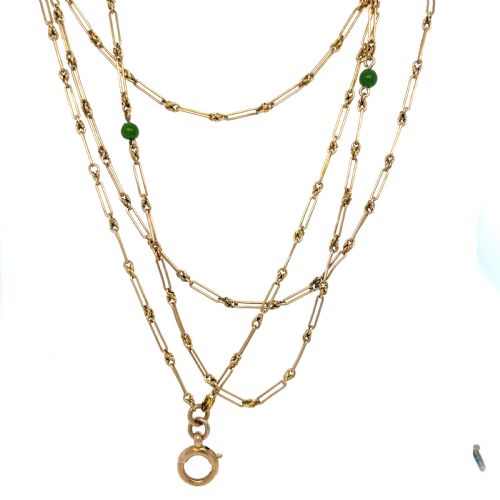
You are most likely to meet pieces spanning the Edwardian era, the nineteen-thirties and the nineteen-fifties on this page. Forms vary from long guard chains designed to loop twice to short, graduated strands resting high on the collarbone.
Makers utilised gold, metal and thread to string or clasp these items, balancing durability with aesthetic appeal. Whether carved from amber or cast in lucite, each design relies on the inherent tone of the material to create its visual impact.
Materials and construction methods
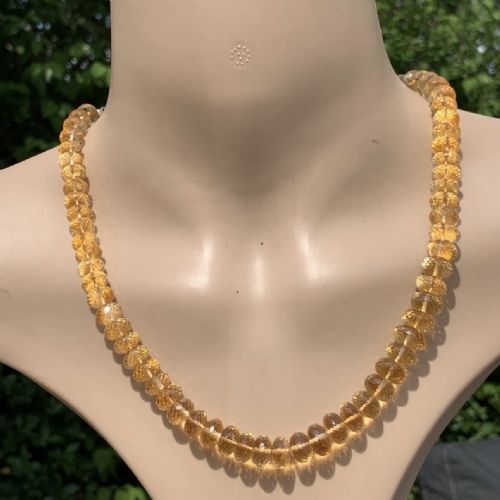
Makers selected Baltic amber, pearl, lucite and citrine, pairing organic resins with precious metals like nine-carat and fifteen-carat yellow gold. Beads were carved, faceted or left in their natural raw state before being strung securely on thread.
Clasps required skilled metalwork, incorporating platinum, gold and silver set with diamonds or emeralds. Longer chains utilised sturdy links designed to support the weight of heavy stones or repeated doubling over clothing.
Distinctions in quality
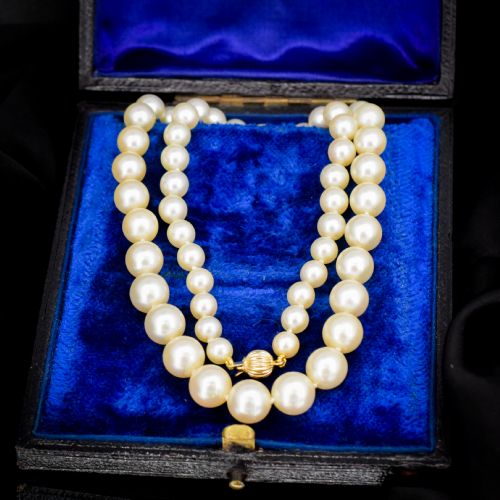
Superior examples show careful graduation of bead sizes, ensuring a smooth visual transition from the back of the neck to the centre front. The uniformity of natural materials like amber or the precision of faceting in gemstones dictates the overall refinement of the piece.
The choice of clasp and stringing material marks the difference between standard production and higher workshop standards. Secure integration of gold or platinum findings ensures the longevity of the necklace during daily wear.
Paris House London
The Yellow Bead Necklace Glossary
- Graduated beads
- Beads increasing progressively in size towards the centre of the strand. This traditional arrangement draws the eye towards the middle of the necklace.
- Guard chain
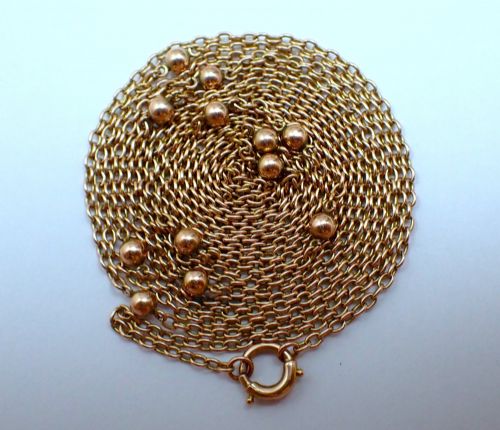
- A long chain traditionally worn around the neck to secure a pocket watch or locket. These pieces often measure over thirty inches and can be doubled.
- Bakelite
- An early synthetic phenol-formaldehyde resin popular in twentieth-century jewellery. It possesses a distinctive weight and warmth when handled.
- Amber
- Fossilised tree resin prized for its translucent warm tones and lightweight feel. Baltic varieties are particularly noted for their butterscotch and egg yolk hues.
- Citrine
- A transparent yellow variety of quartz valued for its bright colour. Faceted cuts enhance the stone's internal brilliance when mounted in a necklace.
Yellow Bead Necklace: Frequently Asked Questions
How do I care for amber beads?
Amber is a relatively soft organic resin that benefits from gentle cleaning with a soft cloth and lukewarm water.
Avoid exposing these pieces to alcohol, perfumes or harsh solvents which can damage the polished surface over time.
What length are longuard chains?
Longuard chains typically measure substantial lengths, often exceeding thirty inches to allow doubling around the neck.
This generous drop reflects their original nineteenth-century purpose as functional holders for watches and other personal items.
How do I identify butterscotch amber?
Butterscotch amber displays an opaque, creamy yellow hue reminiscent of aged honey or caramel.
These pieces feel surprisingly warm to the touch compared to glass or stone alternatives.
Can I wear these necklaces daily?
Sturdier strands featuring secure gold clasps and robust stringing tolerate regular wear with appropriate care.
Delicate pearl necklaces or antique amber with historic thread require more careful handling during daily use.