




Vintage Barograph
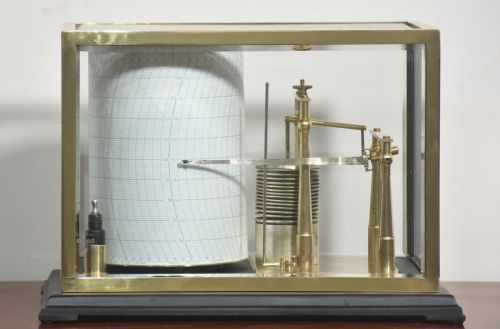
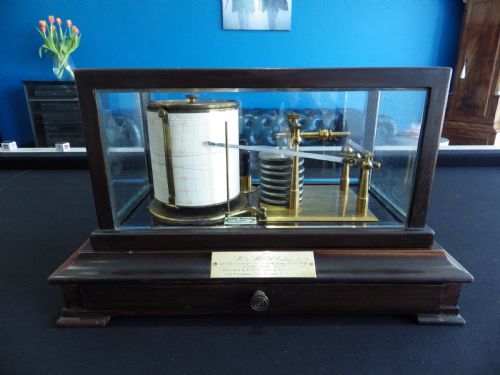
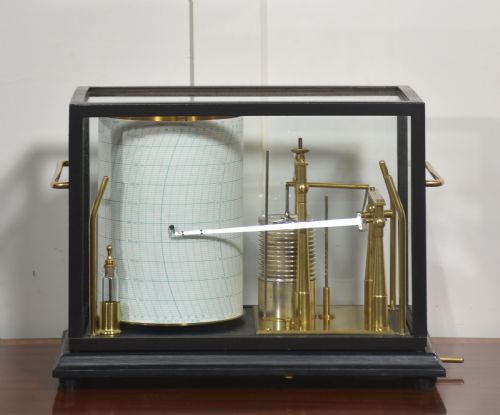
A vintage barograph records atmospheric pressure onto paper charts day after day, combining brass mechanisms with polished timber cabinetry.
Vintage Barograph
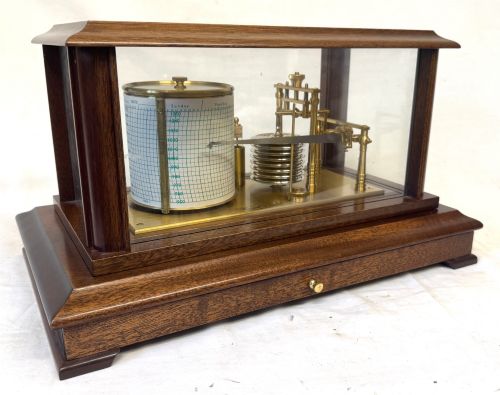
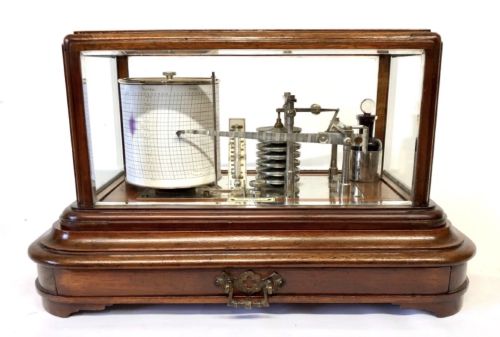
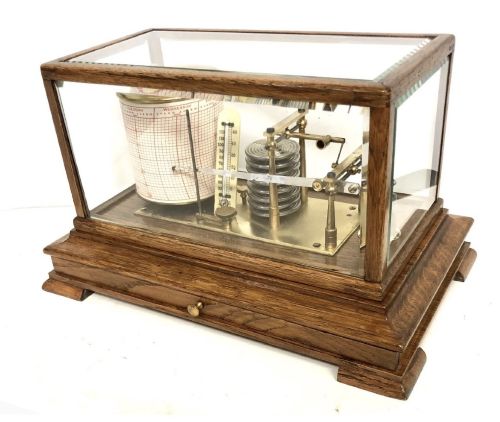
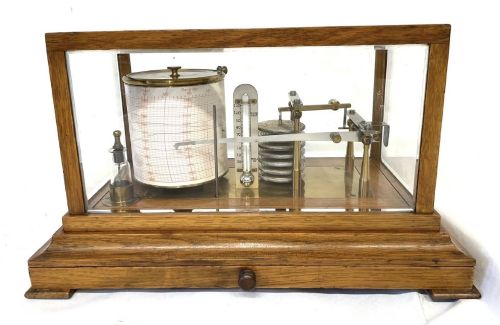
A vintage barograph is a mechanical weather recording instrument designed to track barometric changes over time. When you search for this phrase, you meet brass and glass instruments housed in timber cabinetry from periods spanning the Victorian era through the mid twentieth century. Mahogany and oak five-glass cases dominate the available selections, frequently incorporating chart drawers and thermometers.
These scientific instruments appear in Edwardian, late Victorian, and interwar styles, occasionally bearing the names of prominent makers. The form functions primarily as a desktop weather station, with a rotating drum driven by a clockwork movement to trace atmospheric pressure onto paper charts.
Materials and construction
Makers constructed these instruments using solid timber frames of mahogany, oak, or walnut, fitted with bevelled glass panels to enclose the sensitive mechanism. Brass and steel form the internal barometer linkages and the rotating clockwork drums.
Vintage Barograph Retail Price Guide 2026
Typical asking prices for vintage barograph among the pieces listed under this phrase on Sellingantiques today, from the lower quarter to the upper quarter. They describe what is for sale here now, not the wider market.
Current listings feature weather instruments housed in mahogany, oak, and walnut, spanning Victorian, Edwardian, and mid-twentieth-century periods.
Distinctions in quality
Quality varies according to the precision of the internal clockwork movement and the reputation of the maker supplying the retail establishment. Finer examples display crisp engraving on the brass bedplates, substantial timber housing, and heavy bevelled glass panes.
The presence of original retailer signatures, specialised thermometers, and intact chart drawers distinguishes standard commercial pieces from higher grade scientific instruments.
Russell Norwich·Gaupp And Co·Short And Mason·Negretti And Zambra·Casella London·R Fuess·Harrods Of London·Robson Of Newcastle·Antoine Redier·Jules Richard·Depree And Young Ltd·Dobbie Son And Hutton·Richard Freres
The Vintage Barograph Glossary
- Aneroid
- Operating without liquid. An aneroid barograph uses a stack of corrugated metal vacuum capsules to measure atmospheric pressure.
- Drum
- The rotating brass cylinder. A clockwork mechanism inside the drum turns it once a week beneath the ink pen.
- Chart drawer
- The integrated storage compartment beneath the main glass case. This drawer holds spare paper recording sheets.
Vintage Barograph: Frequently Asked Questions
How does a barograph work?
A stacked pile of metal vacuum chambers expands and contracts as air pressure rises and falls outdoors. This movement transfers through a series of brass levers to a pen arm.
The pen rests against a paper chart secured to a clockwork drum, which rotates slowly to trace a continuous weekly pressure line.
Where should I place my barograph?
Position the instrument on a sturdy, level surface away from direct sunlight, radiators, and draughts to ensure accurate atmospheric readings. Placing it in a main living space allows you to observe daily weather shifts easily.
Avoid high humidity areas that could affect the internal brass mechanism and timber case.
How do I read the paper charts?
Vertical lines on the chart represent time increments, usually spanning seven days from Monday to Monday. Horizontal lines indicate millibars or inches of mercury measuring air pressure.
A rising line suggests improving weather conditions, while a falling line warns of approaching rain or wind.
How do I change the recording chart?
Lift the pen arm gently off the paper using its small raising lever to prevent damaging the delicate nib. Lift the brass drum off its spindle, slide the old paper off, and wrap a fresh chart around the cylinder.
Secure the paper edge, replace the drum, and lower the pen back onto the baseline.