

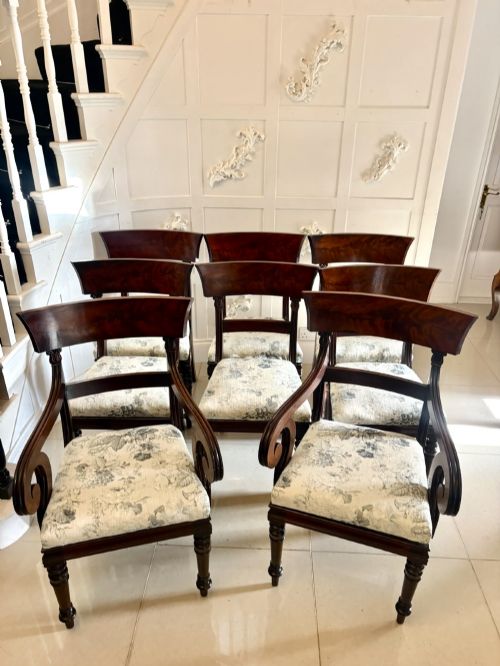
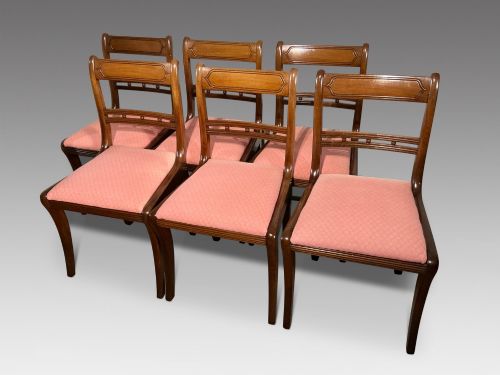
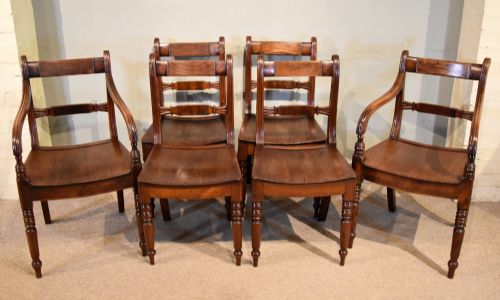
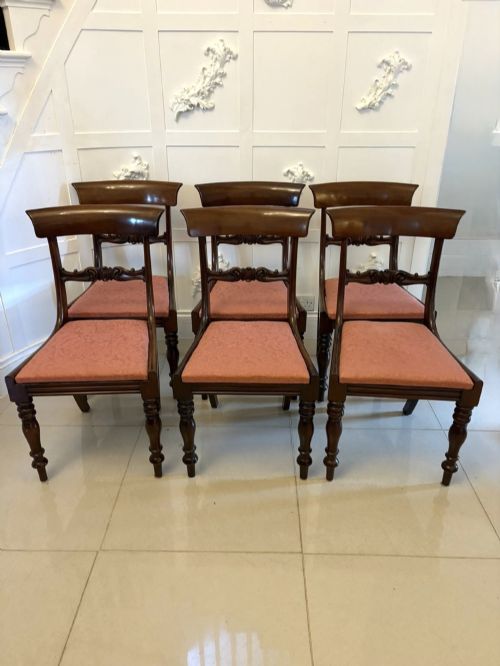


Vintage Bar Back Chair
These vintage bar back chair examples bring sturdy country charm and formal Regency elegance together around any dining table.
Vintage Bar Back Chair
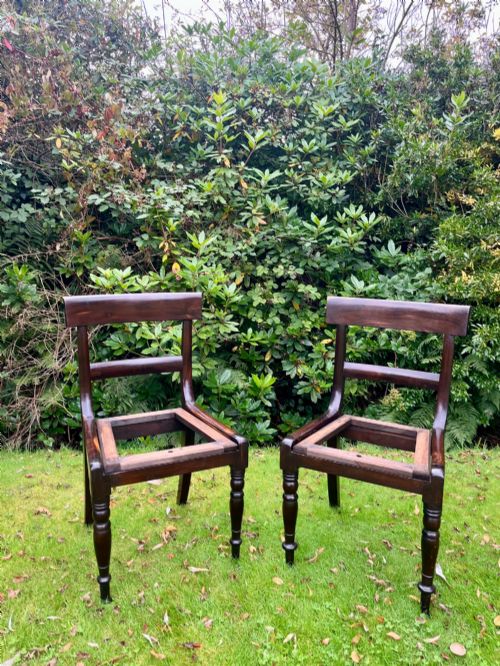
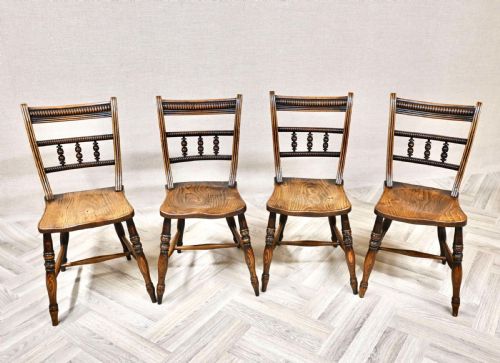
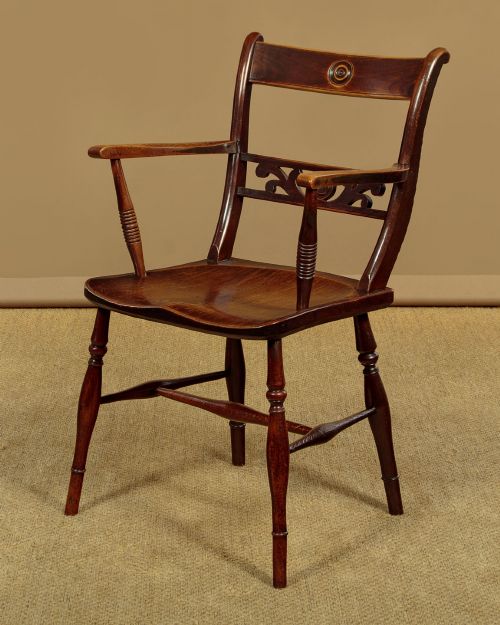
When you search for a vintage bar back chair, you encounter sturdy seating forms spanning Georgian, Regency, and Victorian periods. These pieces include kitchen chairs, dining chairs, armchairs, and carvers designed with distinctive horizontal back rails.
The selections on this page lean heavily towards nineteenth-century mahogany dining sets and kitchen Windsor chairs. You will find single armchairs alongside sets numbering up to twelve pieces, created in styles ranging from English Country to Scottish Regency.
Makers utilised various regional woods, producing everything from formal carved mahogany frames to rustic fruitwood and laburnum country seats. The category encompasses both upholstered overstuffed models and simpler rush seat or timber designs.
How they were made
Cabinet makers and local joiners constructed these chairs using dense hardwoods like mahogany, oak, fruitwood, and laburnum for the primary frames and legs. Softer timbers such as elm and beech often appeared in provincial kitchen and Windsor variations.
Traditional joinery techniques involved turning spindles, steaming wood for curved bar backs, and securing joints with pegs or glue blocks. Upholstered versions incorporated fabric, velvet, or leather pads over stuffing materials to provide extra seating comfort.
Vintage Bar Back Chair Retail Price Guide 2026
Typical asking prices for vintage bar back chair among the pieces listed under this phrase on Sellingantiques today, from the lower quarter to the upper quarter. They describe what is for sale here now, not the wider market.
Some nineteenth-century makers snuck subtle animal hoof feet onto rural rush seat chairs, giving polite dining rooms a touch of woodland whimsy.
What varies in quality
The standard of a vintage bar back chair rests upon the selection of timber and the crispness of its turned or carved details. Finer examples display carefully matched grain patterns in the mahogany and finely proportioned horizontal splats.
Construction rigidity dictates longevity, separating sturdy everyday seating from pieces requiring structural intervention. Original surface patination and uncompromised joinery distinguish superior workshop output from utilitarian production.
The Vintage Bar Back Chair Glossary
- Bar back
- A chair featuring one or more horizontal wooden slats across the backrest, resembling a small bar. This design evolved through the Georgian and Victorian eras for both formal dining and kitchen seating.
- Windsor
- A chair built with a solid wooden seat into which the legs and back spindles are directly inserted. These often feature distinctive bar backs and steam-bent components.
- Carver
- An armchair, usually designed to sit at the head of a dining table or to match a set of single side chairs. They typically incorporate sturdy armrests integrated into the back design.
- Overstuffed
- A seating style where the upholstery covers the wooden frame edges entirely, presenting a padded surface rather than exposed timber rails. This finish appears frequently on nineteenth-century mahogany dining sets.
- Fruitwood
- A generic term used by cabinet makers to describe timber harvested from fruit trees such as pear, apple, or cherry. It yields a dense, tight-grained surface found on country furniture.
Vintage Bar Back Chair: Frequently Asked Questions
How do I style them today?
Mixing a vintage bar back chair with a modern dining table creates a striking contrast that highlights the timber tones. Alternatively, placing an armchair in a hallway or bedroom introduces practical seating with historical character.
Because many examples originate from matched or expanded sets, they blend easily with diverse interior schemes. Their modest footprints suit contemporary spaces just as well as period homes.
Are these chairs comfortable for daily use?
Many models feature shaped wooden seats or overstuffed upholstery designed to support extended sitting during meals. The curved horizontal rails conform naturally to the back.
Adding loose cushions to wooden kitchen variants increases everyday comfort without altering the structure. The robust construction of these nineteenth-century pieces ensures they withstand regular daily demands.
How do I date a wooden chair?
Dating relies on examining the timber species, joinery methods, and stylistic cues such as leg shapes and carving details. Georgian and Regency pieces often display lighter proportions and refined mahogany surfaces.
Later Victorian and 19th-century workshop examples frequently incorporate heavier turnings or alternative woods like beech and elm. Comparing the construction marks to documented period styles helps narrow down the decade of manufacture.