



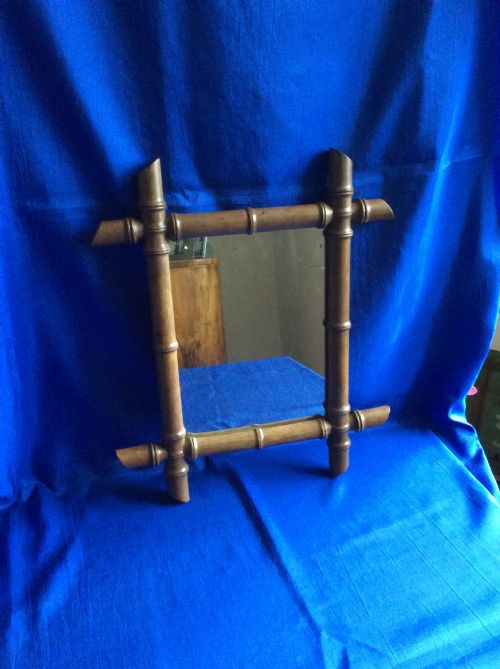


Vintage Bamboo Wall Mirror
A vintage bamboo wall mirror brings warmth and organic texture to an interior, blending natural cane frames with practical glass.
Vintage Bamboo Wall Mirror
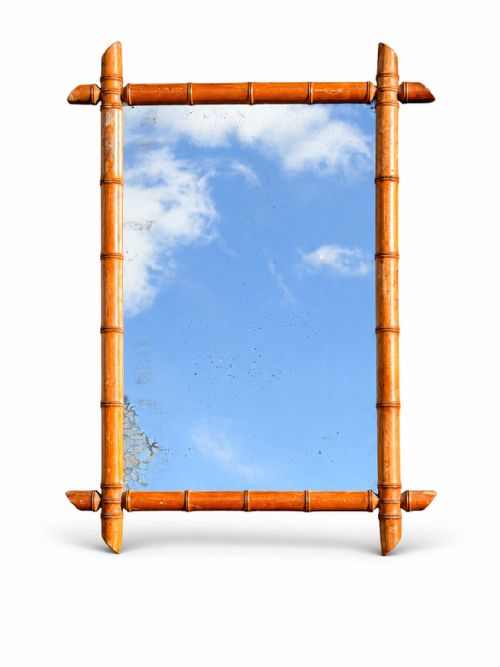
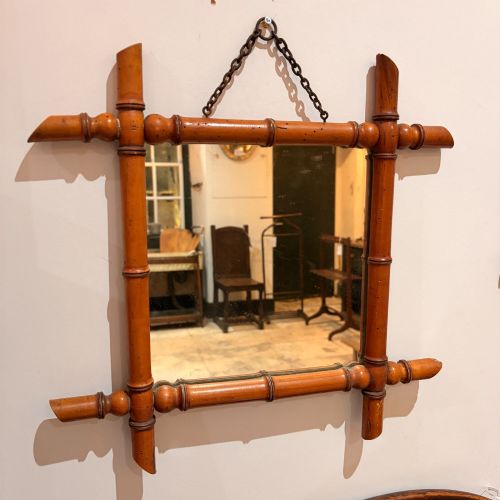
A vintage bamboo wall mirror is an upholstered or wooden frame shaped to resemble natural cane, often designed with hanging capabilities for domestic interiors. These mirrors appear in various regional interpretations, frequently associated with nineteenth-century French and Italian workshop traditions.
The selections available here span the Victorian era, the early twentieth century, and the Art Deco period. Buyers encounter genuine cane structures alongside turned wood finished to mimic the exotic plant material.
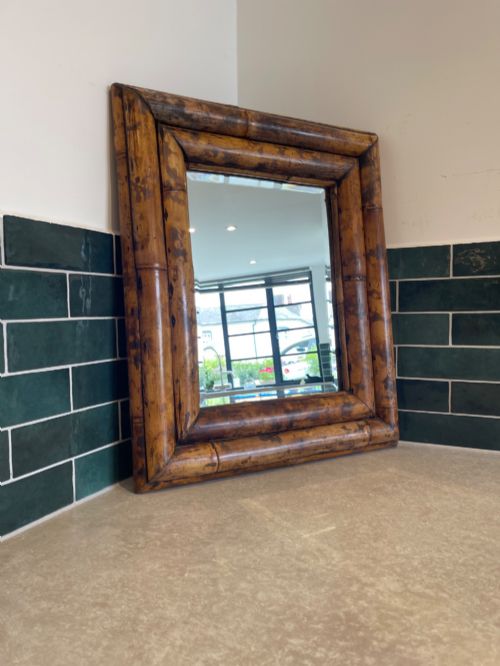
Most examples function primarily as wall-hanging looking glasses, integrating decorative natural motifs into hallways, bedrooms, and reception rooms. Their forms range from small, intimate hangings to heavy, architectural formats.
How they were made
Construction relies heavily on natural bamboo poles or turned beech and timber carved meticulously to simulate segmented cane joints. Artisans steamed and bent these organic materials around wooden carcases to form sturdy circular, rectangular, or arched frames.
Mirrors feature bevelled or flat glass plates secured within the wooden or cane armature, occasionally backed with panelled timber boards. Gilt highlights, painted finishes, and metal structural brackets frequently supplement the primary organic framework.
Vintage Bamboo Wall Mirror Retail Price Guide 2026
Typical asking prices for vintage bamboo wall mirror among the pieces listed under this phrase on Sellingantiques today, from the lower quarter to the upper quarter. They describe what is for sale here now, not the wider market.
Some nineteenth-century makers went to great lengths, meticulously painting individual wooden knots so convincingly that guests reportedly tried to hang coats on them.
What varies in quality
Quality rests on the integrity of the frame construction and the precision of the faux bamboo carving where natural cane is absent. Superior examples display crisp joint nodes, tight mitred corners, and substantial timber weights rather than flimsy veneer.
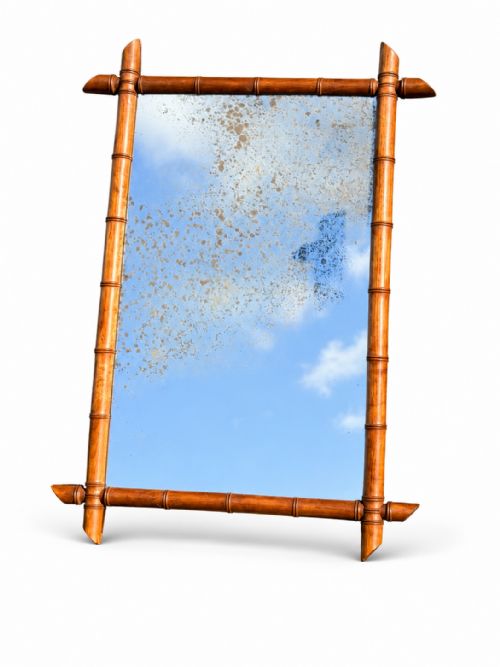
The clarity and originality of the mirror glass heavily influence the piece, alongside the preservation of any original gilt or painted surface treatments. Finer frames exhibit deliberate architectural scaling and balanced proportions rather than hasty assembly.
The Vintage Bamboo Wall Mirror Glossary
- Faux bamboo
- Timber, typically beech, carved and painted to replicate the segmented stalks of natural bamboo. This technique gained immense popularity during the nineteenth-century Aesthetic Movement.
- Aesthetic Movement
- A late nineteenth-century design style that emphasised visual beauty over narrative content, drawing heavily on Japanese art and natural forms. Objects from this period often celebrate asymmetry and organic motifs.
- Bevelled glass
- Mirror glass with edges cut and polished to an angled slope, catching light distinctively. This traditional finish indicates a higher grade of manufacture.
- Gilt
- A thin layer of gold leaf or metallic powder applied to a surface to simulate solid gold. Italian workshops frequently utilised this finish on decorative frames.
Vintage Bamboo Wall Mirror: Frequently Asked Questions
Are these mirrors made of real bamboo?
Many pieces utilise genuine bamboo stalks, while others employ beech or timber carved and painted to mimic the plant. Both methods were common during the Victorian and Art Deco periods.
Close inspection of the joints reveals whether the material is natural cane or turned wood.
How do I clean an antique mirror glass?
Clean the glass using a soft cloth and a mild, ammonia-free glass cleaner sprayed onto the cloth rather than directly onto the surface. This prevents liquid from seeping behind the plate.
Avoid harsh chemical solvents that might damage the surrounding wooden or cane frame.
What rooms suit a vintage bamboo mirror?
These mirrors add texture and historical character to hallways, bedrooms, and living spaces, pairing well with botanical prints and neutral walls. Their organic shapes soften rigid architectural lines.
Smaller formats fit comfortably above mantelpieces or washstands, while larger heavy pieces anchor an entire wall.