






Vintage Bakhtiar Carpet
A vintage bakhtiar carpet brings a robust tribal design and rich wool texture directly to the floor.
Vintage Bakhtiar Carpet
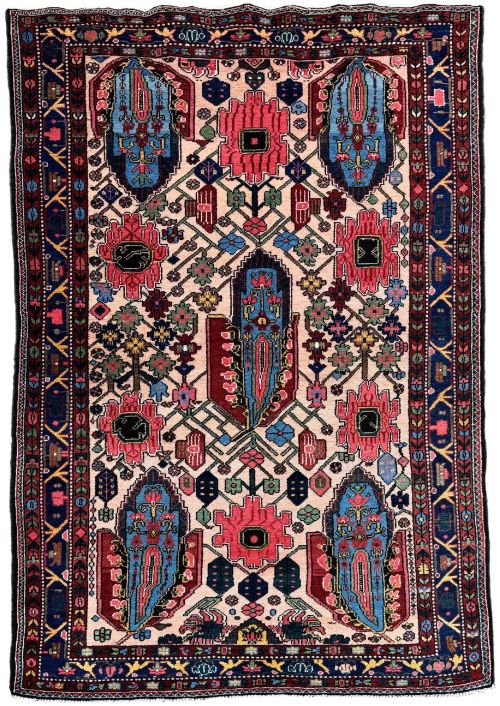
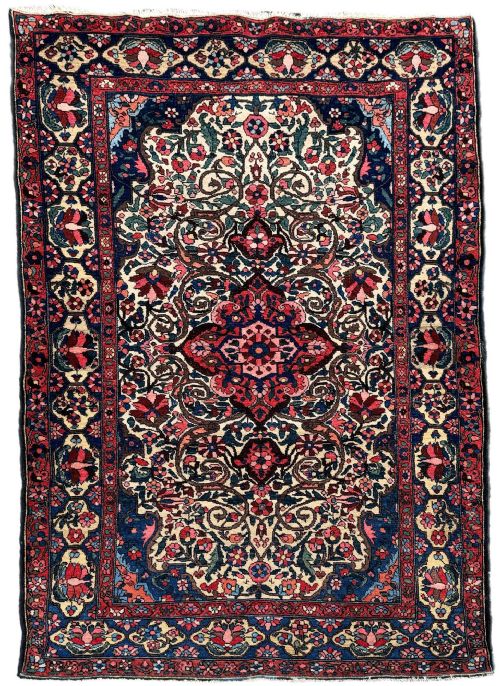
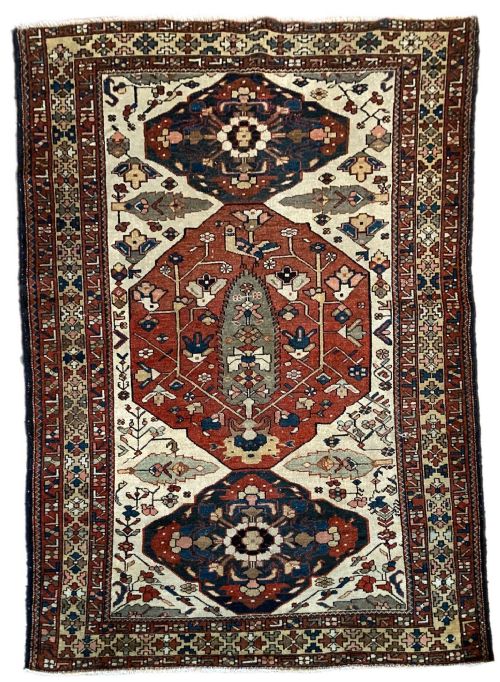
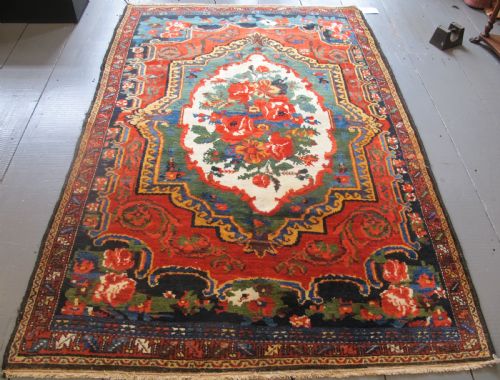
A vintage bakhtiar carpet represents a distinct tradition of Persian weaving, typically seen in room-sized carpets and smaller area rugs. These pieces originate from the Bakhtiar region, spanning periods from the late nineteenth century into the early decades of the twentieth century. Buyers seeking this phrase encounter traditional Persian designs that reflect nomadic and village roots.
The selection on this page centres on pieces dated across distinct decades such as 1890, 1900, 1910, and 1920. The predominant forms appearing here are rugs and carpets, categorised broadly as Persian tribal work. Each example demonstrates the characteristic layout associated with these traditional Persian workshops.
How they were made
The physical structure relies on natural textile materials, combining wool pile with a cotton foundation. Weavers knotted the wool tightly by hand to produce a dense, hard-wearing surface capable of enduring heavy daily use. This combination of materials provides both structural stability and a characteristic tactile weight.
Traditional Persian techniques dictate the construction of each vintage bakhtiar carpet, ensuring the pile remains secure within the cotton warps and wefts. The resulting fabric holds its shape firmly across the floor while maintaining the flexibility inherent in hand-knotted tribal textiles.
Vintage Bakhtiar Carpet Retail Price Guide 2026
Typical asking prices for vintage bakhtiar carpet among the pieces listed under this phrase on Sellingantiques today, from the lower quarter to the upper quarter. They describe what is for sale here now, not the wider market.
Every piece recorded on this page relies entirely on a combination of wool and cotton materials.
What varies in quality
Quality in a vintage bakhtiar carpet reveals itself in the fineness of the knotting and the crispness of the traditional Persian design execution. Denser knotting allows intricate patterns to render with greater clarity across the wool surface. The handling of the wool pile also dictates the resilience and tactile depth of the finished rug.
The integrity of the cotton foundation and the uniformity of the weave distinguish finer examples from standard production. A well-constructed rug maintains straight edges and a flat lay, reflecting the skill of the weaver in managing tension throughout the creation process.
The Vintage Bakhtiar Carpet Glossary
- Pile
- The upright yarn loops that form the soft upper surface of the carpet. This layer bears the direct friction of footsteps.
- Warp
- The foundational threads running lengthwise through the loom. These support the structural tension of the entire rug.
- Weft
- The horizontal threads interlaced across the warp yarns. They lock the rows of wool knots firmly into place.
- Knot
- The individual loops of wool tied around the warp threads. The density of these ties defines the texture.
Vintage Bakhtiar Carpet: Frequently Asked Questions
Where should I place a vintage bakhtiar carpet?
These rugs suit high-traffic living areas and studies where their robust wool construction handles daily movement.
Their traditional Persian patterns anchor room layouts and complement both period and contemporary interior surroundings.
How do I care for a wool carpet?
Regular gentle vacuuming without a rotating brush roll keeps dust from settling deep into the wool pile.
Professional cleaning tailored for antique textiles preserves the natural lanolin and structural integrity of the fibres.
What defines Persian tribal rugs?
Persian tribal rugs are hand-knotted by nomadic or village weavers working within specific regional traditions.
They utilise local materials and geometric or stylised floral motifs passed down through generations of makers.
How do I determine the age of a rug?
Dating relies on stylistic markers, material analysis, and structural characteristics typical of specific manufacturing eras.
Records show examples originating from periods spanning the late nineteenth century through the nineteen-twenties.