





Vintage Arts and Crafts Box
A vintage arts and crafts box brings hand-beaten metal and honest timber together to hold your letters, jewellery and fireside fuel.
Vintage Arts and Crafts Box
When you search for a vintage arts and crafts box, you encounter small desk accessories alongside large fireside containers, all sharing a distinct hand-worked ethos. The pieces span periods from the late nineteenth century through to the nineteen-thirties, with a heavy concentration originating around nineteen hundred.
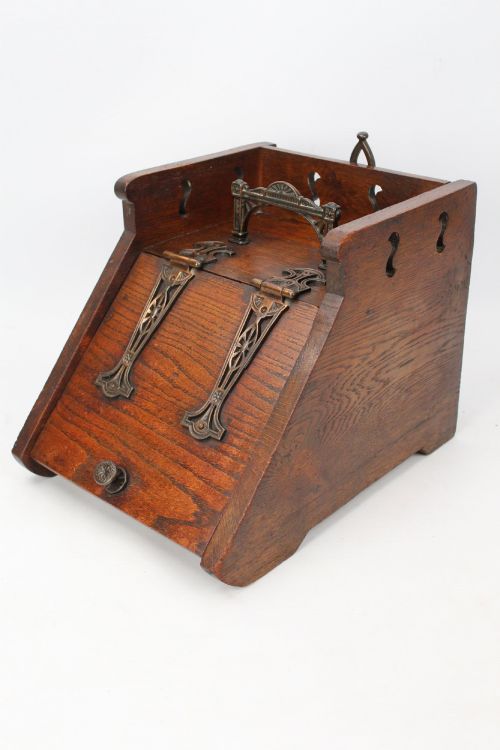
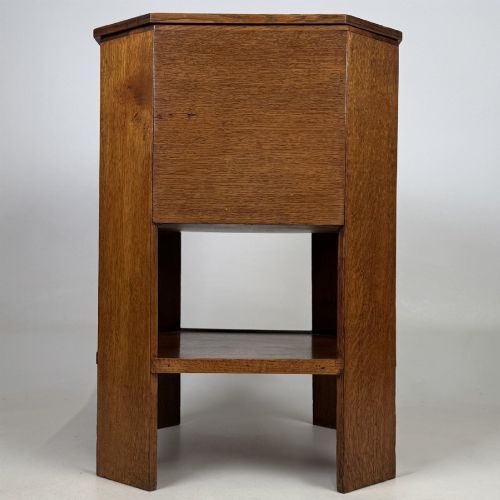
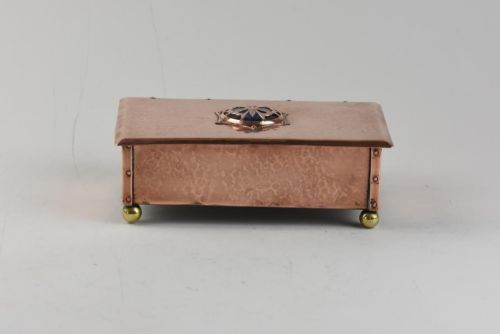
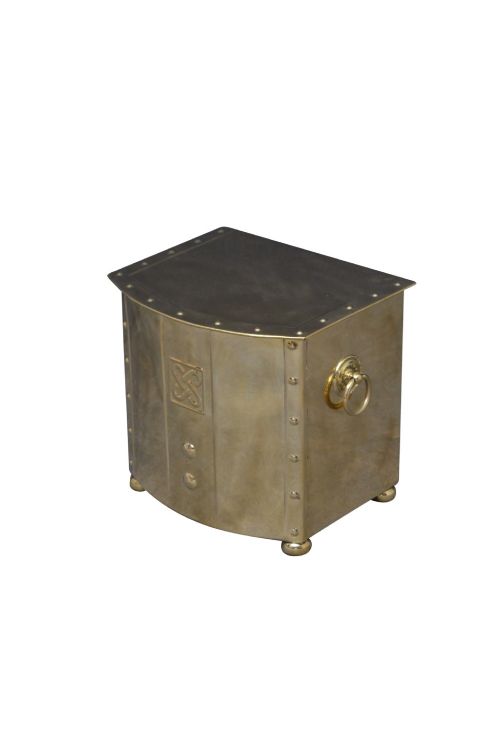
You are most likely to meet oak and copper examples on this page, reflecting the movement's preference for sturdy native timbers and expressive metalwork. Forms range from trinket and jewellery receptacles to heavy coal boxes, purdoniums and stationery cabinets.
Makers and designers embraced various stylistic crossovers, resulting in items that blend arts and crafts principles with art nouveau curves, maritime folk art, and early twentieth-century industrial aesthetics.
How they were made
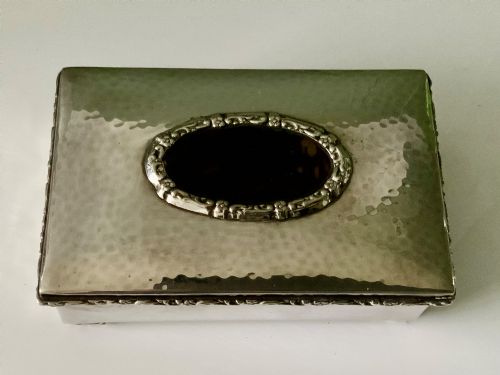
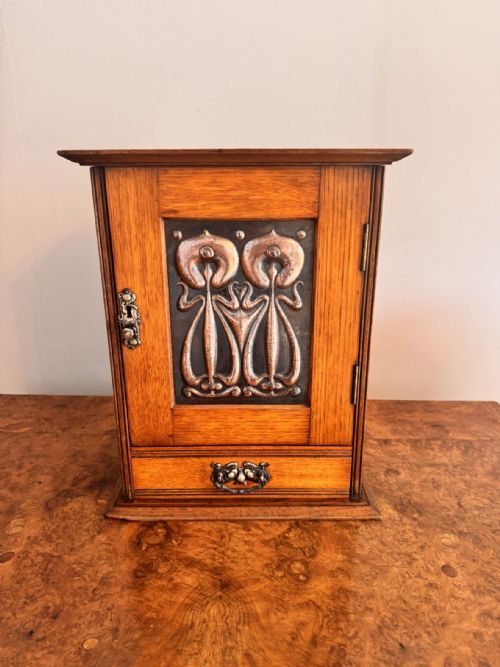
Craftsmen utilised solid oak, often left in its natural golden tone or limed, combined with sheet copper, brass, and pewter panels secured by visible hand-beaten rivets. Metal elements frequently display repousse work, where designs are hammered from the reverse to create raised surface patterns.
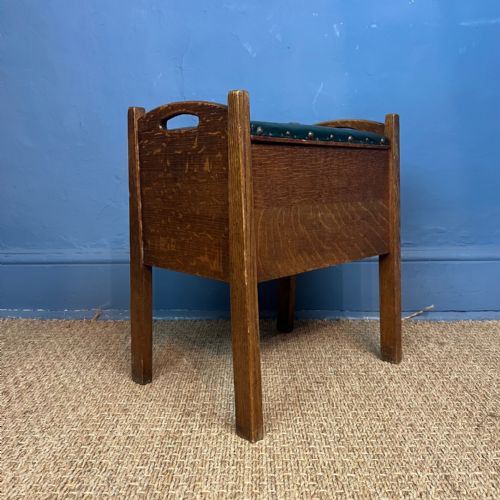
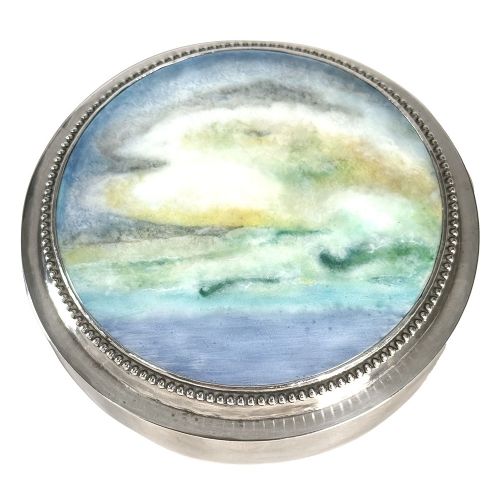
Many boxes incorporate decorative enamel cabochons, glass inserts, or leatherette coverings, showing a reliance on tactile mixed media. Construction relies on traditional joinery techniques suited to sturdy utility, ensuring the timber and metal components withstand daily use.
Vintage Arts and Crafts Box Retail Price Guide 2026
Typical asking prices for vintage arts and crafts box among the pieces listed under this phrase on Sellingantiques today, from the lower quarter to the upper quarter. They describe what is for sale here now, not the wider market.
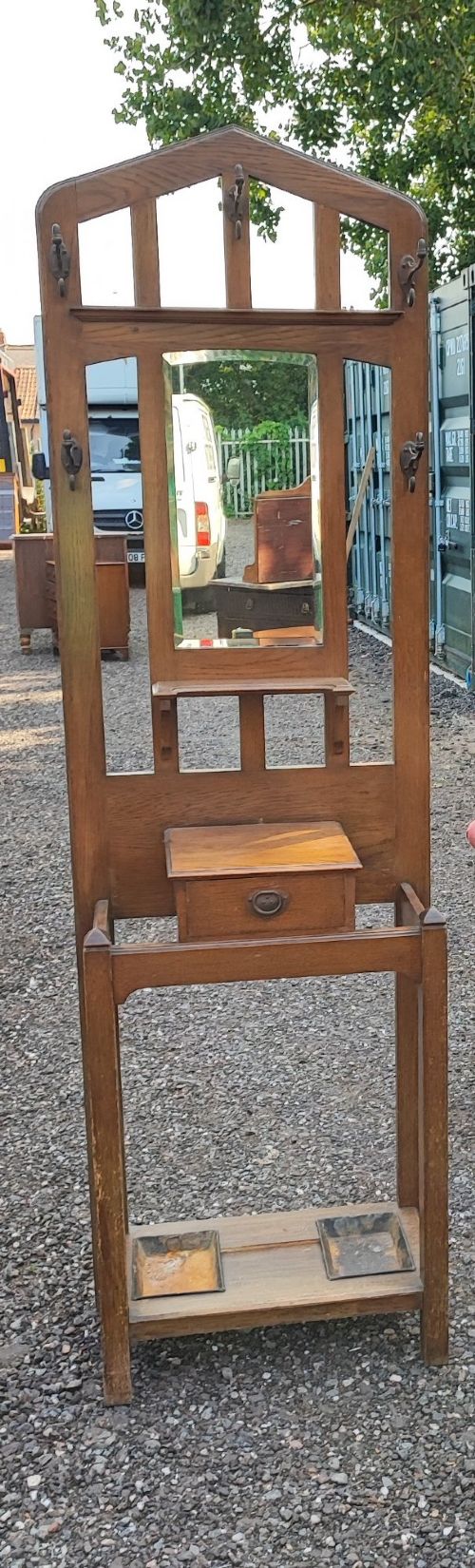
Object forms range from small jewellery caskets and stamp boxes to heavy fireside coal bins and hall stands.
What varies in quality
The distinction between standard utility items and superior pieces rests largely on the depth and execution of the hand-craftsmanship. Pieces bearing attribution to recognised guilds or prominent retailers exhibit finer repousse detailing and superior enamel work.
Material thickness and the integrity of the original patination also dictate quality. Heavy gauge copper, intact patinas, and well-preserved timber indicate higher workshop standards, whereas thinner sheet metals and crude joinery place an item lower in the range.
Guild of Handicrafts·Liberty and Co·Artificer's Guild·Heals
The Vintage Arts and Crafts Box Glossary
- Repousse
- A metalworking technique where the artisan hammers a design from the reverse side to form a raised relief on the front. This process gives copper and pewter panels their characteristic textured depth.
- Purdonium
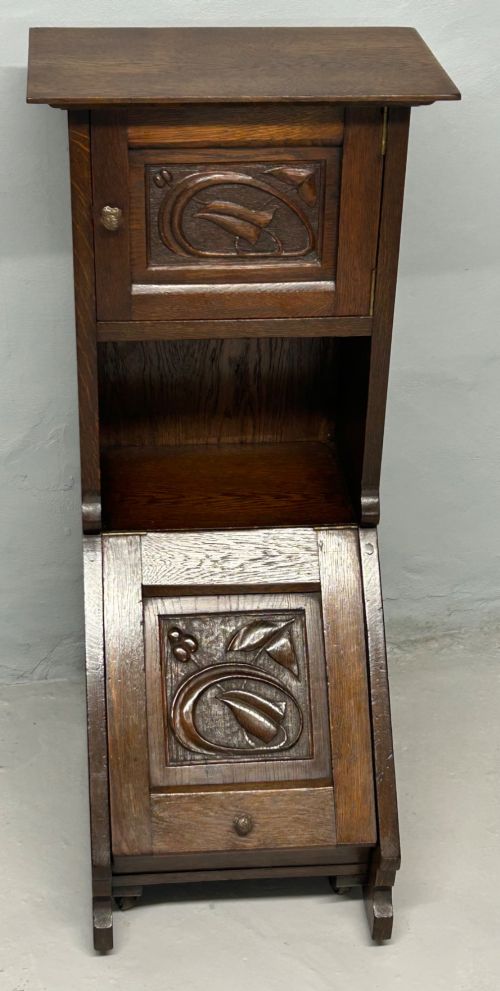
- A specialised household cabinet designed to store coal near a fireplace, typically featuring a sloping front and an internal metal liner. They often incorporate decorative brass or copper mountings.
- Cabochon
- A polished, convex gem or enamel insert lacking facets, frequently mounted centrally on metal box lids. They provide a vibrant splash of colour against hammered surfaces.
- Coffer
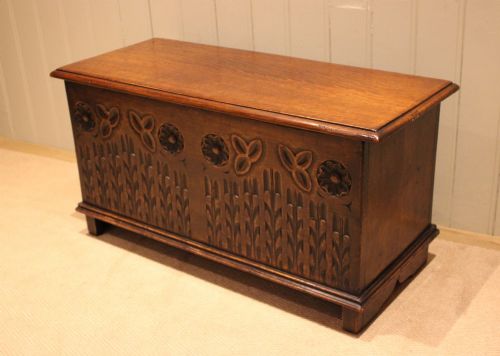
- A heavy wooden chest traditionally used for storage, constructed with panelled sides. Arts and crafts examples often utilise plain oak with exposed hinges.
- Pewter
- An alloy of tin mixed with copper and antimony, utilised for box cladding and decorative panels. It accepts hand-beaten designs well and retains a soft, dull metallic lustre.
Vintage Arts and Crafts Box: Frequently Asked Questions
What is an arts and crafts box?
An arts and crafts box is a decorative yet functional container made during the late nineteenth or early twentieth century, characterised by visible hand craftsmanship and natural materials.
These pieces emphasise honest construction, often utilising solid oak combined with hand-beaten copper, brass, or pewter panels.
How do I use a purdonium?
A purdonium is designed to hold household coal next to a fireplace, functioning as a tidy alternative to an open bucket.
Inside the wooden cabinet sits a metal liner that lifts out for refilling, keeping coal dust contained away from your living space.
Where should I place a desk box?
A desktop stationery box or letter rack suits a study, hallway table, or living room surface where small items tend to accumulate.
Use them to corral letters, stamps, and everyday trinkets while letting the patinated metalwork catch the light.
How can I date an oak box?
Dating relies on examining the construction methods, hardware styles, and stylistic markers such as art nouveau curves or simple geometric arts and crafts panels.
Pieces from the late Victorian period generally feature heavier timber framing, while nineteen-thirties examples often display lighter finishes like limed oak.