


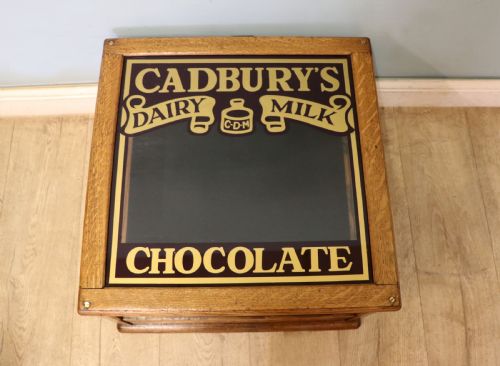


Vintage Advertising Box
These vintage advertising boxes bring the mercantile history of the shop floor straight into your home.
Vintage Advertising Box
A vintage advertising box serves as a functional container or countertop display originally utilised by merchants and traders to promote commercial goods. The pieces appearing here encompass display cabinets, storage crates, desktop cabinets, haberdashery cabinets, trunks and coffers, novelty tins, novelty biscuit tins, and apothecary boxes.
The selections you encounter span the Victorian, Edwardian, early twentieth century, and nineteen-thirties interwar commercial periods. Styles range across rustic country, French vintage, Victorian novelty, and Anglo-Indian designs.
Countertop display cabinets and novelty biscuit tins form the bulk of the domestic items likely to be met on this page. These containers preserve the visual identity of past commercial enterprises through painted signage, embossed tinplate, and glazed timber frames.
How they were made
Makers constructed these pieces using woods such as mahogany, oak, pine, and general hardwood, often paired with glass viewing panels and brass hardware. Countertop units frequently feature glazed doors or lift-up lids designed for public inspection of goods.
Surface finishes include polished wood, painted surfaces, and applied sign-writing to display brand names like Cadburys, Fry's, and Wills Capstan. Novelty biscuit tins utilise lithographed and shaped metalwork to mimic satchels, tractors, or carved wooden boxes.
Vintage Advertising Box Retail Price Guide 2026
Typical asking prices for vintage advertising box among the pieces listed under this phrase on Sellingantiques today, from the lower quarter to the upper quarter. They describe what is for sale here now, not the wider market.
Periods represented reach from Victorian and Edwardian eras through to nineteen-thirties commercial designs.
What varies in quality
Quality rests upon the crispness of the original sign-writing, the integrity of the glass panels, and the preservation of painted or polished surfaces. Standard mass-produced crates differ significantly from finely joined haberdashery and apothecary display units.
The complexity of the construction, particularly in novelty biscuit tins shaped as satchels or tractors, dictates the desirability of the piece. Surviving brass hardware and intact internal fittings further separate standard storage boxes from superior merchant display pieces.
Ermen & Roby·William Crawfords & Son Ltd·Peek Frean and Co·Hunter and Palmer
The Vintage Advertising Box Glossary
- Countertop display cabinet
- A glazed wooden case placed on shop counters to showcase small retail items to customers.
- Novelty biscuit tin
- A metal container pressed and decorated into an unusual figurative shape to attract retail buyers.
- Haberdashery cabinet
- A multi-drawer wooden unit originally designed to organise and display sewing requisites and small clothing accessories.
- Sign-written
- Lettering painted by hand directly onto the timber or glass surface of a commercial display piece.
Vintage Advertising Box: Frequently Asked Questions
What were advertising boxes used for?
Traders and shopkeepers utilised these boxes to store, protect, and display commercial stock directly to the purchasing public. Items ranged from sewing cottons and biscuits to tobacco and writing pencils.
Countertop cabinets placed goods at eye level on shop counters, while specialised tins encouraged impulse purchases through clever figurative designs.
How do I date an advertising box?
Dating relies upon observing the construction timber, the style of the sign-writing, and the manufacturing techniques used for the glass and brass elements. Victorian and Edwardian pieces often display heavier timber framing and hand-lettered signage.
Nineteen-thirties examples frequently incorporate more industrial construction methods and distinct interwar commercial typography.
How do I clean a wooden display cabinet?
Maintenance requires gentle dusting with a dry microfibre cloth to protect aged polished wood and delicate painted signage. Avoid harsh chemical cleaners that might strip original varnish or damage painted brand lettering.
Glass panels benefit from standard glass cleaner applied sparingly to a cloth rather than sprayed directly onto the surrounding wood.
Where can I place these in a home?
Countertop display cabinets work well on kitchen worktops, sideboards, or desktop surfaces to house collections of small curiosities. Storage crates and rustic chests provide functional storage in living spaces or hallways.
Smaller novelty tins and apothecary boxes suit placement on bookshelves and mantelpieces where their details remain visible.