


Vintage 1930s Dresser
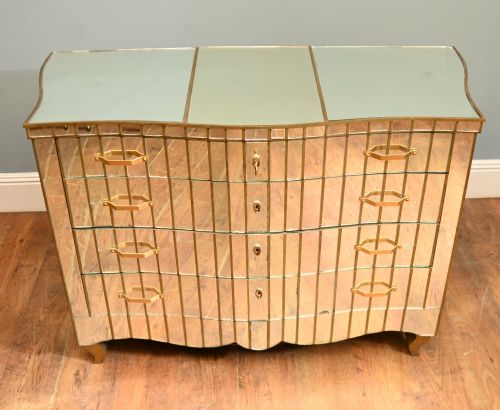
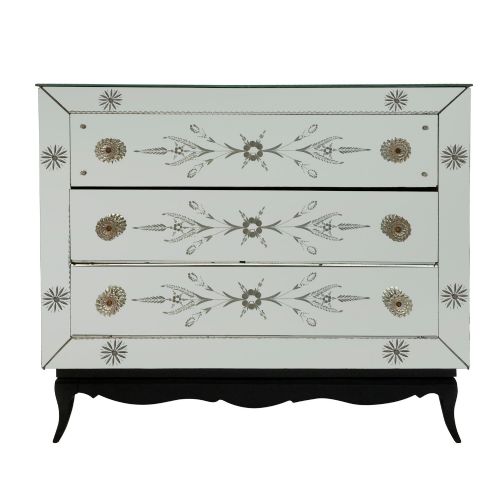
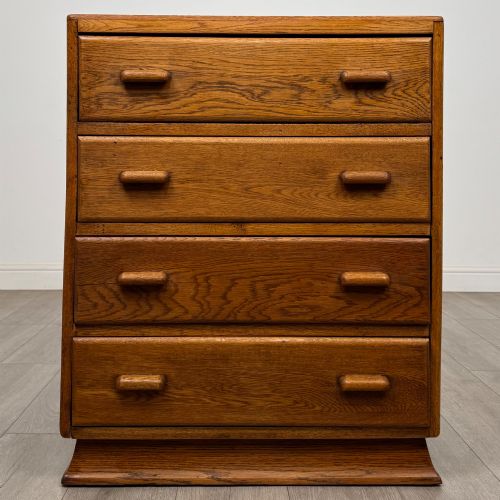
A vintage 1930s dresser brings geometric line and figured grain into a bedroom, offering solid storage with distinct period character.
Vintage 1930s Dresser
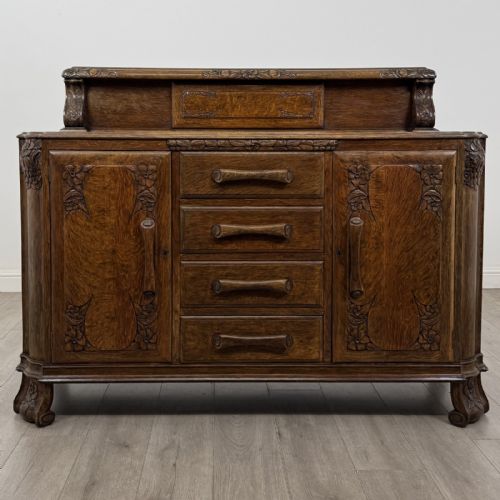
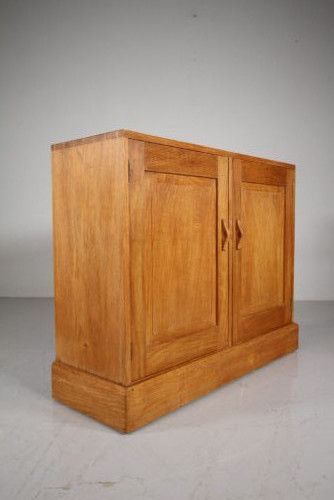
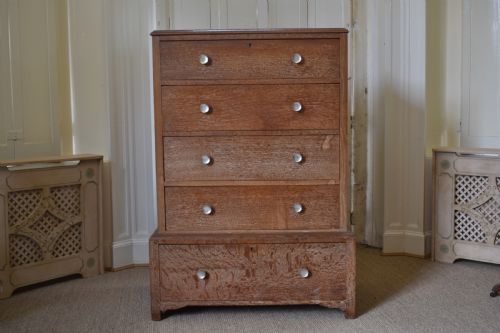
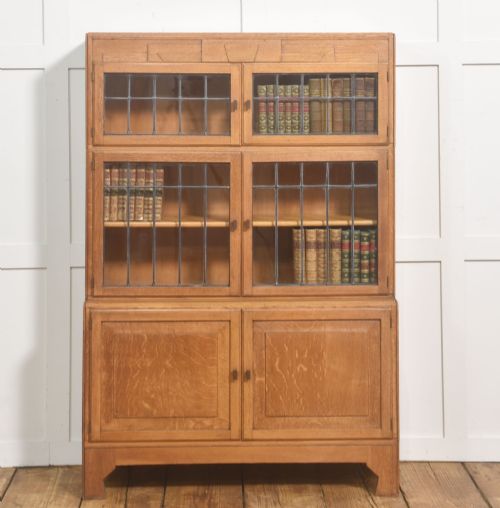
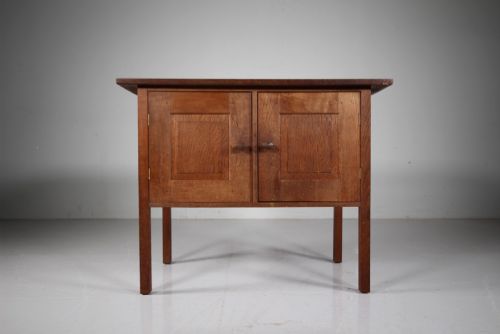
When searching for a vintage 1930s dresser, buyers encounter a range of forms, primarily chests of drawers alongside sideboards, tall chests, and smaller powder or trinket boxes. The main pieces span the 1930 and 1920 periods, with occasional Edwardian examples appearing in oak.
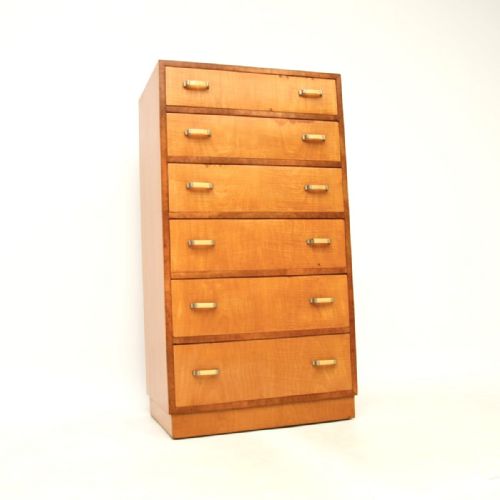
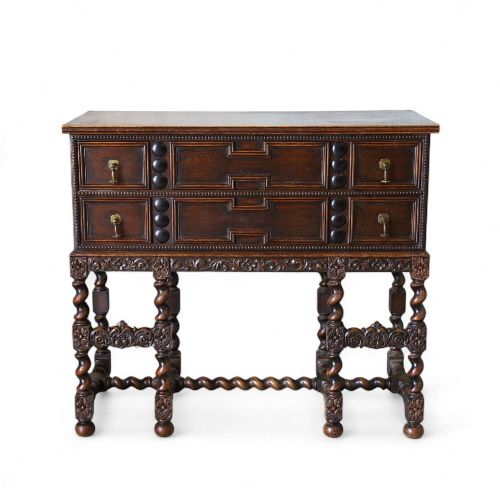
Art Deco styling dominates these pieces, often expressed through clean geometric lines or stepped forms. Alongside these, buyers find Arts and Crafts influences, Carolean Revival carving, and French Provincial details.
The materials vary from standard oak to decorative veneers like burr walnut, figured walnut, and satinwood. Some items introduce porcelain half dolls, brass, or marble tops to complete the form.
How they were made
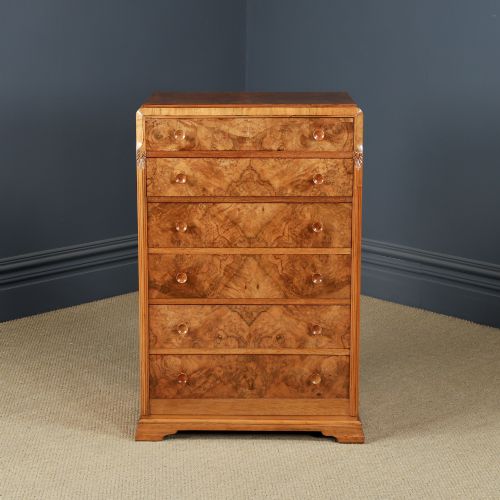
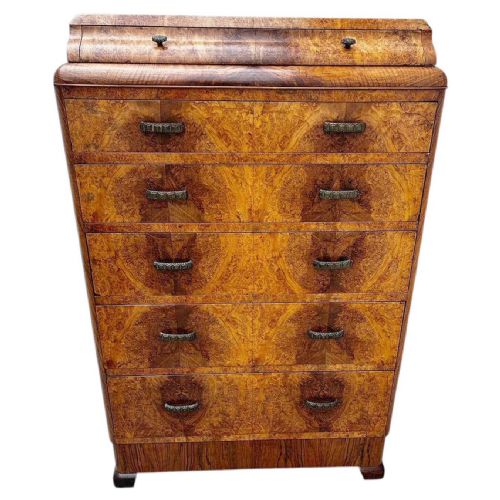
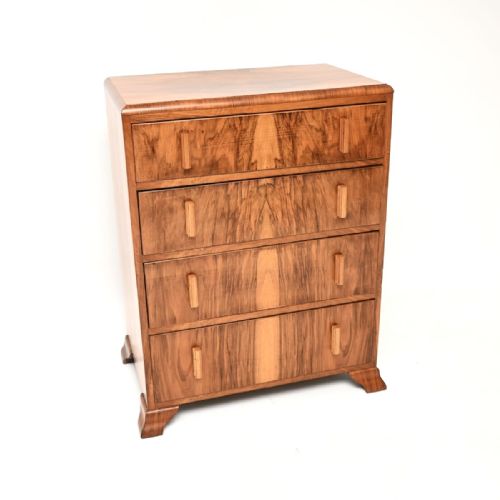
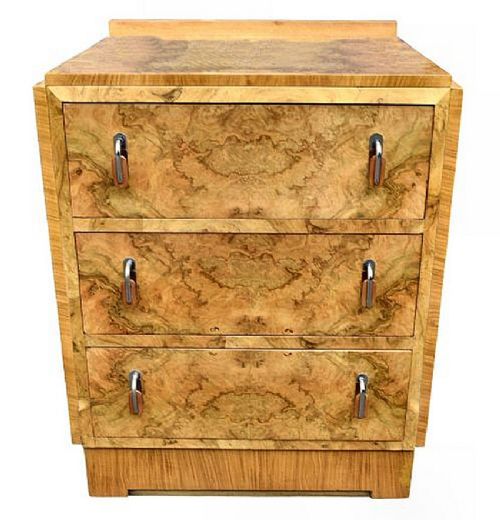
Makers of the period utilised solid hardwoods like oak alongside complex timber veneers to construct chests and sideboards. Walnut, burr walnut, and figured walnut veneers were applied to structural carcases to create striking visual patterns on drawer fronts and doors.
Surface treatments included bleaching to achieve a blonde walnut finish, liming on oak, or applying high-gloss clear glazes. Smaller items combined ceramic, porcelain, and crystal glass, often integrating moulded metal components.
The listings combine 1930 and 1920 periods with Edwardian items, spanning oak, walnut, porcelain, brass, and ceramic materials.
What varies in quality
The selection of timber veneer determines much of the visual merit in these pieces. Matched burr and figured walnut displays careful book-matching across drawer fronts, whereas lower grades utilise plain timber with minimal grain movement.
Joinery and hardware construction also separate standard utility items from finer workshops. Original wooden handles, carved gallery backs, and stamped maker details indicate higher standards of production.
Peter Waals·Fasold and Stuach·Bowman Brothers·Hoffman·Limoges
The Vintage 1930s Dresser Glossary
- Art Deco
- A design style spanning the 1920s and 1930s characterised by streamlined geometric shapes, stylised motifs, and modern industrial influences. It replaced more ornate historical revivals with clean architectural lines.
- Burr Walnut
- A specialised wood veneer taken from the growth growths or burls of walnut trees. It yields a swirling, highly figured pattern prized for cabinet fronts.
- Half Doll
- A ceramic or porcelain upper figure torso attached to a powder box, lid, or skirt. These decorative items served dressing tables during the early twentieth century.
- Carolean Revival
- A furniture style reviving seventeenth-century English design elements. Pieces often incorporate barley-twist supports and deep relief carving.
- Limed Oak
- Timber treated with a specialised pickling or liming compound that leaves a white pigment in the open grain. This technique lightens the wood tone.
Vintage 1930s Dresser: Frequently Asked Questions
What defines a 1930s dresser?
A 1930s dresser typically refers to chests of drawers, dressing tables, or sideboards produced during the Art Deco era. They combine geometric forms with rich timber veneers like walnut and oak.
Many examples feature stepped profiles, horizontal banding, and original wooden or metal handles. The category also includes smaller porcelain powder boxes and trinket jars from the same decade.
How do I identify Art Deco pieces?
Art Deco furniture relies on symmetrical layouts, bold geometric shapes, and contrasting wood grains. Look for stepped cornices, rounded corners, and minimal ornamentation.
Materials like bleached blonde walnut, satinwood, and mirrored glass further signal the aesthetic. Hardware tends to be flush or strictly linear rather than ornate.
Are these pieces made of solid wood?
Many 1930s items combine a solid timber carcase with decorative wood veneers on the visible exterior surfaces. Oak pieces are often solid, whereas walnut chests utilise figured veneers over secondary woods.
This technique allowed cabinetmakers to display striking grain patterns across large drawer fronts without risking major timber warping.
Where were these items manufactured?
The listings show production originating from England, France, Germany, and Austria. English workshops favoured oak and walnut, while French makers produced decorative sideboards with marble tops.
Porcelain trinket boxes and powder jars were frequently produced by continental European factories and ceramic studios.
How do I care for walnut veneer?
Protect walnut veneer furniture by keeping it away from direct sunlight and strong heat sources. Excessive light can bleach natural wood tones and dry out old finishes.
Dust regularly with a dry cloth and apply occasional clear wax polish designed for antique wood surfaces to nourish the timber.