
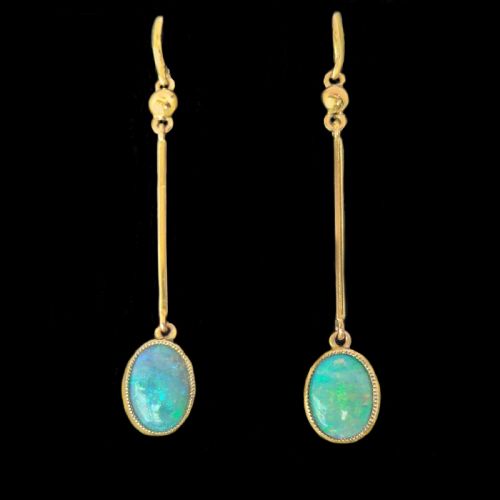
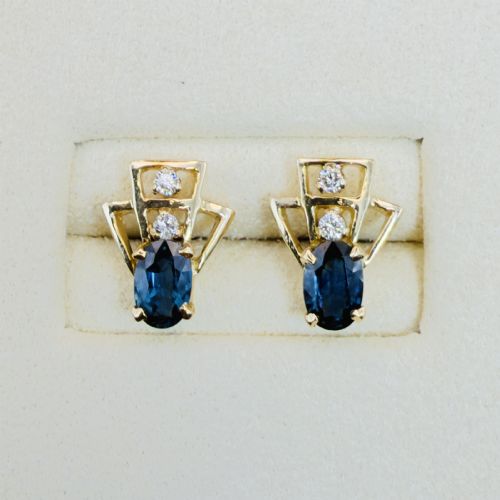
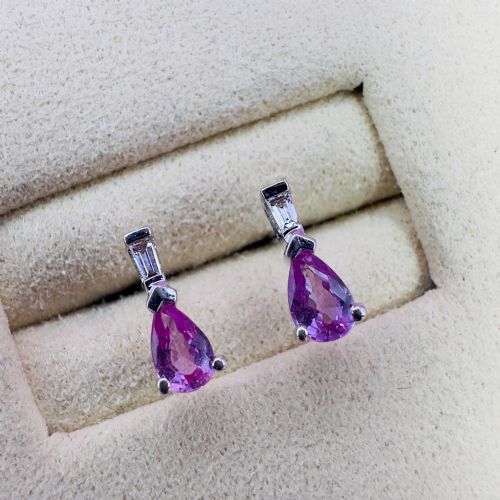


Vintage 18ct Gold Earrings
Vintage 18ct gold earrings bring together precious metal and gemstones in enduring designs from the Edwardian era through the mid-century.
Vintage 18ct Gold Earrings
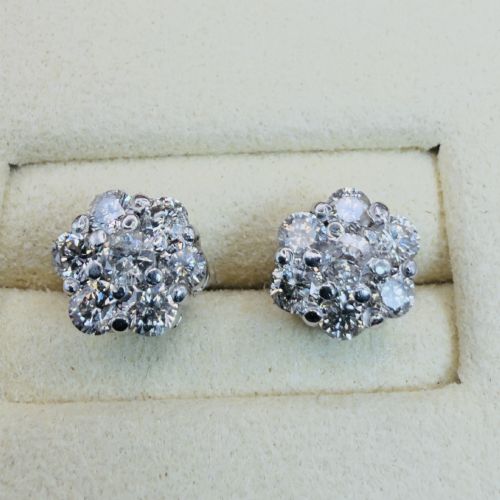
Most frequent on this page are mid-century clip-on styles and Art Deco diamond or gemstone clusters. These pieces reflect the evolving tastes of the twentieth century, moving from Edwardian restraint to bold modernist statements.
Originating from British, French, Italian, and Austrian workshops, these earrings showcase global design influences. Collectors find both everyday studs and elaborate chandelier drops suitable for formal occasions.
How They Were Made
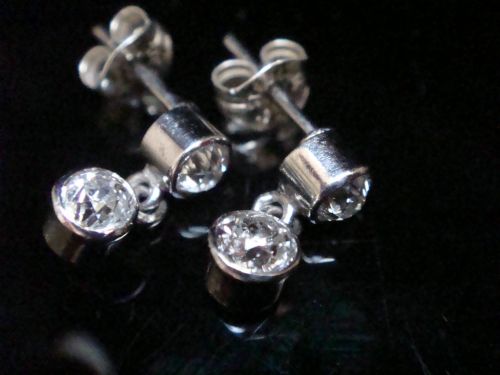
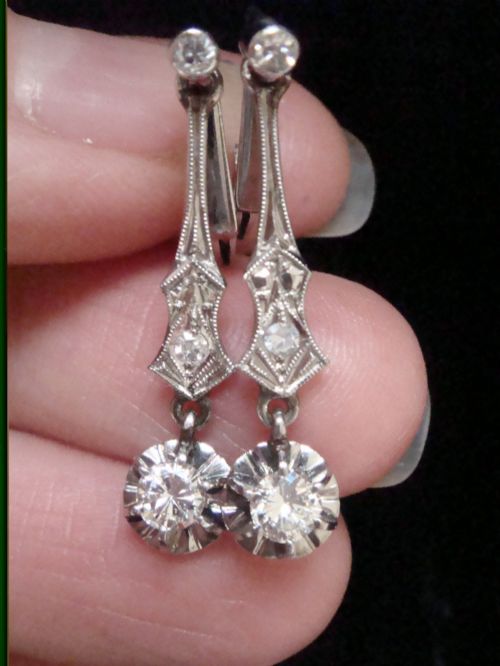
Master jewellers utilised 18ct yellow and white gold alongside platinum to mount old-cut and brilliant-cut diamonds securely. Metalwork techniques combined traditional casting with delicate wirework, millegrain edges, and secure screw or omega backings.
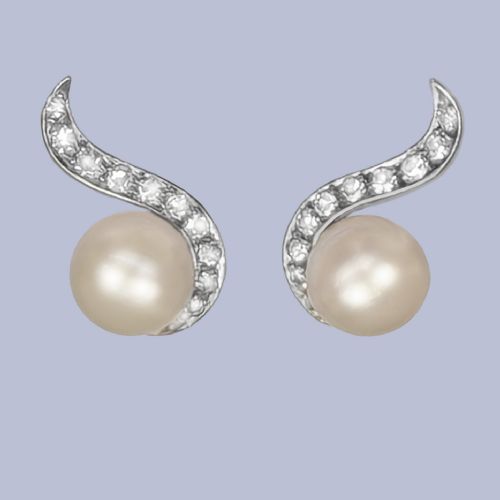
Gemstones including sapphires, rubies, emeralds, jade, and pearls were meticulously cut and set by hand into floral, geometric, and abstract motifs. Platinum claws and bezels frequently reinforced white gold mountings, enhancing the brilliance of central stones.
Some mid-century earrings are heavy enough to double as miniature golden door-knockers for your earlobes.
What Varies In Quality
The standard of these earrings depends on the precision of the stone setting and the weight and purity of the gold mount. Superior examples display perfectly matched natural gemstones, intricate hand-finished metalwork, and robust, original closures.
Maker provenance and designer signatures elevate certain pieces significantly. Exceptional quality shows in the harmonious proportions of the cluster or drop, where the metalwork enhances rather than overpowers the central stones.
Andrew Grima·Boucheron·Cartier·FOPE·Kutchinsky·Le-Gi·Nicolis Cola·Tiffany and Co
The Vintage 18ct Gold Earrings Glossary
- Cluster
- A gemstone setting where a central stone is surrounded by a ring of smaller stones, often diamonds.
- Old-cut
- A diamond cutting style prevalent before the modern brilliant cut, characterised by a smaller table and high crown.
- Omega back
- A hinged clip closure shaped like the Greek letter omega, commonly found on mid-century heavy earrings.
- Millegrain
- A decorative jewellery technique featuring tiny raised metal beads along the edge of a setting.
- Dormeuse
- A type of secure sleeping earring designed with a hinged back for comfortable overnight wear.
Vintage 18ct Gold Earrings: Frequently Asked Questions
How do I secure vintage screw back earrings?
Screw back earrings feature a threaded post and a small nut that tightens against the earlobe. Gently turn the nut until it rests comfortably without pinching the skin.
Ensure you do not over-tighten the mechanism, as this can strip the delicate threads over time. Regular cleaning of the screw thread maintains smooth adjustment.
What is the difference between Art Deco and mid-century earrings?
Art Deco earrings from the 1920s and 1930s utilise geometric shapes, white gold or platinum, and calibrated gemstones. They favour symmetry, clean lines, and intricate diamond work.
Mid-century pieces from the 1950s and 1960s introduce textured yellow gold, abstract floral motifs, and bolder sculptural volumes. These later designs often embrace clip-on fittings and organic forms.
Can clip-on earrings be converted to pierced posts?
Many vintage clip-on earrings can be adapted by a skilled jeweller who solders a post onto the reverse. This conversion allows wearers without pierced ears to enjoy standard post fittings.
However, altering signed designer pieces or hollow gold structures may diminish their collector value. Consult a specialist before modifying historical jewellery.
How should I clean 18ct gold and gemstone earrings?
Clean 18ct gold and hard gemstone earrings using warm water, mild washing-up liquid, and a soft-bristled brush. Gently scrub around the settings to remove accumulated everyday oils and dust.
Avoid using ultrasonic cleaners for jewellery containing pearls, emeralds, opals, or jade, as these porous or treated stones suffer damage from vibration and heat.