
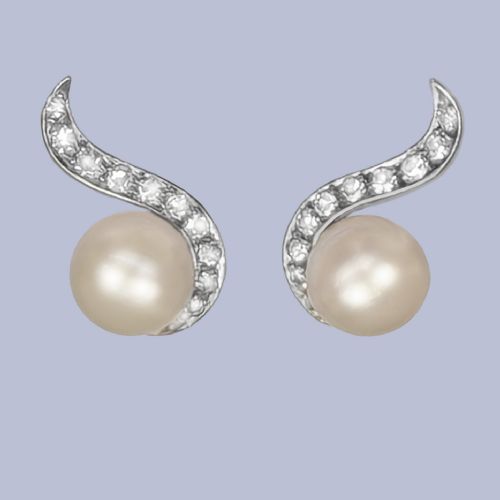
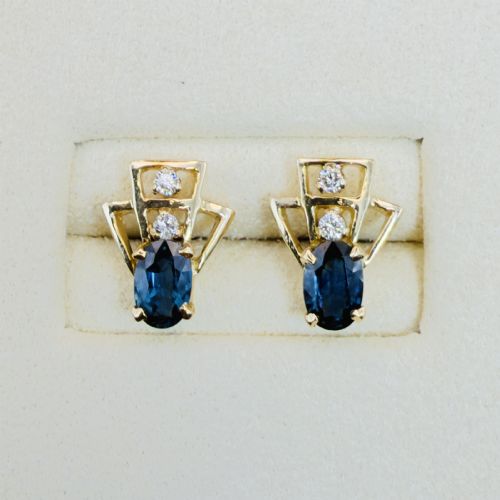


18ct Gold Clip Earrings
These 18ct gold clip earrings bring secure, comfortable fastenings together with substantial precious metal and fine stones.
18ct Gold Clip Earrings
When you search for 18ct gold clip earrings, you encounter substantial metalwork paired with secure, non-pierced fastenings across several distinct periods. The inventory spans early twentieth-century Edwardian and Art Deco examples through to mid-century modernist and retro designs.
The most common pieces on this page date from the nineteen-fifties and nineteen-sixties, often featuring heavy yellow or white gold structures. These mid-century items frequently incorporate geometric shapes, textured surfaces, and colourful hardstones.
Earrings from the nineteen-twenties frequently utilise platinum settings atop gold bases to showcase old-cut diamonds alongside sapphires, rubies, or emeralds. Designers of the later twentieth century turned towards abstract forms, abstract floral motifs, and bold clip mechanisms.
How They Were Made
Maker workshops constructed these earrings primarily from eighteen-carat yellow and white gold, occasionally combining platinum for heightened durability around delicate stone settings. Casting, hand-forming, and ridging techniques created the heavy structural hoops, fans, and abstract floral clusters seen in the selection.
Master jewellers secured gemstones including diamonds, sapphires, rubies, emeralds, pearls, turquoise, rose quartz, and lapis lazuli using claw, bezel, and pave settings. Robust clip-on mechanisms were engineered to balance securely against the earlobe without requiring a pierced post.
Materials documented across the inventory include eighteen-carat yellow gold, eighteen-carat white gold, and platinum.
What Varies in Quality
The standard of execution depends heavily on the weight of the eighteen-carat gold and the structural integrity of the hinge and tension spring within the clip mechanism. Superior pieces maintain a crisp spring action that secures the earring comfortably while preserving alignment against the lobe.
Stone selection and matching dictate the upper tier of the range, where uniformity in diamond cut, sapphire saturation, or lapis lazuli patterning elevates the design. Signed pieces from notable maker workshops retain superior finishing in the concealed solder joints and surface texturing.
Boucheron·Andrew Grima·Cartier·Kutchinsky
The 18ct Gold Clip Earrings Glossary
- Clip-on design
- A mechanical fastening utilising a hinged bracket that grips the earlobe without requiring a pierced hole. This style gained widespread popularity during the mid-twentieth century for heavier statement earrings.
- Old-cut diamond
- A hand-faceted diamond cut before the standardisation of the modern brilliant in the early twentieth century. These stones typically feature smaller tables, higher crowns, and open culets.
- Eighteen-carat gold
- An alloy consisting of seventy-five percent pure gold combined with other metals to provide durability and colour variation. It serves as the primary structural material across this selection.
- Pave setting
- A technique where numerous small gemstones are set closely together with minimal visible metal. This method creates a continuous surface of sparkling stones.
18ct Gold Clip Earrings: Frequently Asked Questions
Are clip earrings comfortable to wear?
The comfort of a clip-on earring depends primarily on the tension of the spring mechanism and the surface area of the clip pad. Properly adjusted clips distribute weight evenly across the earlobe.
Heavier mid-century pairs may require fitted silicone cushions to enhance comfort during extended wear.
How do I date these earrings?
Dating relies on stylistic markers such as the geometric symmetry of Art Deco pieces or the organic, textured goldwork of the nineteen-sixties. Maker marks, original boxes, and specific gemstone cuts also provide reliable chronological evidence.
White gold and platinum combinations point towards earlier twentieth-century fabrication.
Can clip earrings be converted to posts?
Converting clip earrings to pierced posts is technically possible by adding a post to the reverse. However, jewellers generally discourage this modification because it alters the original maker's design and removes the functional clip mechanism.
Preserving the original clip structure maintains the historical integrity of signed or vintage pieces.
What maintenance do these earrings need?
Routine care involves gentle cleaning with a soft brush and warm soapy water to remove accumulated cosmetics from behind the stones and hinges. Ultrasonic cleaning should be avoided if the piece contains softer hardstones like turquoise or lapis lazuli.
Regularly checking the tension of the clip mechanism ensures the earrings remain secure.