





Victorian Writing Tool
A victorian writing tool brings tangible weight and purpose to a room, offering handsome surfaces and thoughtful compartments designed for correspondence.
Victorian Writing Tool
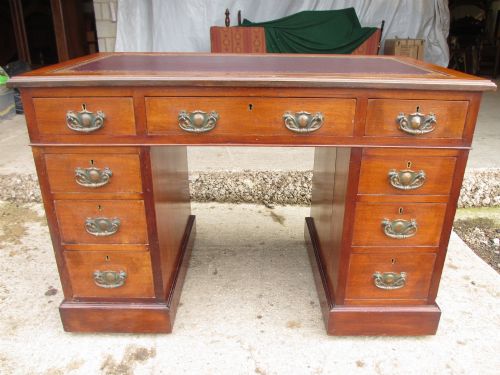
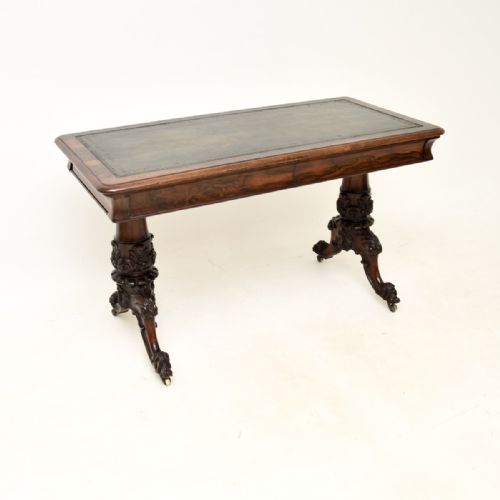
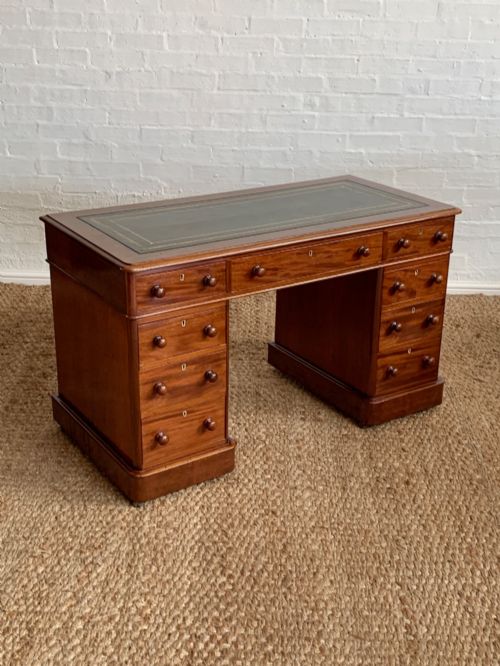
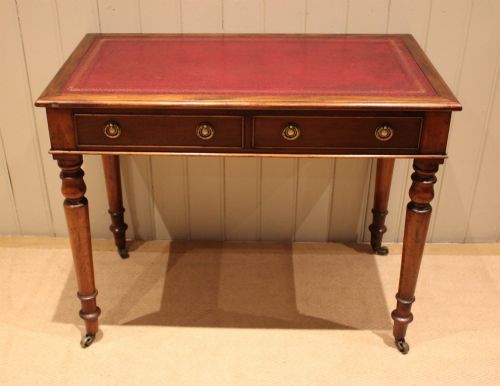
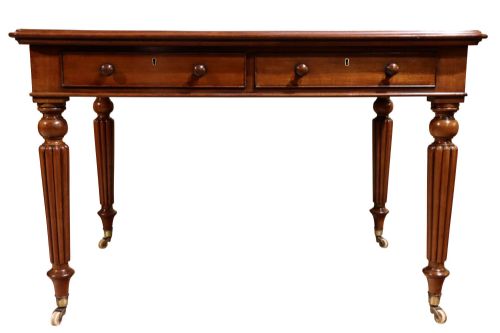
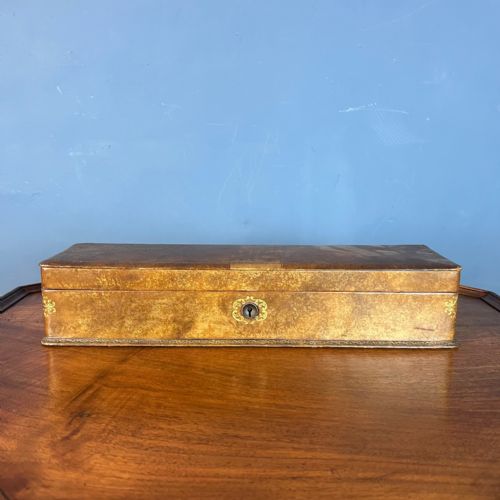
A victorian writing tool encompasses the desks, tables, and accessories created during the nineteenth century to facilitate letter writing and paperwork. Buyers exploring this category encounter pedestal desks, writing tables, partner's desks, blotters, and pen boxes.
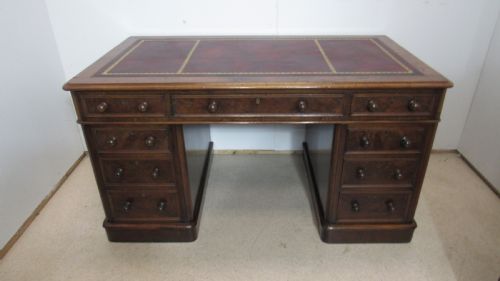
The versions most frequently met on this page include mahogany and walnut writing desks and tables fitted with inset leather surfaces. These pieces range from modest ladies writing tables to substantial freestanding pedestal desks and library tables.
Materials and construction
Cabinetmakers utilised dense timbers such as mahogany, walnut, and burr walnut for the primary structures of desks and tables. These woods were chosen for their durability and rich grain, often enhanced by ebonisation or decorative veneers.
Writing surfaces were routinely finished with tooled leather, including Moroccan hides and royal commemorative designs stamped in gold leaf. Smaller desk accessories incorporate brass hardware, cardboard, and specialised calligraphic materials.
Victorian Writing Tool Retail Price Guide 2026
Typical asking prices for victorian writing tool among the pieces listed under this phrase on Sellingantiques today, from the lower quarter to the upper quarter. They describe what is for sale here now, not the wider market.
Materials recorded across these items include mahogany, walnut, burr walnut, rosewood, brass, leather, and gold leaf.
Assessing quality and craftsmanship
Quality in these pieces rests upon the selection of timber and the precision of the cabinetwork in drawers, legs, and pedestals. Superior examples display carefully matched veneers and robust internal framing that withstands decades of daily use.
The treatment of the writing surface and secondary details sets finer examples apart from simpler utilitarian pieces. Original tooled leather insets, intact gold leaf tooling, and retained brass fixtures elevate the status of a desk or accessory.
The Victorian Writing Tool Glossary
- Pedestal desk
- A heavy freestanding desk supported by two banks of drawers rather than conventional legs. This form provides substantial storage beneath the main writing surface.
- Writing table
- A lighter table designed specifically for correspondence, usually fitted with one or more shallow drawers beneath the top. Unlike pedestal desks, these rely on four legs for support.
- Tooled leather
- Leather decorated with impressed patterns and gold leaf around the perimeter of a writing surface. This technique provides a smooth, durable barrier for writing.
- Reformed Gothic
- A nineteenth-century design style drawing inspiration from medieval architecture through geometric lines and structural honesty. Pieces in this style reject heavy Victorian ornamentation in favour of simplified forms.
- Partner's desk
- A large double-sided desk designed so two people can work opposite each other. These pieces feature drawers and cupboards accessible from both sides.
Victorian Writing Tool: Frequently Asked Questions
What is a pedestal desk?
A pedestal desk is a large, freestanding office or library desk built with two supporting columns of drawers beneath the top surface. These columns hold the main writing platform aloft and provide deep storage on both sides.
Such desks were built to anchor a study or library, often finished on all sides so they could stand proudly in the middle of a room rather than against a wall.
How do I maintain leather desk tops?
Leather desk tops require gentle cleaning using specialist leather balms to prevent the material from drying and cracking over time. Avoid harsh chemical cleaners that strip the original gold leaf tooling.
Keeping the leather nourished preserves the rich colour and maintains the smooth texture needed for writing and daily use.
What is a ladies writing table?
A ladies writing table is a smaller, more delicate desk produced during the nineteenth century for correspondence in private sitting rooms. These tables feature slender legs and compact drawer arrangements.
Their lighter proportions made them easy to position near windows or fireplaces where natural light was best for writing letters.
How do I identify Reformed Gothic style?
Reformed Gothic furniture is identified by its architectural lines, chamfered edges, and exposed structural joints rather than flowing floral carvings. This style emerged in the mid-to-late nineteenth century.
Pieces in this aesthetic often utilise dark woods like ebonised mahogany or walnut, emphasising geometric form and disciplined ornamentation.