

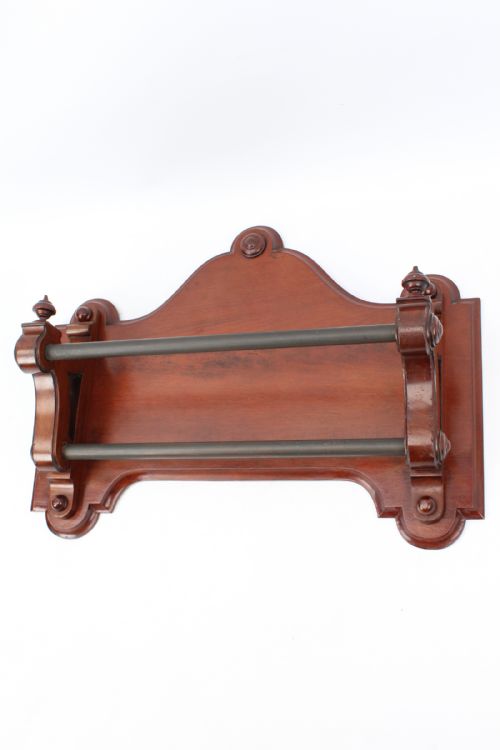


Victorian Wooden Towel Rail
These Victorian wooden towel rail examples bring practical nineteenth-century utility and rich timber warmth straight into a modern bathroom or bedroom.
Victorian Wooden Towel Rail
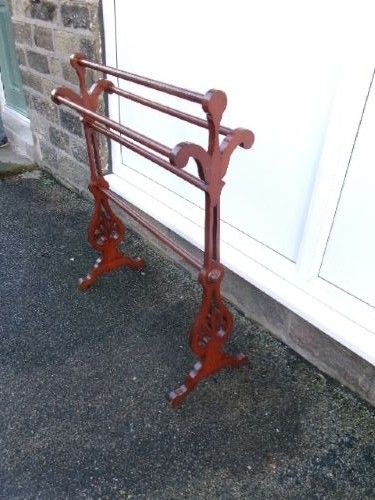
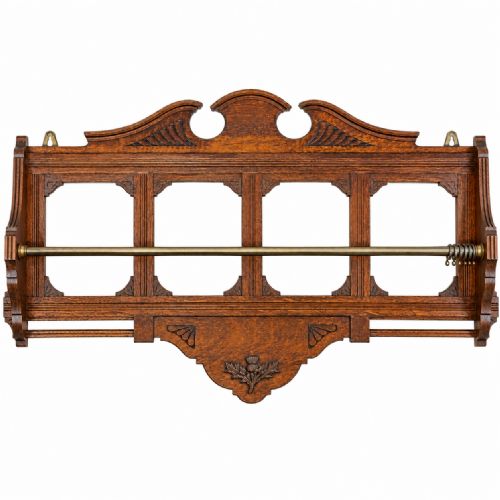
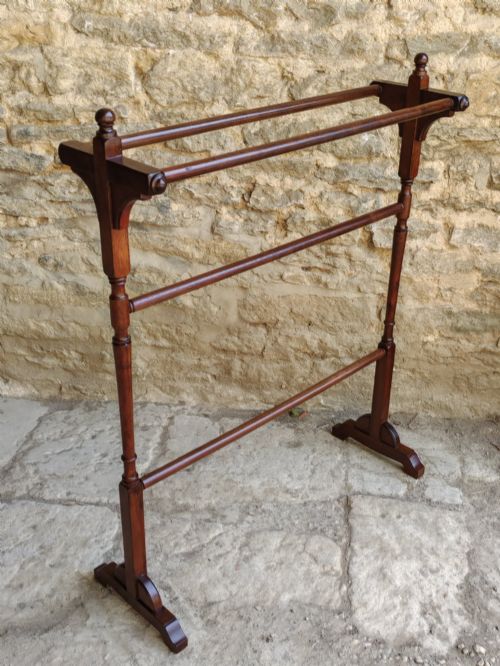
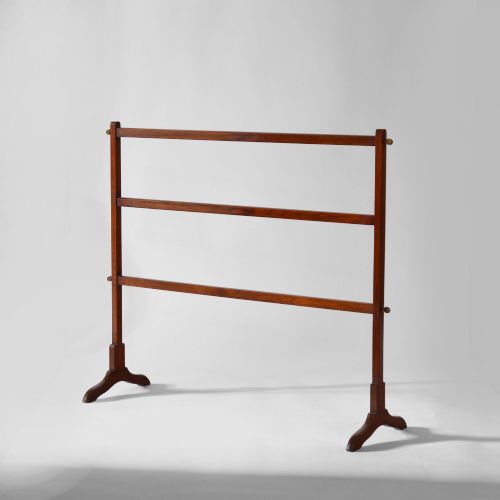
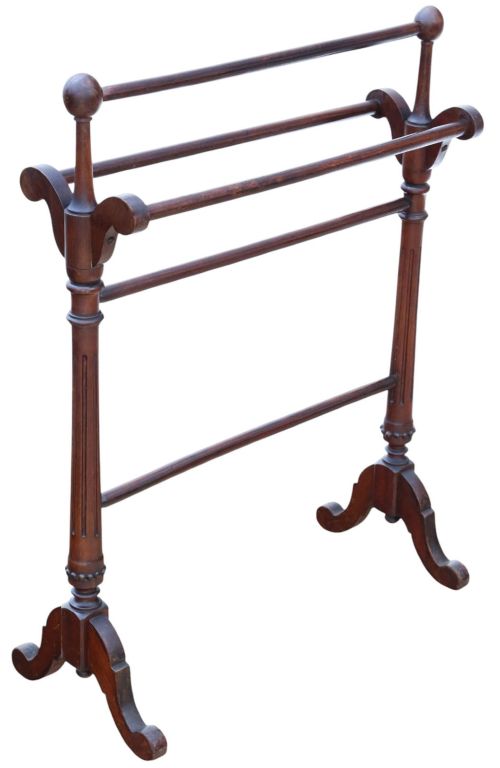
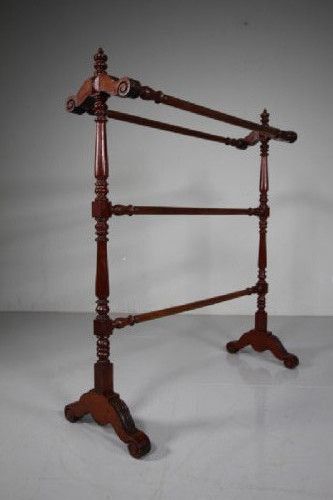
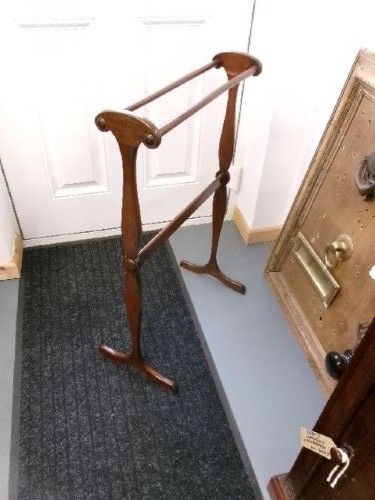
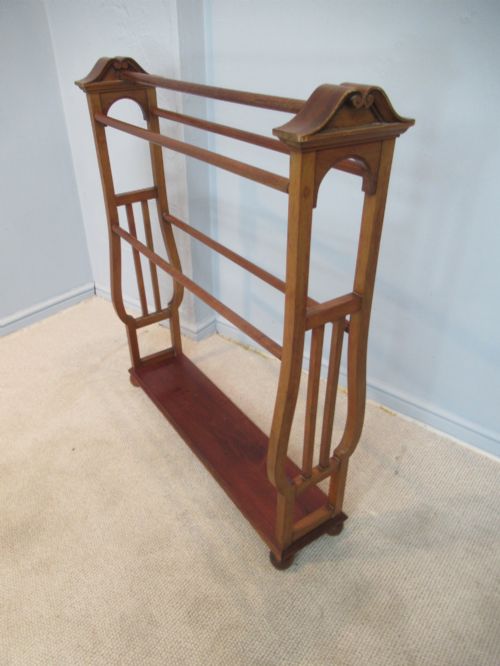
A Victorian wooden towel rail provides sturdy freestanding or wall-mounted frames designed originally for holding linens and drying garments in domestic rooms. You will frequently encounter mahogany standing versions, alongside folding formats and wall racks from the nineteenth century.
The selection ranges from compact small pieces to large oversized clothes rails and three-fold stands originating across the Victorian, Edwardian, and Regency periods. Mahogany forms the backbone of the selection, accompanied by oak, walnut, pine, teak, and ebonised wood.
Makers utilised various regional aesthetics, yielding styles that span Victorian Gothic Revival, Arts & Crafts, and Colonial Campaign. These household utilities now function efficiently for hanging towels while displaying period craftsmanship.
How they were made
Carpenters constructed these rails using dense timbers such as mahogany, oak, and walnut, frequently turning the upright supports on a lathe for structural rigidity. Joints relied upon traditional mortise and tenon construction to withstand the daily weight of damp linens.
Certain pieces incorporate brass fittings or carved wooden detailing to elevate domestic utility into decorative furniture. Ebonised finishes and painted pine surfaces demonstrate how common softwoods were transformed to mimic exotic hardwoods or match contemporary interior tastes.
Victorian Wooden Towel Rail Retail Price Guide 2026
Typical asking prices for victorian wooden towel rail among the pieces listed under this phrase on Sellingantiques today, from the lower quarter to the upper quarter. They describe what is for sale here now, not the wider market.
Listings feature timbers including mahogany, oak, walnut, pine, teak, and ebonised wood across the nineteenth and early twentieth centuries.
What varies in quality
Quality rests upon the selection of timber and the stability of the frame joints rather than ornate decoration alone. Dense, well-figured mahogany or quarter-sawn oak displays superior durability compared to softer pine alternatives.
Superior examples maintain tight joints without excessive wobble in the folding hinges or side rails. The crispness of hand-carved elements and the original integrity of turned wooden uprights distinguish finer pieces from utilitarian workshop output.
The Victorian Wooden Towel Rail Glossary
- Cheval towel rail
- A freestanding floor model featuring a pivoting frame supported by stable side pillars, often designed with multiple folding sections.
- Campaign towel rail
- Portable furniture originally constructed for travel, typically featuring collapsible frames and brass hinges or knock-down joints.
- Ebonised wood
- Timber treated with a dark stain or chemical process to imitate expensive ebony, popular during the later nineteenth century.
- Wall rack
- A storage fixture designed to be fixed directly to a wall, combining shelving or hooks with an integrated hanging rail.
- Gothic Revival
- An architectural and decorative style drawing inspiration from medieval forms, characterised by pointed arches and heavy timber mouldings.
Victorian Wooden Towel Rail: Frequently Asked Questions
Where were these towel rails placed?
Victorian households positioned these rails primarily in bedrooms, dressing rooms, and nurseries to air and warm linens near fires.
Today, they find practical placement in modern bathrooms, utility rooms, and master bedrooms as functional towel holders.
How do I care for wooden rails?
Keep nineteenth-century timber away from direct heat sources and excessive moisture to prevent wood splitting or joint loosening.
Apply occasional beeswax polish to nourish the antique surfaces and maintain the natural lustre of the polished grain.
Are folding rails stable?
Multi-fold designs utilise hinged wooden panels that support their own weight when angled correctly on a flat floor surface.
Heavier mahogany and oak frames remain exceptionally steady during daily use despite having movable sections.
How do I date these pieces?
Dating relies upon timber choice, joinery techniques, and stylistic markers such as Gothic Revival mouldings or Arts & Crafts simplicity.
Nineteenth-century pieces typically exhibit hand-turned turnery and traditional fox-wedge joints rather than modern metal fixings.