

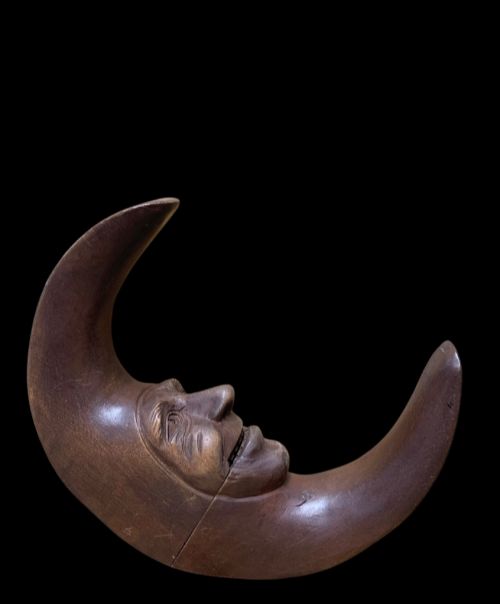


Victorian Wood Nutcracker
A victorian wood nutcracker is a tactile piece of treen that brings character to a mantelpiece, carved from walnut or boxwood to serve nuts with humour.
Victorian Wood Nutcracker
A victorian wood nutcracker takes the form of figural carvings, animals, and hands, showing the playful side of nineteenth century domestic life. Buyers will find nutcrackers alongside novelty walking canes incorporating carved heads.
The material is almost exclusively hardwood, shaped into monkeys, fists, and celestial faces. These objects bridge utilitarian kitchen tools and decorative folk art.
Originating largely from the nineteenth century, including specific dates around eighteen eighty and nineteen hundred, these pieces reflect the carving traditions of the Black Forest alongside British folk art.
How they were made
Metal hinges and brass pins join the moving levers where necessary, though the primary structure relies on hinged wooden arms or screw mechanisms carved from the same block of timber.
Victorian Wood Nutcracker Retail Price Guide 2026
Typical asking prices for victorian wood nutcracker among the pieces listed under this phrase on Sellingantiques today, from the lower quarter to the upper quarter. They describe what is for sale here now, not the wider market.
Several nutcrackers take the unusual form of a clenched fist or the man in the moon.
What varies in quality
The choice of timber and the preservation of the original surface patina dictate the visual weight of the object. Richly grained walnut and dark boxwood hold the carver's lines more sharply than softer woods.
The Victorian Wood Nutcracker Glossary
- Treen
- Small handmade wooden objects for domestic use. This term covers everything from nutcrackers to small boxes.
- Black Forest
- A style of wood carving originating from the mountain region in Germany, known for realistic animal and figural studies. Pieces in this style often feature bears, dogs, and humans.
- Figural
- Representing a human or animal form. These nutcrackers use recognizable shapes to conceal the mechanical lever.
- Boxwood
- A dense, pale hardwood favoured for intricate detail work. Carvers selected it for items requiring fine lines.
- Folk art
- Utilitarian objects made by self-taught or traditional craftsmen outside academic art circles. These pieces display local stylistic traits.
Victorian Wood Nutcracker: Frequently Asked Questions
How do you use a wooden nutcracker?
Most designs use leverage where pressing the handles together forces the jaw or fist forward against the nut. Users should apply gentle, steady pressure rather than sudden force to protect the antique wood.
Displaying them on a shelf or table keeps them safe from heavy handling while showing off the carved details.
What woods were used for these?
Carvers utilised dense hardwoods such as walnut, boxwood, and general dark wood. These timbers resisted splitting under the pressure required to crack shells.
The natural grain adds depth to the carved fur and facial expressions found on figural subjects.
How do I date a Victorian nutcracker?
Dating relies on style, tool marks, and the wear patterns on the wood surface. Pieces from the nineteenth century often feature hand-carved details associated with Black Forest production.
Comparing the hinge construction and the style of the figural carving helps narrow down the decade of creation.
Are these nutcrackers purely decorative?
While they were originally built as working kitchen tools, many collectors now treat them as display pieces. Their sculptural forms suit placement on sideboards and desks.
Using them gently for light nuts preserves the mechanical joints and the antique finish.