



Victorian Walnut Window Seat
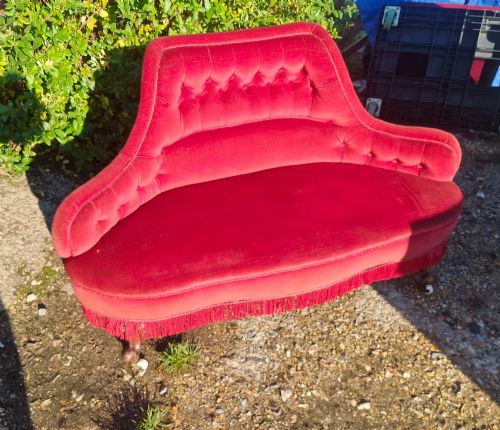
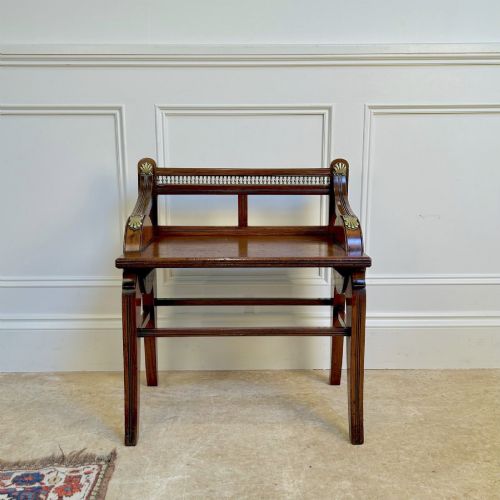
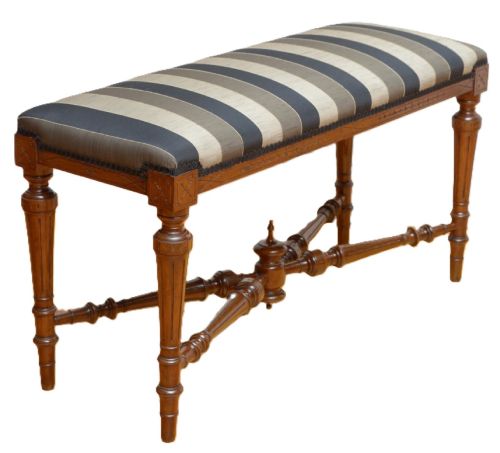
These victorian walnut window seat pieces combine rich timber frames with varied textile upholstery, offering compact seating designed for placement beneath lower panes.
Victorian Walnut Window Seat
A victorian walnut window seat sits low and long beneath glazing, shaped as a bench, duet stool, or X-frame stool. These forms belong to the Victorian era, with dates stretching from the mid-nineteenth century through to 1890.
The walnut frames appear alongside related seating like hall benches and salon settees, plus occasional tables sharing the same aesthetic. Most examples on this page are standard Victorian or follow the linear lines of the Aesthetic Movement.
Makers such as James Shoolbred occasionally produced these pieces, though many survive as unmarked examples from English country houses. They serve today as bedroom ends or hallway perches just as they did in Victorian interiors.
Materials and construction
Walnut forms the structural frame, carved with details like fluted legs or figural elements such as hunting dog heads. Brass fittings sometimes secure the joints or upholstery elements.
Textiles provide the seating surface, utilising materials like linen, wool tweed, and patterned tapestry fabric. Many pieces arrive recovered in modern neutral linens while retaining their nineteenth-century wooden skeletons.
Victorian Walnut Window Seat Retail Price Guide 2026
Typical asking prices for victorian walnut window seat among the pieces listed under this phrase on Sellingantiques today, from the lower quarter to the upper quarter. They describe what is for sale here now, not the wider market.
Listings span several decades, featuring walnut frames dated from 1850 through to 1890 alongside broader Victorian periods.
What separates the best pieces
Carving depth and design ambition divide standard framing from exceptional output. Pieces showing specific movement traits, such as Aesthetic Movement lines or detailed animal carvings, display greater sculptural confidence.
The retention of original textiles versus modern replacement fabric alters how a piece reads historically. Structural integrity in the walnut joints and the crispness of the turned or fluted legs determine lasting merit.
James Shoolbred
The Victorian Walnut Window Seat Glossary
- Walnut
- A dense hardwood prized for its rich grain and dark warm tone. It was widely used across Victorian seating frames.
- Duet stool
- An extended stool designed to seat two players at a piano or two people by a window. These long proportions suit the window seat form.
- Aesthetic Movement
- A late nineteenth-century design style emphasising simplicity and artistic reform over heavy historicism. It influenced furniture lines around 1890.
- X-frame
- A structural furniture base formed by intersecting diagonal timbers creating a cross shape. This classic support appears frequently on nineteenth-century stools.
Victorian Walnut Window Seat: Frequently Asked Questions
Where did these seats go in a house?
These long stools and benches sat directly beneath tall Victorian windows where natural light favoured reading or needlework.
Over time, owners also placed them at the foot of beds or along long hallway walls where deep seating was useful.
What is an X-frame stool?
An X-frame stool uses intersecting diagonal wooden members to support the upper cushion. This ancient architectural form returned to popularity during the Victorian period.
Makers often embellished these crossing supports with carved details like animal heads or floral motifs.
Are these seats comfortable?
Victorian window seats rely on padded upholstery stretched over webbed frames to provide a firm sit. Their primary purpose was compact, upright perching rather than lounging.
Modern reupholstery in linen or wool tweed often updates the internal padding while keeping the historic frame intact.
How do I spot an Aesthetic Movement piece?
Aesthetic Movement pieces discard heavy Victorian carving in favour of cleaner, more restrained geometric lines. Walnut frames from around 1890 often show this lighter touch.
They sit alongside traditional heavily carved walnut furniture without matching its ornate flourishes.