



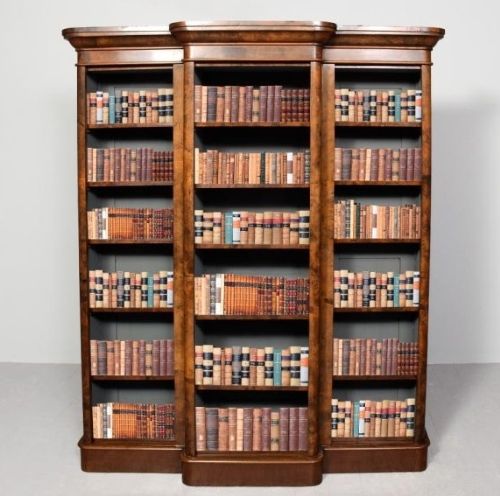
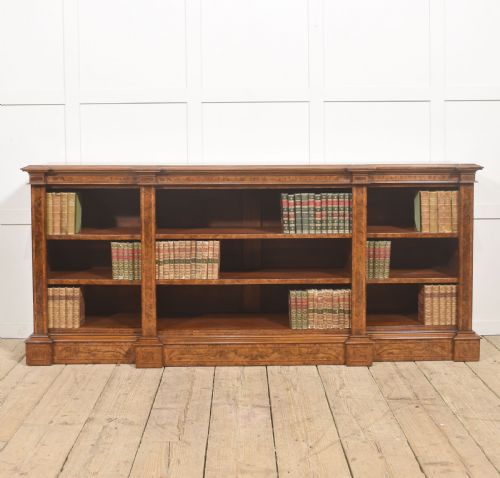


Victorian Walnut Library Shelf
A victorian walnut library shelf offers practical display and storage, bringing rich grain and warm tone to any room.
Victorian Walnut Library Shelf
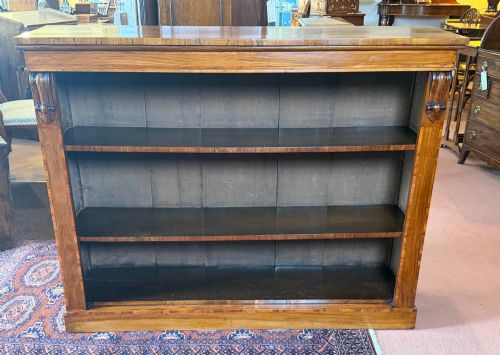
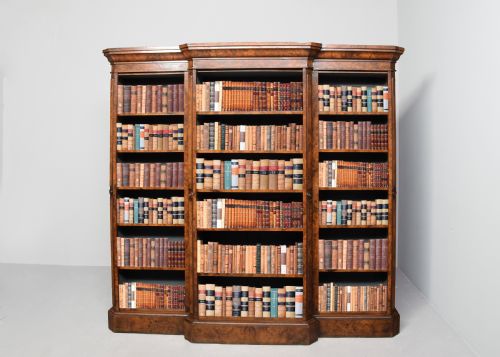
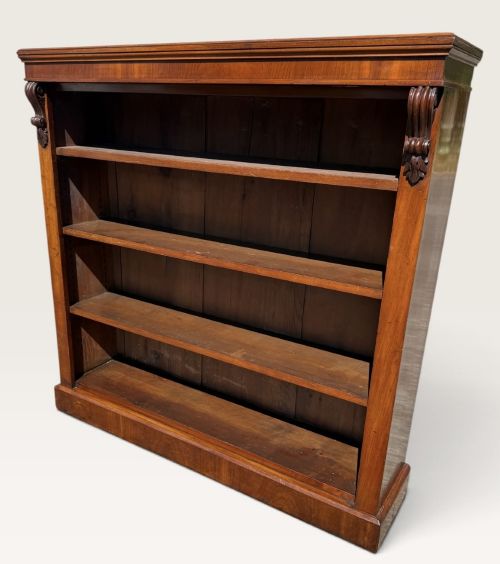
A victorian walnut library shelf typically takes the form of an open bookcase, often featuring adjustable shelving to suit varying volumes. These pieces emerge predominantly from the nineteenth century, spanning periods from William IV through mid-Victorian and Edwardian eras.
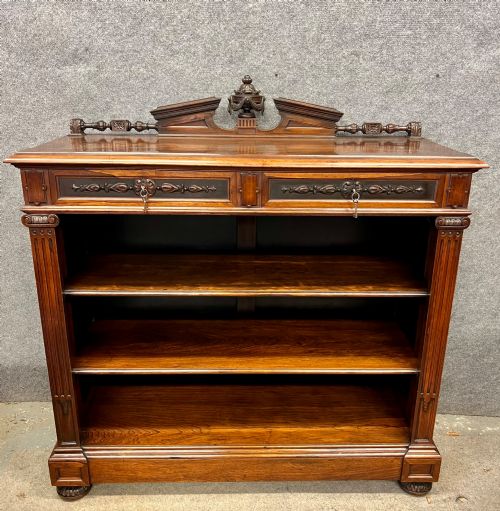
Most examples found here are open bookcases, though related items like etageres, music cabinets, and glazed bookcases also appear. Makers and cabinetmakers utilised timber, pine, and mahogany alongside the primary walnut to construct these functional library furnishings.
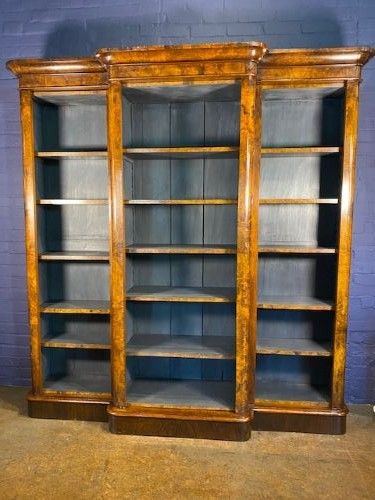
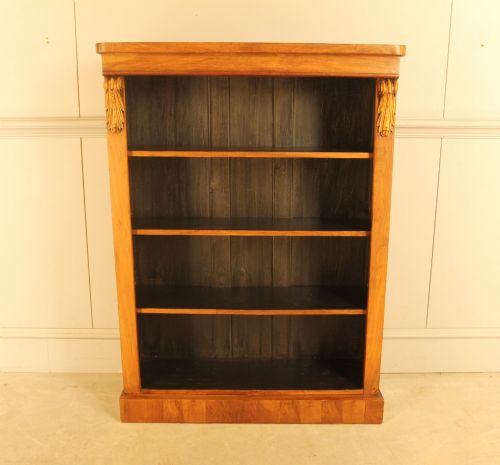
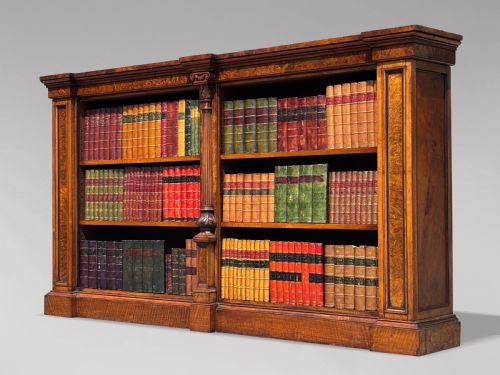
Forms range from neat, diminutive sizes to large breakfront and stepped configurations with multiple sections. Details such as carved friezes and barley twist columns occasionally enrich the standard rectilinear silhouette.
How they were made
Cabinetmakers built these shelves using solid timber frames faced with walnut veneer or burr walnut, which displays intricate, swirling grain patterns. Secondary woods like pine and mahogany provided structural stability for the carcases and internal partitions.
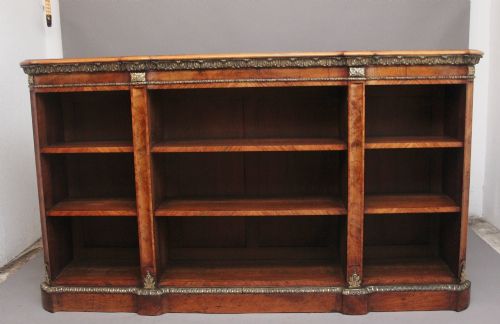
Metal elements such as brass fixtures and ormolu mounts appeared on select pieces to accent the woodwork. Glass panes were incorporated into doors on enclosed or glazed variants, while adjustable shelf mechanisms utilised wooden or metal supports.
Victorian Walnut Library Shelf Retail Price Guide 2026
Typical asking prices for victorian walnut library shelf among the pieces listed under this phrase on Sellingantiques today, from the lower quarter to the upper quarter. They describe what is for sale here now, not the wider market.
Some music cabinets double as storage for Victorian sheet music, hiding domestic hobbies behind burr walnut doors.
What varies in quality
The choice of timber sets the baseline, with figured burr walnut commanding attention for its visual depth compared to plain walnut veneers. Superior examples display careful book-matching of the grain across wide surfaces and breakfront facades.
Construction methods determine longevity, seen in the precision of the joinery and the integration of architectural details like carved friezes. Finer pieces balance proportions with restraint, whereas lesser items rely on heavy, unrefined ornamentation.
Johnstone and Jeanes
The Victorian Walnut Library Shelf Glossary
- Burr walnut
- A veneer sliced from walnut tree growths, prized for its swirling, highly figured grain patterns. It provides a decorative surface on high-status nineteenth-century furniture.
- Breakfront
- A piece of furniture where the central section projects forward from the flanking outer sections. This architectural arrangement adds depth and visual interest to large bookcases.
- Etagere
- A small piece of furniture consisting of a set of open shelves for displaying small objects. These tiered stands date across the nineteenth century.
- Ormolu
- Gilded bronze mounts applied to furniture for decorative effect. It contrasts sharply with dark walnut surfaces on select high-end pieces.
- Frieze
- The horizontal band situated just below the top cornice of a bookcase. Cabinetmakers often decorated this area with carved woodwork.
Victorian Walnut Library Shelf: Frequently Asked Questions
Are the shelves adjustable?
Many nineteenth-century open bookcases include adjustable shelving supported by wooden racks or metal pins.
This flexibility allowed owners to accommodate books of varying heights within the same case.
What is burr walnut?
Burr walnut is a specialised veneer taken from the knotted growth of a walnut tree, showing dense and swirling patterns.
Cabinetmakers reserved this decorative wood for the most prominent exterior surfaces of quality furniture.
How do I style a library shelf?
These open shelves suit studies and living spaces, holding rows of books alongside small decorative objects.
The warm timber tones complement traditional and eclectic interiors alike.