







Victorian Wall Etagere
A victorian wall etagere provides tiered display space, combining practical shelving with decorative architectural detail for the home.
Victorian Wall Etagere
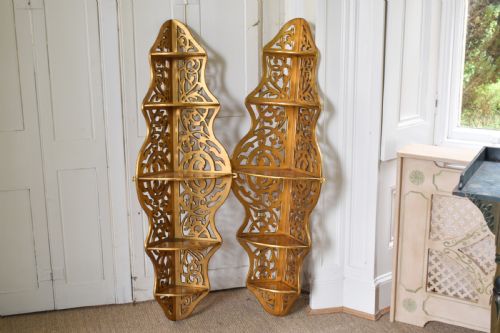
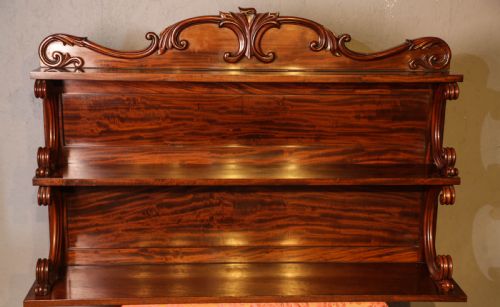
A victorian wall etagere serves as a hanging display piece, typically featuring multiple tiers of open shelving designed to mount directly onto a wall. These units utilise vertical space efficiently while showcasing ornaments, small books or cabinet porcelain.
The pieces listed span corner shelves, waterfall designs and multi-tiered hanging boards originating predominantly from the nineteenth century. Mahogany and walnut appear regularly alongside satin birch, cherry wood and amboyna.
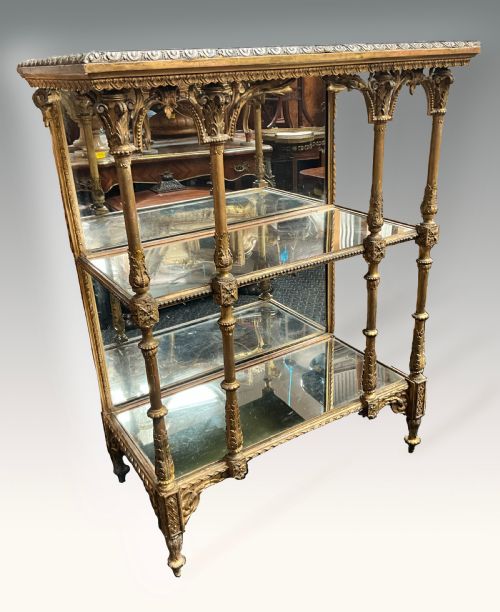
Stylistic influences range from French chateau and Victorian Gothic revival to rococo revival and the aesthetic movement. Certain examples incorporate mirrors or small cabinets into the structure, merging open display with enclosed storage.
Materials and construction
Timbers such as mahogany, walnut and satin birch form the structural foundation of these etageres, shaped into boards, turned supports and carved mouldings. Cabinetmakers employed brass fittings, brass rods and painted accents to enhance the timber frames.
Giltwood and gesso appear on more ornate examples, creating reflective, gilded surfaces shaped into scrolling motifs and decorative flourishes. Inlaid details and bobbin turnings demonstrate nineteenth-century woodworking specialisations.
Victorian Wall Etagere Retail Price Guide 2026
Typical asking prices for victorian wall etagere among the pieces listed under this phrase on Sellingantiques today, from the lower quarter to the upper quarter. They describe what is for sale here now, not the wider market.
Materials represented across the inventory feature mahogany, walnut, satin birch, cherry wood, amboyna, brass, glass, gesso and giltwood.
Assessing quality and execution
Quality rests in the selection of timbers and the precision of the joinery, from simple hanging boards to complex units with integrated mirrors and cabinets. Better examples show careful attention to turned spindles, carved gesso and secure wall mounting points.
The refinement of the decorative style dictates the tier between standard utilitarian shelving and high-status display furniture. Original brass hardware, intact gilding and well-figured grain distinguish superior workshop production.
The Victorian Wall Etagere Glossary
- Etagere
- A piece of furniture consisting of a set of open shelves for displaying small objects. They are designed to stand on the floor or hang upon a wall.
- Gesso
- A plaster-like mixture used as a base for moulding or painting on wood. It is often gilded with gold leaf on ornate nineteenth-century frames.
- Bobbin
- A type of turned furniture leg or support resembling a string of bobbins. This decorative turning technique appears frequently on nineteenth-century hanging shelves.
- Waterfall
- A style of tiered shelving where each shelf steps back progressively from the one below. This creates a cascading silhouette against the wall surface.
Victorian Wall Etagere: Frequently Asked Questions
How do I hang a wall etagere safely?
These units mount to the wall using integrated brackets, screw holes or hanging loops fixed to the rear framework. It is essential to locate wall studs or utilise appropriate heavy-duty fixings to support the weight of the timber and displayed items.
Overloading upper tiers should be avoided to maintain stability. Professional installation is recommended for larger mahogany or mirrored pieces.
What rooms suit a hanging etagere?
Hanging etageres work well in drawing rooms, hallways and studies where floor space is limited. They provide an elevated focal point for displaying small collections without cluttering floor areas.
Kitchens and bathrooms are less suitable unless humidity levels are strictly controlled to protect nineteenth-century adhesives and wood veneers.
How do I clean nineteenth-century wood?
Dusting with a dry, soft cloth prevents particle buildup on carved surfaces and turned spindles. Periodic application of quality beeswax nourishes the mahogany, walnut or satin birch without damaging the historic finish.
Harsh chemical cleaners and excessive moisture must be avoided entirely. They strip natural oils and soften nineteenth-century glue or gesso.
How can I tell a Victorian piece from a Regency one?
Regency wall shelves tend to display cleaner classical lines influenced by neoclassical design, often featuring simpler mahogany boards. Victorian examples frequently incorporate heavier carving, aesthetic movement details, gesso or mixed woods like satin birch and amboyna.
Examining the construction joints, screw types and secondary timbers helps clarify the period of manufacture.