

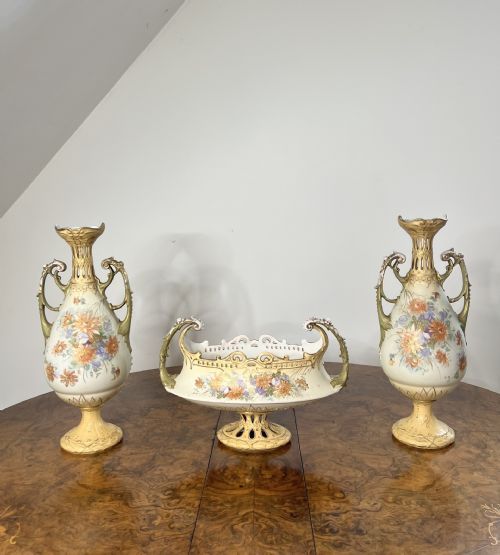


Victorian Vienna Porcelain
These Victorian Vienna porcelain pieces bring elaborate hand-painted classical scenes and rich gilding straight into a room.
Victorian Vienna Porcelain
Victorian Vienna porcelain covers ornamental ceramics produced across the nineteenth century, encompassing cabinet plates, chocolate cups, and grand decorative urns. Pieces frequently display mythological or allegorical subjects, including figures such as Cupid and Psyche alongside woodland scenes.
Buyers encounter diverse decorative formats on this page, ranging from single portrait vases and ewers to matched vase garniture sets and centrepieces. Stylistic influences span neoclassical revival, rococo revival, and art nouveau.
Origins trace directly to nineteenth-century Vienna production, alongside pieces bearing the Royal Vienna style or works issued by specific makers like Ernst Wahliss. Dates cluster around the middle and latter decades of the nineteenth century, notably circa 1880 to 1900.
How They Were Made
Potters shaped fine porcelain bodies into vases, ewers, and plates, which were then finished with hand-painted artistic details and colourful enamel work. Artisans applied lavish gold leaf and gilding to accentuate handles, rims, and borders.
Certain ceramic forms incorporate pierced porcelain techniques or detailed figural handles, whilst related items integrate walnut cases, brass fittings, or glass elements.
Victorian Vienna Porcelain Retail Price Guide 2026
Typical asking prices for victorian vienna porcelain among the pieces listed under this phrase on Sellingantiques today, from the lower quarter to the upper quarter. They describe what is for sale here now, not the wider market.
Materials recorded across the selection include porcelain, enamel, gold leaf, walnut, brass, and glass.
What Varies in Quality
The standard of hand-painted artistry dictates the distinction between ordinary production and exceptional cabinet pieces. Delicate portraiture and intricate allegorical scenes demand superior brushwork from the decorator.
The application of gold leaf and gilding varies considerably, with finer items displaying richer metallic depth and more complex tooling. Pierced porcelain work and sculptural handles also reflect the ambition of the original workshop.
Ernst Wahliss·Gustav Becker·Royal Vienna
The Victorian Vienna Porcelain Glossary
- Cabinet plate
- A decorative ceramic plate intended for display in a cabinet rather than dining use. These often feature detailed figural or mythological painting.
- Garniture set
- A matched group of three or more ornamental vases or urns designed to sit together on a mantelpiece or sideboard. They share coordinated decorative schemes.
- Ewer
- A large jug with a wide spout and ornate handle, historically used for water but produced in this period purely for display. Many examples feature classical forms.
- Enamel
- A glassy substance fused to the porcelain surface through firing to create colourful painted decoration. It provides a durable and vibrant finish for figures and floral motifs.
- Gilding
- The application of gold leaf or gold paint to highlight ceramic details. High-quality pieces use heavy gilding around panels and borders.
Victorian Vienna Porcelain: Frequently Asked Questions
What are Vienna porcelain urns?
Vienna porcelain urns are large decorative vessels produced during the nineteenth century for display in formal rooms. They often feature classical shapes and hand-painted mythological scenes.
Many examples form part of matching garniture sets designed to decorate mantelpieces or large pieces of furniture.
How do I identify Royal Vienna style?
Royal Vienna style porcelain is characterised by rich hand-painted artwork, heavy gilding, and classical or allegorical subjects. Pieces frequently depict named figures or romantic scenes.
Objects span cabinet plates, portrait vases, and chocolate cups decorated with intricate enamels.
Where were these pieces made?
These ceramics originate from Vienna makers and decorators working during the nineteenth century. Production encompasses both major factories and independent studios like that of Ernst Wahliss.
Designs reflect the shifting aesthetic tastes of the period, moving from neoclassical revival toward art nouveau.
How should I clean porcelain with gilding?
Clean nineteenth-century gilded porcelain gently with a dry or very slightly damp soft cloth. Avoid harsh rubbing, as aged gold leaf and enamel can wear away.
Keep pieces away from direct strong sunlight and moisture to preserve the delicate hand-painted surfaces.