



Victorian Vanity Cabinet
A victorian vanity cabinet organises daily grooming and personal treasures, combining practical compartments with the rich timber grains characteristic of the nineteenth century.
Victorian Vanity Cabinet
When buyers search for a victorian vanity cabinet, they encounter a diverse array of functional furniture designed for personal care, including washstands, dressing tables, jewellery boxes, and shaving stands. These pieces reflect the domestic priorities of the nineteenth century, housing everything from porcelain ewers to intimate trinkets.
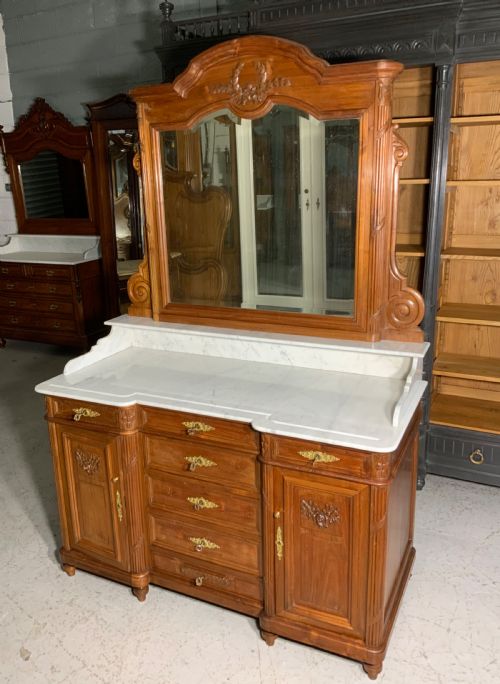
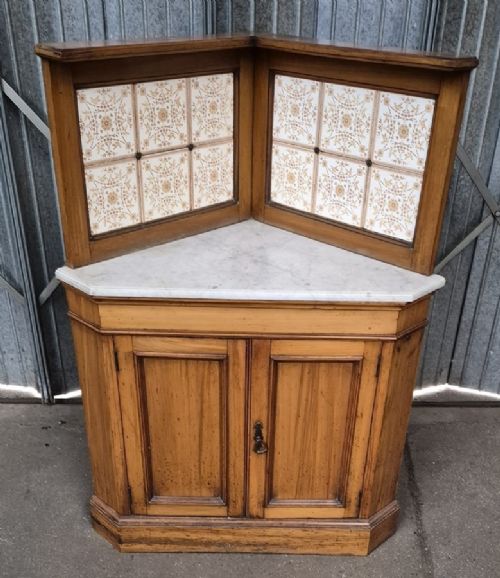
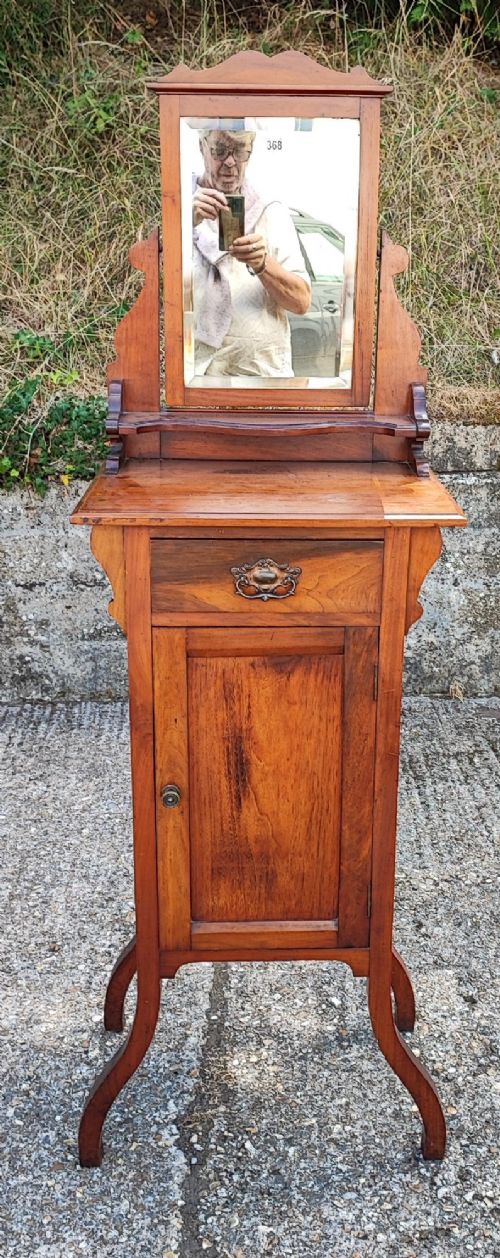
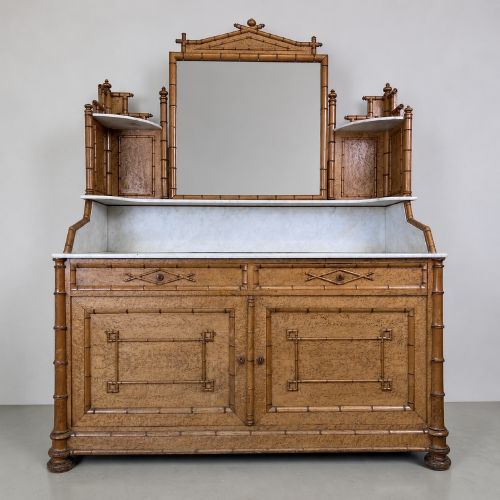
The pieces appearing on this page span several distinct forms, with washstands featuring prominently alongside tabletop jewellery chests and dressing cabinets. Makers of the period adapted these utilitarian objects to suit varied domestic interiors, incorporating marble tops, mirrors, and specialised compartmentalization.
While the label covers multiple stylistic influences such as the Aesthetic Movement, Arts and Crafts, and French revivals, the core Victorian output remains anchored in solid timbers and practical storage solutions. Buyers find both monumental bedroom suites and compact table-top boxes designed for private chambers.
Materials and construction methods
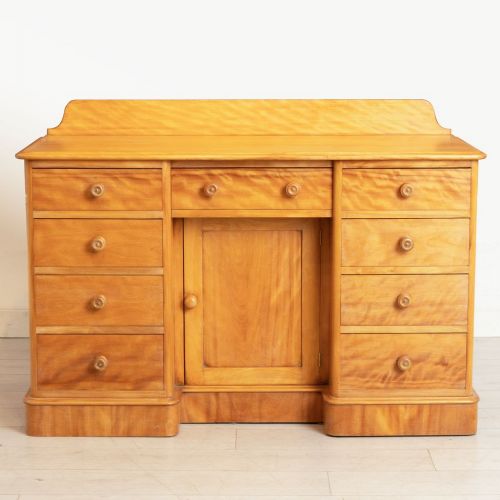
Cabinet makers relied heavily on robust timbers like mahogany, walnut, rosewood, and satin birch, often applying marquetry inlay or bird's-eye maple veneers to create decorative surface patterns. These woods provided the structural integrity needed for daily use in bedrooms and dressing rooms.
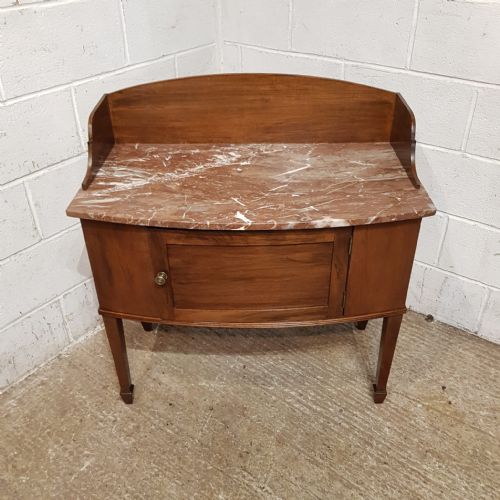
Many washstands and cabinets incorporated heavy marble tops, particularly rouge or white variants, to withstand water and cosmetic spills during grooming routines. Glass mirrors, brass hardware, mother-of-pearl accents, and ceramic majolica panels further enhanced both the utility and visual appeal of these furnishings.
Several cabinets conceal specialised shaving cups and adjustable mirrors designed for gentlemanly grooming routines.
Distinctions in craftsmanship
Superior examples distinguish themselves through the selection of finely figured veneers, precise marquetry inlay, and the retention of original hardware such as brass handles and adjustable mirrors. The integration of high-grade marble slabs and secondary timbers indicates a higher tier of workshop production.
Makers known for exceptional joinery, including documented firms, demonstrate greater refinement in the fitting of drawers, secret compartments, and hinged lids. Pieces that maintain their original surfaces without invasive modern restoration command greater appreciation from collectors seeking authenticity.
Walker & Sons·Edwards & Roberts·Gillows·J. Shoolbred
The Victorian Vanity Cabinet Glossary
- Marquetry
- Decorative veneer work arranged in intricate patterns or pictures using various woods. This technique adorns drawer fronts and cabinet doors on finer Victorian pieces.
- Washstand
- A dedicated piece of furniture designed to hold a basin, ewer, and washing accessories. Many incorporate marble tops and mirrored splashbacks.
- Bonheur Du Jour
- A small lady's writing desk featuring an upper section with shelves, drawers, or a small cabinet. These delicate pieces function primarily for correspondence and light reading.
- Majolica
- Opaque tin-glazed earthenware decorated with colourful metallic oxide glazes. These panels occasionally appear inset into furniture for decorative effect.
Victorian Vanity Cabinet: Frequently Asked Questions
How were washstands used in Victorian bedrooms?
Washstands served as the primary washing station before modern indoor plumbing became universal in bedrooms. They typically held a ceramic basin and water pitcher on a protective marble surface.
Lower shelves or enclosed cupboards below stored chamber pots, spare linens, and washing accessories out of sight.
What is the difference between a dressing table and a vanity cabinet?
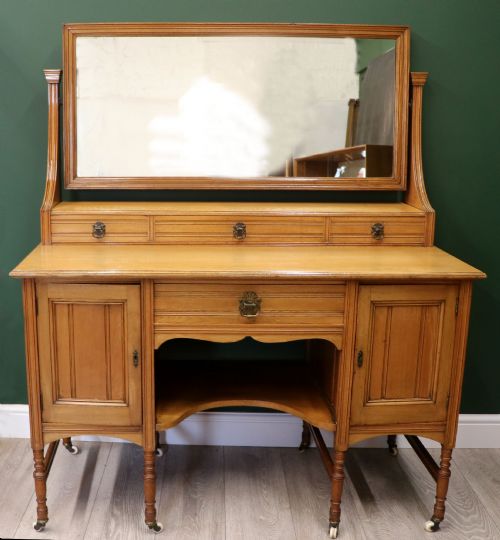
Dressing tables generally provide a surface and mirror specifically for hair styling and applying cosmetics, often featuring multiple drawers for personal items. Tabletop vanity cabinets and boxes focus instead on secure storage for jewellery and small trinkets.
Larger cabinet forms combine elements of both, enclosing mirrors and compartments behind doors.
How do I identify Arts and Crafts influence on these pieces?
Arts and Crafts pieces emphasise honest construction, visible joinery, and simpler structural forms without excessive surface ornamentation. They often utilise oak or mahogany with minimal inlay, focusing on the natural grain of the timber.
Hardware on these examples tends to be understated, utilising hammered copper or brass.
Where should I place a marble top washstand today?
Marble top washstands adapt well into modern bathrooms or hallways as stylish storage units and sink surrounds. The stone surface naturally resists water, making it practical for contemporary utility.
In living areas or bedrooms, they function effectively as decorative console tables with integrated shelving.