

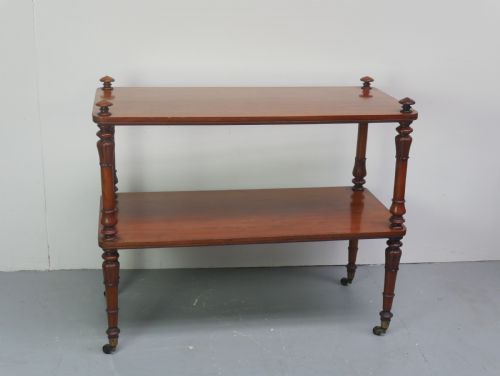


Victorian Two Tier Server
These Victorian two tier server pieces combine tiered display surfaces with substantial timber construction to anchor nineteenth-century dining and reception rooms.
Victorian Two Tier Server
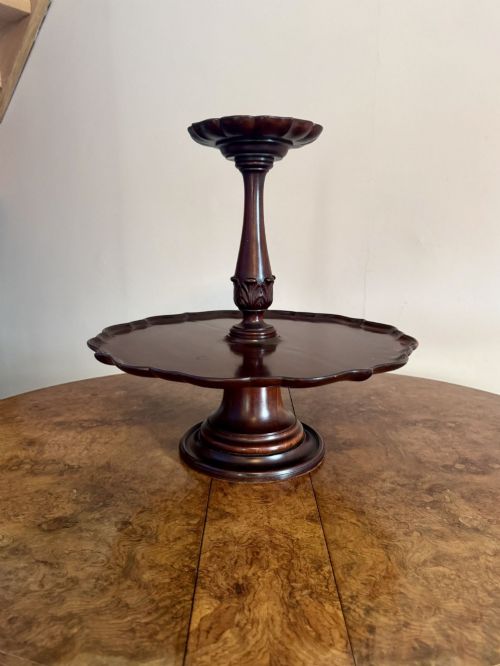
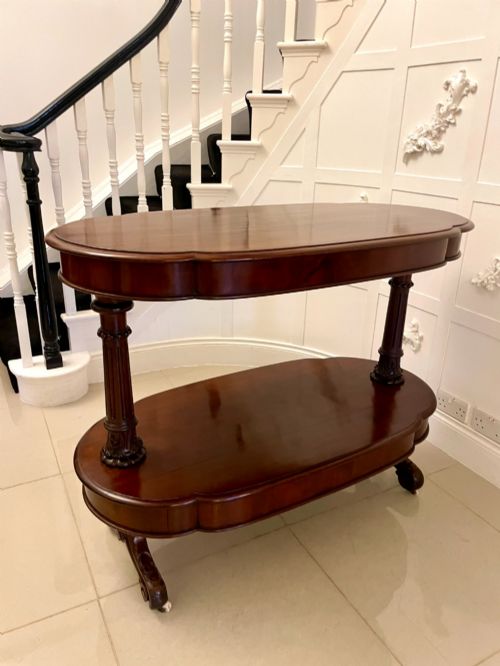
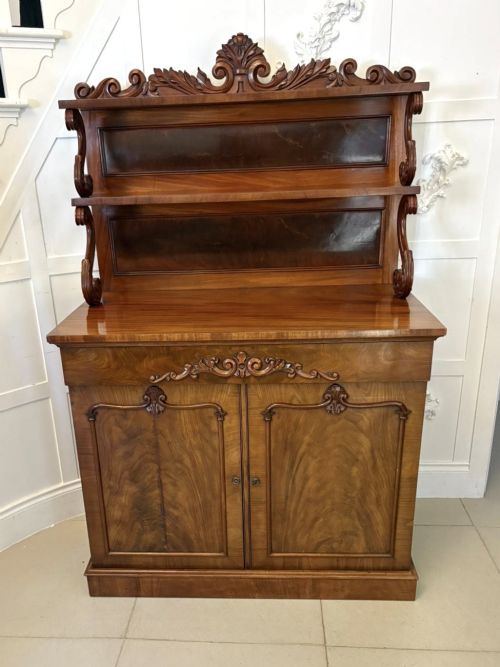
When searching for a victorian two tier server, you encounter robust dining furniture designed for serving food and displaying silver during the nineteenth century. These forms encompass serving tables, sideboards, dumb waiters, and console tables with dual levels for organisation.
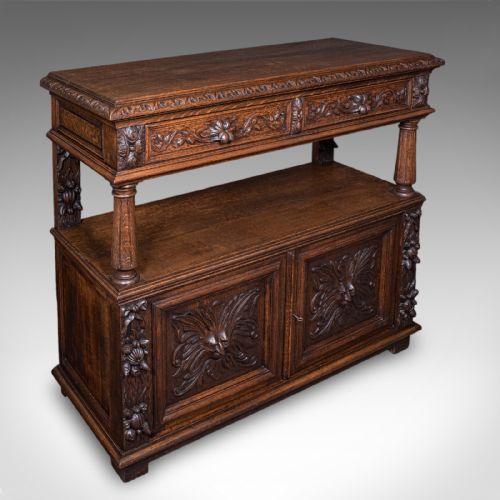
The pieces appearing on this page originate predominantly from the Victorian period, spanning the mid-nineteenth century up to the eighteen-eighties. You find variations ranging from plain mahogany boards to elaborate carved oak sideboards with architectural presence.
Makers and workshops of the era produced these servers to function as auxiliary furniture in grand dining rooms and smaller reception spaces. The lower and upper tiers provide practical surfaces that reflect the domestic routines of the period.
How they were made
Cabinet makers constructed these servers using dense timbers such as mahogany, pollard oak, walnut, and ebonised wood, often enhanced with flame mahogany veneer or parcel gilt highlights. Carpenters joined structural components with traditional mortise and tenon joinery to support heavy tableware.
Carving and turning define the decorative technique, seen in heavy tripod bases, revolving mechanisms, and carved oak details like the Green Man motif. Brass fittings and ceramic castors appear frequently to facilitate movement and secure structural joints.
Victorian Two Tier Server Retail Price Guide 2026
Typical asking prices for victorian two tier server among the pieces listed under this phrase on Sellingantiques today, from the lower quarter to the upper quarter. They describe what is for sale here now, not the wider market.
The furniture spans distinct nineteenth-century styles, incorporating Gothic revival, Aesthetic Movement, and Regency influences.
What varies in quality
Quality in a victorian two tier server rests on the selection of timber and the depth of its figuring, distinguishing plain planks from highly figured flame mahogany veneer or pollard oak. Superior examples demonstrate crisp hand-carving, particularly in architectural mouldings and figural motifs.
Construction methods also separate standard production from exceptional cabinet work, visible in stable revolving mechanisms, solid secondary woods, and integrated brass hardware. Workshops known for high-end retail production achieved superior proportions and finish that endure across generations.
Gillows of Lancaster and London·James Shoolbred and Co
The Victorian Two Tier Server Glossary
- Dumb waiter
- A tiered serving table or stand fitted with multiple shelves or revolving trays used to hold dishes without servant attendance. These pieces stand on tripod bases or straight legs.
- Pollard oak
- Timber taken from trees that were pollarded, producing wood with a dense, knotted grain pattern. Cabinet makers valued this timber for its distinctive decorative appearance on drawer fronts and doors.
- Flame mahogany veneer
- A thin slice of mahogany timber cut from the point where a branch joins the trunk to create a fiery, rippling pattern. Furniture makers applied this veneer to primary display surfaces for visual impact.
- Green Man
- A sculptural architectural motif depicting a human face entwined with foliage, vines, or branches. This carving style appears frequently on nineteenth-century oak furniture in the Gothic revival taste.
- Aesthetic Movement
- A late nineteenth-century design style that emphasised visual beauty and art for art's sake over historical revivalism. Pieces from this movement often feature simpler geometric lines and ebonised finishes.
Victorian Two Tier Server: Frequently Asked Questions
What is a victorian two tier server used for?
These servers functioned as auxiliary furniture in dining rooms to hold dishes, glassware, and silver during meals. The two tiers provided extra surface area for food service when dining tables were crowded.
Today, they serve well in modern dining rooms or hallways as display tables and storage surfaces. Their proportions allow them to hold lamps, books, or decorative objects while occupying minimal floor space.
How do I identify an Aesthetic Movement server?
Aesthetic Movement servers differ from traditional Victorian pieces through cleaner geometric lines and often feature ebonised wood or walnut rather than heavy mahogany. They reflect a shift towards simpler forms during the eighteen-eighties.
These pieces typically avoid heavy historical carving in favour of subtle architectural detailing and refined proportions. They fit well into interiors that mix antique and modern elements.
What is the difference between a buffet and a dumb waiter?
A buffet is a sideboard designed with cabinets, drawers, and flat surfaces for holding food and serving implements against a wall. They often feature substantial carved decoration in oak or mahogany.
A dumb waiter frequently incorporates revolving tiers or circular trays supported on a central tripod base. This design allowed diners to access dishes independently without requiring servants in the room.
How do I care for a mahogany server?
Protect mahogany surfaces by keeping furniture away from direct sunlight and strong heat sources that can dry out the timber and veneer. Regular dusting with a soft, dry cloth preserves the polished finish.
Apply a quality beeswax periodically to nourish the wood and maintain its natural lustre without building up heavy chemical residues. Avoid placing wet or hot items directly onto the antique timber.