
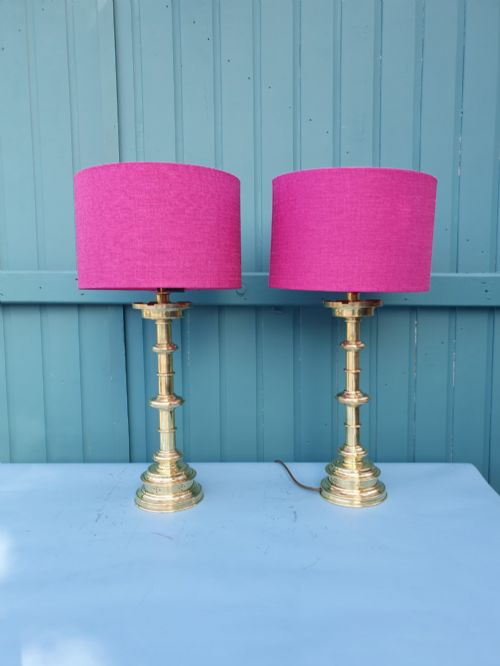
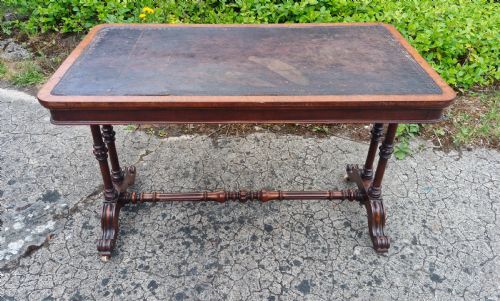

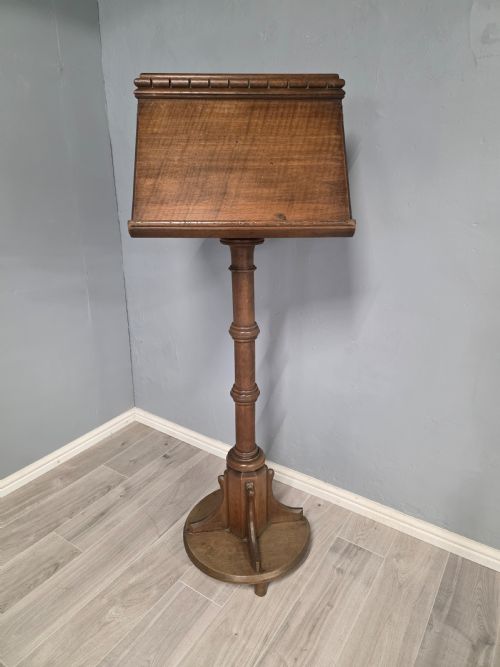


Victorian Turned Column Desk
These victorian turned column desk options are solid timber writing pieces and lamps that bring distinct nineteenth-century proportion to a study.
Victorian Turned Column Desk
A victorian turned column desk brings solid timber construction and distinct nineteenth-century proportion to a study or workspace. These pieces range across the Victorian period, with examples also appearing from later decades.
The selections here extend across walnut and pine forms, accompanied by related table lamps and writing tables that share the same architectural vocabulary. Buyers will encounter both large library tables and compact ladies davenports.
Origin details in the evidence point towards traditional English workshops alongside pieces influenced by Victorian Gothic Revival and Anglo-Indian styles. Each form provides a functional writing surface rooted in nineteenth-century craftsmanship.
Materials and construction methods
Cabinet makers utilised sturdy timbers such as walnut, pine, and oak alongside dense hardwoods like lignum vitae for turned supports. Metal elements incorporate solid brass and iron, frequently paired with leather writing surfaces.
Joinery techniques focus on stability and endurance, supporting heavily turned columns and robust pedestals without relying on veneer where solid timber serves better. Surface finishes range from waxed pine to polished walnut and handpainted details.
Some makers apparently believed that if a turned column was good, four more tucked underneath would make it respectable.
Distinguishing quality across examples
Superior execution shows in the crispness of the turned woodwork and the density of the chosen timber, such as solid walnut or lignum vitae. Poorer variations rely on softer pine with less refined turning and simpler secondary woods.
The integration of secondary materials, including properly fitted leather inserts and substantial brass hardware, separates utilitarian pieces from finer library furnishings. Proportion and balance in the column supports dictate the overall visual success of the piece.
The Victorian Turned Column Desk Glossary
- Davenport
- A small Victorian desk featuring a sloping writing surface above a pedestal of drawers. This form provides compact workspace with integrated storage.
- Library Table
- A large freestanding table designed for the centre of a room, often fitted with leather tops and drawers. These pieces were utilised in nineteenth-century studies for reading and correspondence.
- Lignum Vitae
- An exceptionally dense and heavy hardwood utilised for turned objects and decorative supports. Its natural oils give the wood a distinctive oily lustre.
- Gothic Revival
- An architectural and decorative style drawing on medieval ecclesiastical forms. Pieces in this manner feature pointed arches, heavy mouldings, and robust columns.
- Pricket
- A type of candlestick or lamp featuring a spike upon which a candle or fitting is secured. This form appears frequently in ecclesiastical metalwork.
Victorian Turned Column Desk: Frequently Asked Questions
What is a Victorian turned column desk?
A Victorian turned column desk is a nineteenth-century writing piece defined by cylindrical turned wooden supports and solid timber construction.
These desks and tables provide durable workspaces that reflect the architectural tastes of the period.
How do I identify the wood used?
Examination of grain patterns and weight helps distinguish between dense hardwoods like walnut or lignum vitae and softer timbers such as pine.
Finer pieces typically utilise darker, heavier woods that take a deep polish.
Where were these desks placed?
These pieces were designed for studies, libraries, and withdrawing rooms within nineteenth-century homes.
Freestanding library tables sat in the middle of a room, while smaller davenports were positioned against walls or near windows.
Are these pieces suitable for daily work?
Solid timber construction and sturdy turned columns make these desks well-suited for contemporary writing and laptop use.
Leather writing inserts provide a durable surface for daily correspondence.
What styles accompany these desks?
Related items often share Victorian Gothic Revival or traditional English design vocabularies.
Brass lamps and table stands from the same era frequently complement the timber tones of the desks.