
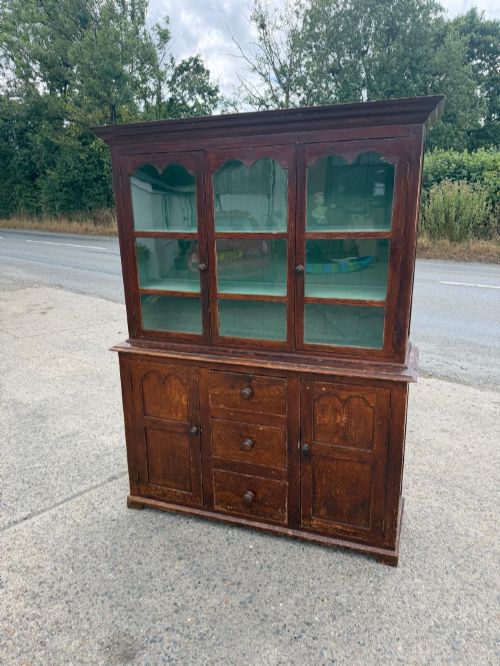
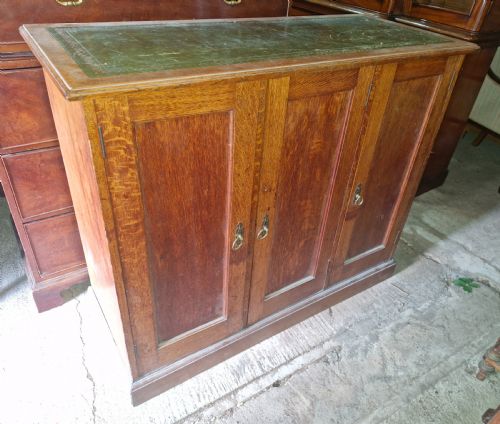


Victorian Three Door Sideboard
A Victorian three door sideboard anchors a dining room with its substantial timber frame and generous capacity.
Victorian Three Door Sideboard
When you search for a victorian three door sideboard, you encounter large storage furniture primarily designed for dining rooms and large reception spaces. The pieces appearing here span the nineteenth century, including examples from the eighteen-sixties and nineteen-hundreds.
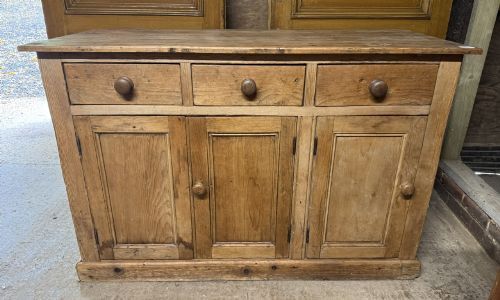
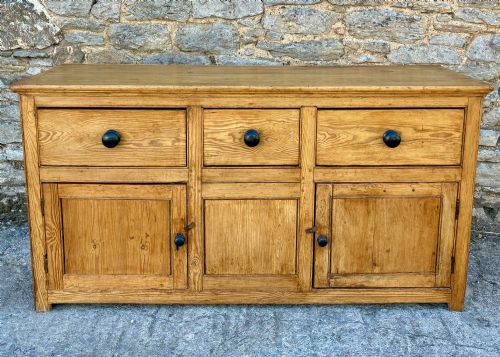
Most entries align with Victorian, Gothic Revival, and Edwardian design sensibilities. Buyers find both formal architectural pieces and simpler rustic farmhouse variants.
How they were made
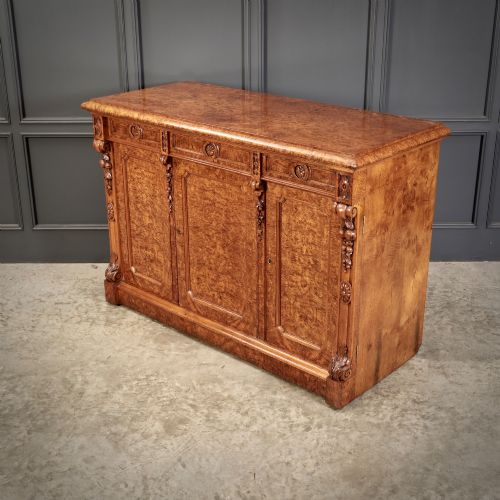
Cabinet makers utilised dense hardwoods like mahogany, walnut, and oak to build heavy carcases that could withstand daily domestic use. Decorative veneers such as pollard oak and birds eye maple were applied to door panels to create striking natural grain patterns.
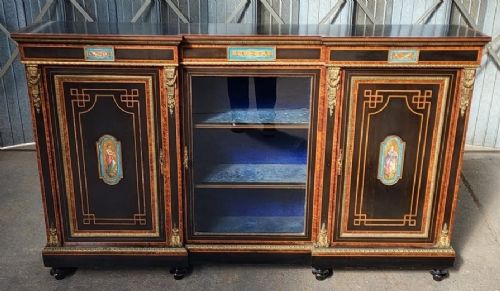
Metalwork played a structural and decorative role, with brass hardware and ormolu mounts fitted to key areas. Carving, inlay work, and glazed glass panels completed the detailing on higher grade specimens.
Listings feature woods such as oak, mahogany, rosewood, pine, pollard oak, and birds eye maple across the nineteenth century.
What varies in quality
The choice of primary timber and secondary veneer sets the baseline for quality, with figured woods and pollard oak demanding greater joinery skill. Finer pieces display crisp hand carving and integrated architectural mouldings rather than basic applied decoration.
Hardware execution and internal fittings also separate standard utility cupboards from top tier reception furniture. Original brass mounts, well-fitted doors, and sound drawer construction indicate superior workshop origin.
James Shoolbred & Co
The Victorian Three Door Sideboard Glossary
- Pollard oak
- Timber taken from trees that have been pollarded, producing a clustered, highly figured grain pattern prized for cabinet doors.
- Chiffonier
- A compact low sideboard or cabinet, frequently fitted with a mirror or small shelf superstructure on the top.
- Ormolu
- Gilded bronze ornamentation applied to furniture for decorative effect.
- Gothic Revival
- An architectural and decorative style drawing on medieval forms, featuring pointed arches and heavy carved tracery.
- Buffet sideboard
- A heavy serving piece or low cupboard designed for the dining room to hold silver and tableware.
Victorian Three Door Sideboard: Frequently Asked Questions
How do I style a three door sideboard?
Position the sideboard against a principal dining room wall where its length can anchor the space. Balance the top surface with table lamps, ceramics, or a hanging mirror above.
Keep interior shelving organised for dining linens or glassware, utilising the three compartments to separate everyday items from display pieces.
What woods were used for these sideboards?
Cabinet makers relied heavily on dense native and exotic hardwoods. Mahogany and oak form the structural backbone of most traditional examples.
More decorative pieces incorporate pollard oak, birds eye maple, walnut, and rosewood veneers across the visible door panels.
Are these cabinets suitable for modern living rooms?
The generous internal dimensions provide practical storage for modern media equipment, books, and tableware. Their substantial proportions make them effective focal points in larger open-plan rooms.
Careful measurement of ceiling height and floor space ensures the heavy timber frame does not overwhelm smaller domestic environments.
How do I distinguish Gothic Revival styles?
Gothic Revival pieces display architectural motifs borrowed from medieval stone buildings. Look for pointed arches, heavy linenfold carving, and robust oak framing.
These details contrast sharply with the smoother, curved mahogany surfaces found in standard Victorian or Rococo Revival designs.