
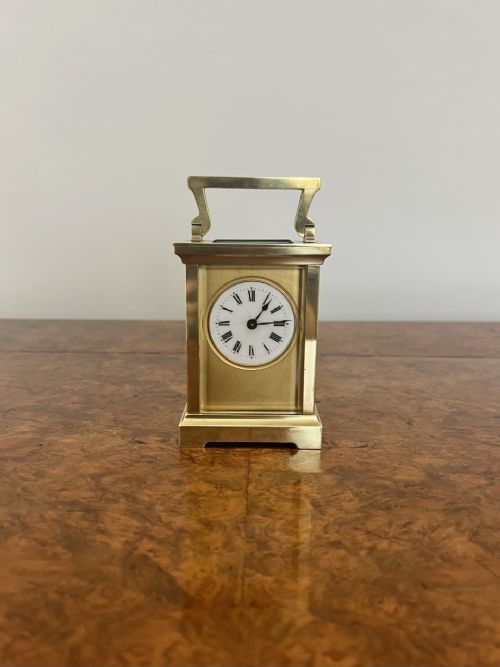


Victorian Tabletop Clock
These victorian tabletop clock examples bring together brass, enamel and precise French or English movement design to sit handsomely on any surface.
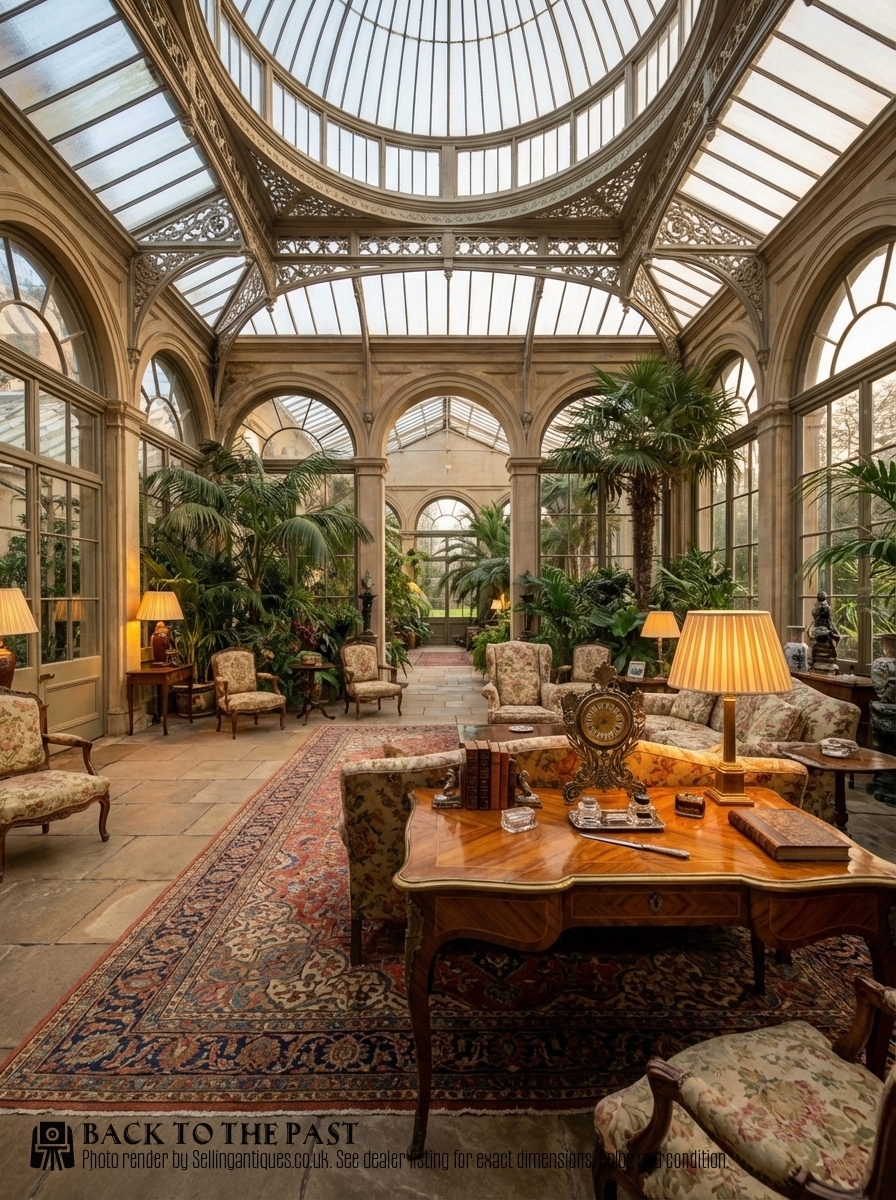
Victorian Tabletop Clock
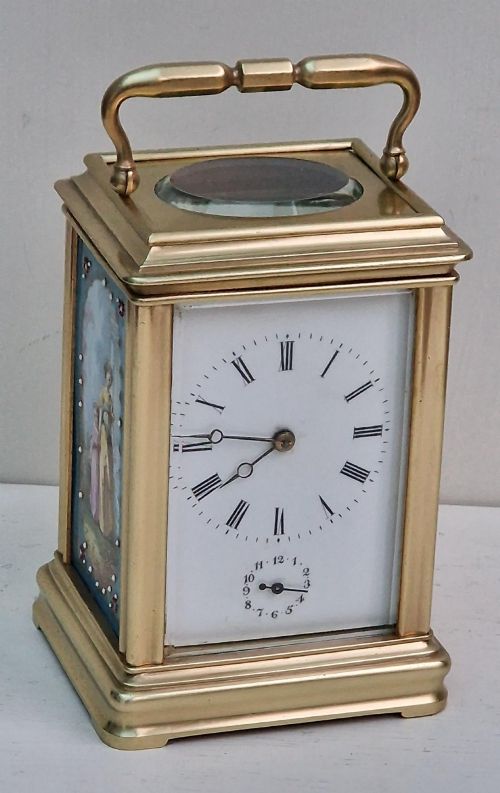
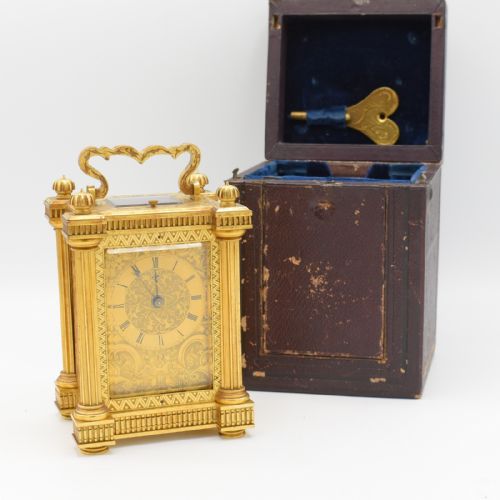
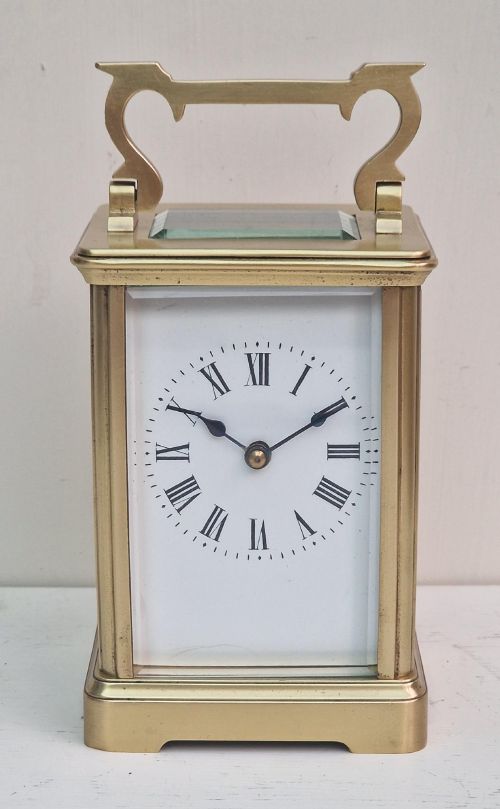
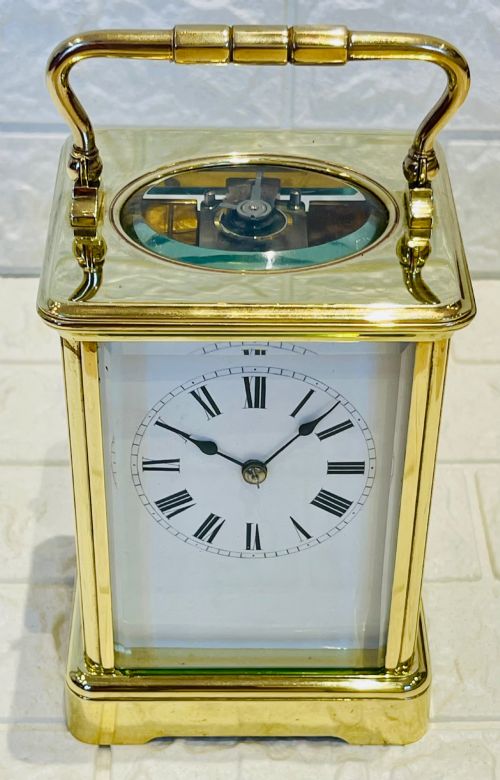
A victorian tabletop clock encompasses carriage clocks, mantel clocks, desk clocks and bracket clocks spanning the nineteenth century. The carriage clock in brass or gilt brass dominates the selection, often housed in glass panels with enamel dials.
Makers and retailers such as Howell and James, Dent, Delépine-Barrois, Brunelot and Penlington and Batty appear alongside unsigned pieces. French carriage clocks and mantel clocks in rococo revival, empire and gothic styles sit alongside English bracket and skeleton clocks.
The objects range from miniature timepieces and giant repeater carriage clocks to portico clocks under glass domes and champlevé enamel mantel clocks. Walnut, figured walnut, leather, bronze and ormolu provide the housing for these mechanical timepieces.
How they were made
Brass, gilt brass, gilt bronze and ormolu form the structural cases, shaped into gorge cases, Corinthian capped pillars and ornate frames. Glass panels permit a view of the escapement and gear trains, whilst leather often covers travel cases.
Enamel provides the white or cream dial faces with black numerals, sometimes enhanced with painted porcelain panels or champlevé enamel detailing. Bronze and cold painted bronzed metal appear in figurative mantel clocks, complemented by twin double fusee movements and striking or repeating mechanisms.
The selection includes pieces attributed to French makers and English retailers from the eighteen-fifties through the Edwardian period.
What varies in quality
The refinement of the movement distinguishes the pieces, particularly where grande-sonnerie, alarm and repeat bell strike functions are present. Signed makers like Dent or Brunelot and retail names such as Howell and James indicate workshop distinction.
The heaviness of the cast brass case, the depth of engraving on panels and the preservation of the enamel dial dictate the grade. Cases featuring champlevé enamel, porcelain panels or glass domes display greater ambition than plain brass housings.
Howell & James London·Delépine-Barrois·Brunelot·Dent·Penlington & Batty
The Victorian Tabletop Clock Glossary
- Carriage clock
- A portable spring-driven timepiece originally designed for travel, featuring a glass-panelled brass case and a handle on top.
- Repeater
- A mechanism that chimes the hours and quarters on demand when a button or pendant is pressed.
- Champlevé
- An enamelling technique where troughs are dug into the metal surface, filled with enamel powder and fired.
- Gorge case
- A distinctive rectangular brass carriage clock case with stepped mouldings at the top and base.
- Fusee
- A conical pulley used in spring-driven clocks to maintain equal power as the mainspring unwinds.
Victorian Tabletop Clock: Frequently Asked Questions
What is a carriage clock?
A carriage clock is a portable timepiece designed during the nineteenth century for travellers, housed in a brass frame with glass panels so the movement can be seen from the sides.
Most examples rest on small feet and feature a swinging handle on the top for carrying.
How do repeating mechanisms work?
A repeating mechanism allows the clock to strike the last hour and quarter-hour when a button or cord is pushed, rather than waiting for the hourly hour strike.
This function was particularly useful for telling the time in a dark bedroom without lighting a candle.
Where were these clocks made?
Many fine carriage clocks and decorative mantel pieces originated in French workshops, frequently imported and retailed by prominent London establishments.
English makers also produced robust bracket clocks, skeleton clocks and carriage models during the Victorian era.
How do I care for a antique clock?
Antique mechanical clocks require regular servicing by a qualified horologist to clean the gear trains and maintain proper lubrication.
Avoid placing them in direct sunlight or near sudden temperature changes to protect the delicate enamel dials and wooden cases.