


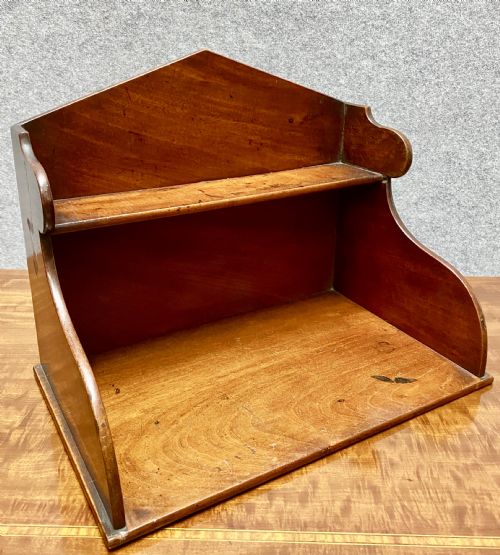

Victorian Tabletop Book Rack
A victorian tabletop book rack organises volumes neatly at hand, combining practical desk utility with fine timber craftsmanship.
Victorian Tabletop Book Rack
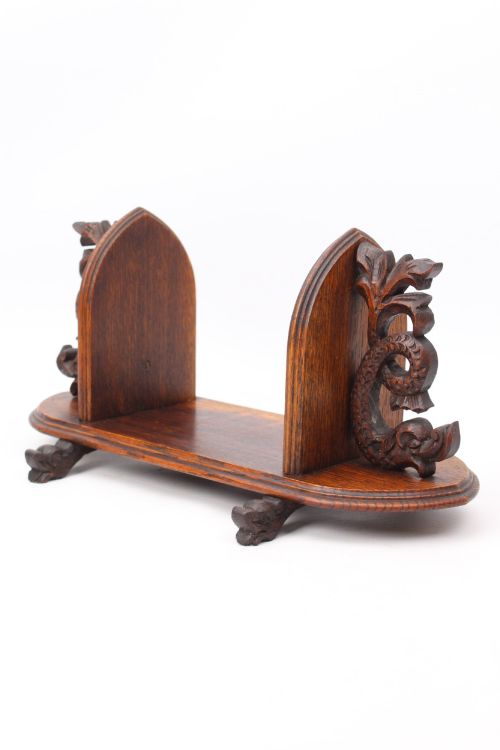
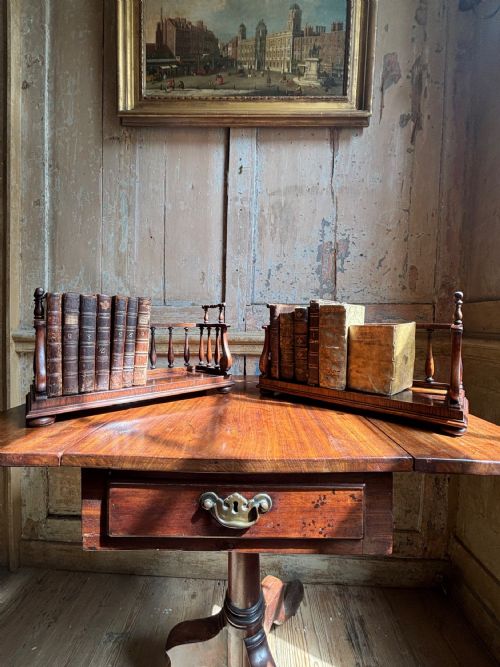
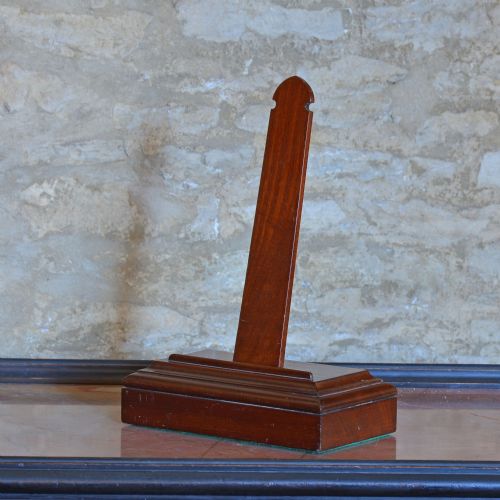
A victorian tabletop book rack takes several forms on this page, including extending book slides, static stands, and revolving bookcases designed for desk use. Most examples date from the nineteenth century, utilising dense hardwoods to sit firmly upon a library table or writing desk.
How they were made
Cabinetmakers constructed these pieces primarily from solid hardwoods like oak, mahogany, rosewood, walnut, and coromandel. These timbers provided the structural integrity required to support heavy volumes without warping under daily use.
Metal components such as brass mounts and extending mechanisms were integrated into the design to allow adjustable lengths, whilst decorative elements like felt lining and wood mosaic added surface texture and protected book bindings.
Listings feature items from the nineteenth century alongside Edwardian and 1930s examples, utilising oak, mahogany, rosewood, walnut, and coromandel.
What varies in quality
The sophistication of the timber selection and decorative technique separates standard utility pieces from finer examples. Finer specimens display intricate wood mosaic work, coromandel veneers, or precise brass mountings rather than plain construction.
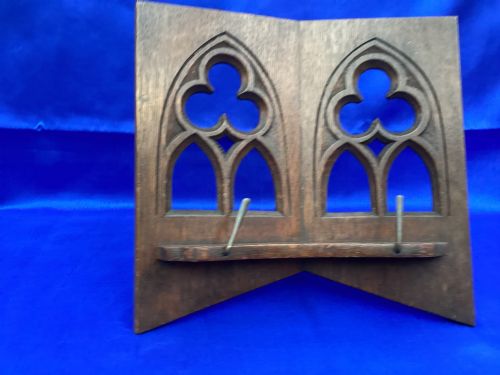
The smoothness of the extending mechanism on sliding racks indicates the care taken during initial manufacture. Robust joints and thoughtful architectural detailing, particularly within Gothic Revival pieces, define the upper tier of the range.
Gillows
The Victorian Tabletop Book Rack Glossary
- Book slide
- An extending desk accessory designed to hold a varying number of volumes upright between two ends. These pieces often utilise a sliding action on a wooden base.
- Gothic Revival
- A nineteenth-century design style drawing inspiration from medieval architecture, characterised by pointed arches, trefoils, and heavy structural oak. This aesthetic frequently appears on Victorian desk stands.
- Wood mosaic
- Small pieces of coloured wood arranged geometrically to form decorative patterns on a surface. Tunbridge ware uses this technique to create pictorial or abstract motifs.
- Desk tidy
- A combined desk accessory featuring compartments for books, stationery, or writing implements. These items kept nineteenth-century workspaces organised and efficient.
Victorian Tabletop Book Rack: Frequently Asked Questions
How do extending book slides work?
Extending book slides feature interlocking wooden channels that pull apart or push together smoothly. This action adjusts the length of the base to accommodate more or fewer books.
Most mechanisms rely on precise carpentry rather than complex metal gears. The wooden base supports the expanding weight while keeping the upright ends stable.
Where were tabletop book racks used?
These pieces sat upon writing desks, library tables, and study surfaces in nineteenth-century homes. They kept frequently referenced volumes within arm's reach of the reader.
Their portable nature allowed owners to move their working library between rooms easily. They served both a domestic function and a decorative display purpose.
What is the difference between oak and rosewood racks?
Oak pieces often display a heavier, more architectural presence associated with Gothic Revival or Arts and Crafts styles. They tend to have visible grain and robust structural framing.
Rosewood and coromandel examples showcase rich, dark tropical timbers with finer decorative finishes. These denser woods usually appear on more formal, high-status desk accessories.
How do I care for a wooden book rack?
Keep wooden book racks away from direct heat sources and strong sunlight to prevent the timber from drying out or splitting. Gentle dusting with a dry cloth maintains the surface sheen.
Avoid using harsh modern chemical polishes on antique finishes. Period polishes or appropriate wax formulations help preserve the natural patina of the wood.