




Victorian Tabletop Accessory
These Victorian tabletop accessory pieces are compact desk and reading furnishings designed to organise writing spaces, bringing period craftsmanship directly into daily modern use.
Victorian Tabletop Accessory
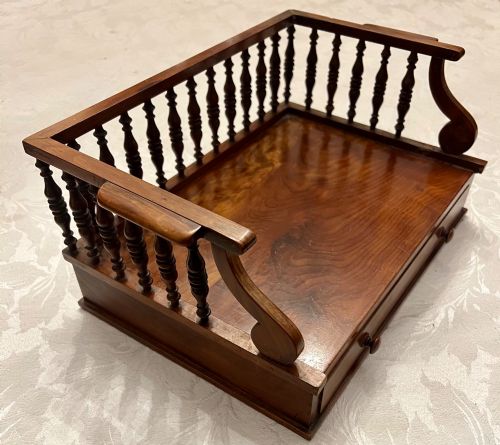
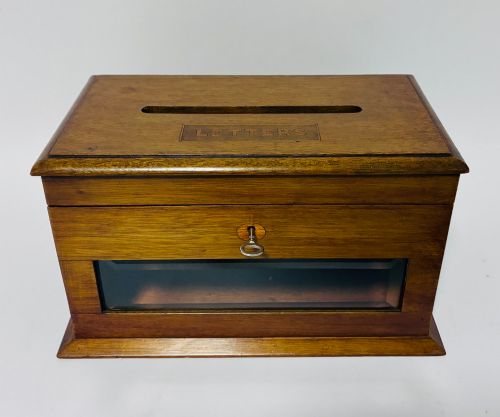
A Victorian tabletop accessory encompasses functional desk furnishings, reading stands and small display items designed for the nineteenth-century study, drawing room or library. These objects range from practical mahogany letter boxes and adjustable book carriers to silver table snuff boxes and novelty cigar lighters.
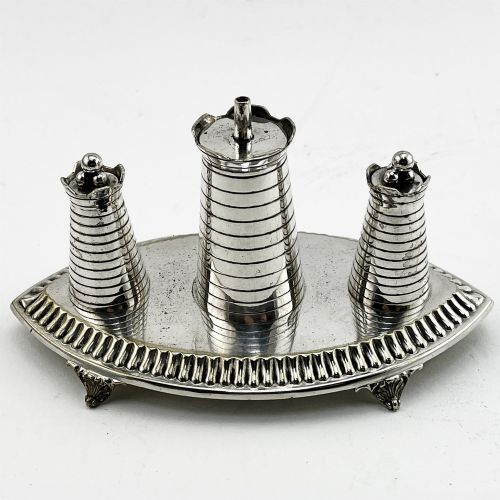
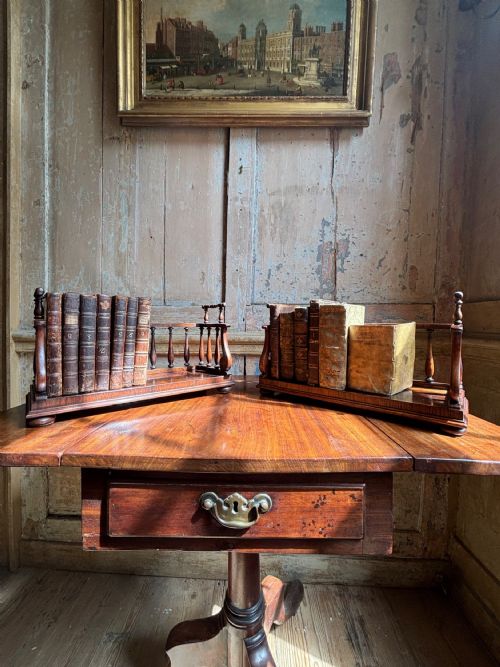
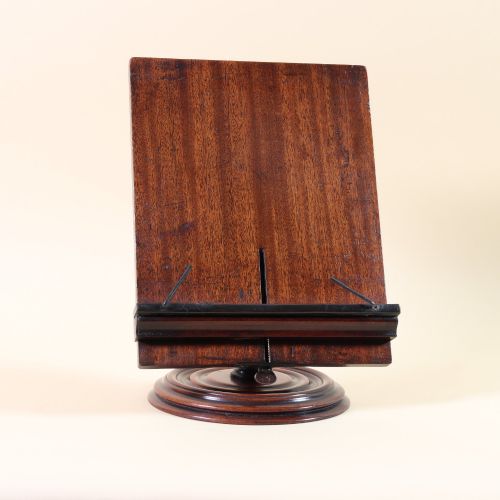
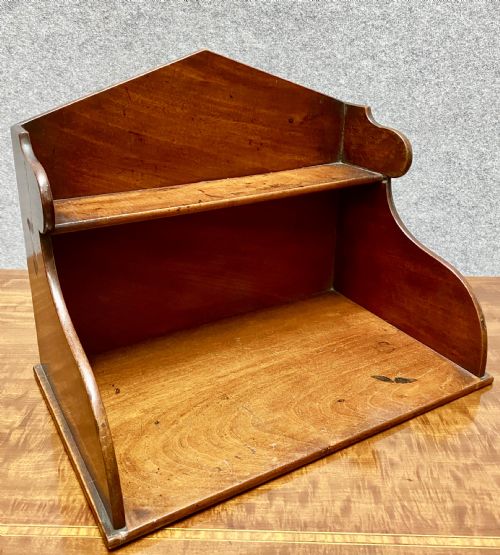
The versions most commonly met on this page are desk-top book rests, reading stands, and small storage containers constructed from dense timbers like mahogany, walnut and yew wood. Alongside these wooden items, metal and silver pieces such as candlesticks, cruet sets and musical leaf turners appear frequently.
Originating predominantly from the nineteenth century and the Edwardian era, these pieces reflect the domestic habits and writing rituals of their period. They serve both utilitarian purposes, such as holding books or correspondence, and decorative functions on the surface of a desk or table.
How they were made
Makers utilised dense hardwoods such as mahogany, walnut, rosewood and oak for the structural bodies of book stands, letter boxes and desk tidies. These timbers were often selected for their grain and polished to a durable finish.
Metal components, including brass mounts, nickel plating, silver plate and sterling silver, were incorporated into mechanisms like sliding bookends and patent page turners. Casting and smithing techniques created sturdy structural elements such as cast iron carriages and heavy candlesticks.
Victorian Tabletop Accessory Retail Price Guide 2026
Typical asking prices for victorian tabletop accessory among the pieces listed under this phrase on Sellingantiques today, from the lower quarter to the upper quarter. They describe what is for sale here now, not the wider market.
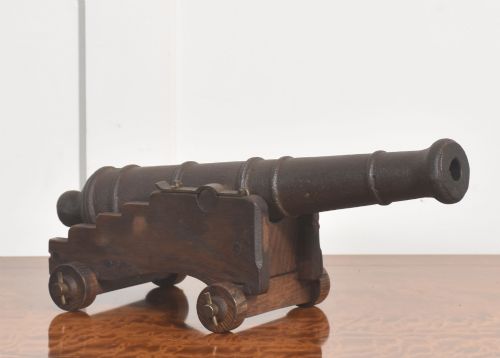
A cast iron signal cannon sits ready to fire from its miniature oak carriage, proving that Victorian desk accessories could be surprisingly explosive.
What varies in quality
The standard of materials and the precision of mechanical adjustments separate finer examples from standard pieces, particularly in items featuring sliding bookends, adjustable stands or patent turning devices. Heavier gauges of sterling silver, well-figured timber grains, and crisp casting detail on brass and iron elements indicate superior manufacture.
The integration of functional hardware, such as secure brass mountings and smooth-operating hinges on letter boxes and snuff boxes, demonstrates the maker's attention to detail. Simpler, purely decorative items rely on the natural properties and condition of the horn, glass or wood used in their construction.
Elkington & Co·Padbury
The Victorian Tabletop Accessory Glossary
- Book carrier
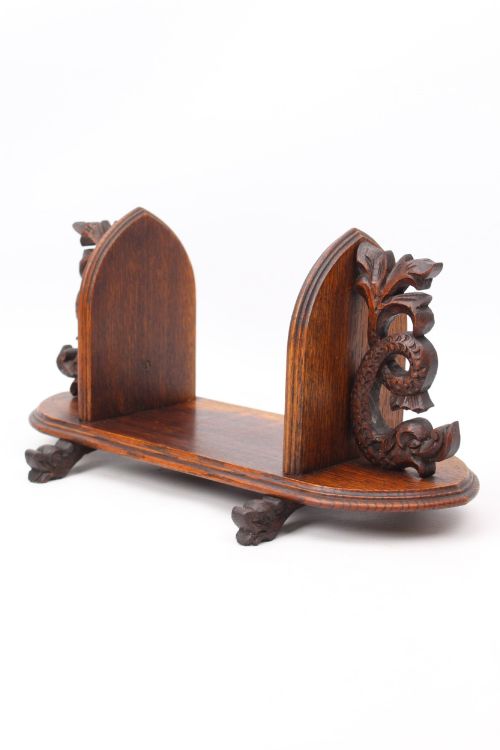
- A portable stand or rack designed to hold a small selection of volumes upright on a desk or table. These often feature folding or fixed ends to keep books secure.
- Cruet set
- A matched group of bottles or containers used for holding condiments or oils at the table. In a desk or tabletop context, multi-bottle silver frames served organisational or serving roles.
- Gothic Revival
- An architectural and decorative style drawing inspiration from medieval forms. Pieces in this manner frequently display pointed arches, heavy oak construction and ecclesiastical motifs.
- Letter box
- A secure lidded container or small cabinet utilised for receiving and sorting incoming correspondence. These often incorporate hinged access doors and designated brass slots.
- Snuff box
- A small, pocketable or tabletop lidded container made to hold powdered tobacco. Examples are frequently fashioned from precious metals like sterling silver with hinged lids.
Victorian Tabletop Accessory: Frequently Asked Questions
What is a tabletop book carrier used for?
A tabletop book carrier holds a curated selection of current reading material upright on a desk, table or shelf. These portable racks keep volumes within arm's reach while working.
They were common in nineteenth-century studies and libraries to manage working texts without needing a full-sized bookcase.
How do I care for wooden desk accessories?
Maintain wooden surfaces by keeping them away from direct heat sources and rapid humidity changes. Regular dusting with a soft, dry cloth preserves the polished finish.
Avoid using harsh chemical polishes that can build up and dull the natural grain of mahogany, walnut or yew.
Are silver items marked with hallmarks?
Sterling silver pieces from the nineteenth century typically carry standard hallmarks indicating the assay office, date letter and maker's mark. These stamps provide verifiable clues regarding origin and age.
Silver plate items feature different marks that denote plating techniques rather than precious metal purity.
What distinguishes Gothic Revival pieces?
Gothic Revival items utilise architectural motifs borrowed from medieval design, such as pointed arches, trefoils and heavy dark oak. This style gained popularity during the nineteenth century for library and study furnishings.
Such pieces often look heavier and more angular than standard Victorian domestic objects.