


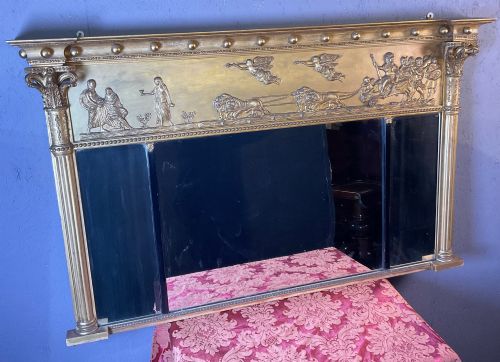
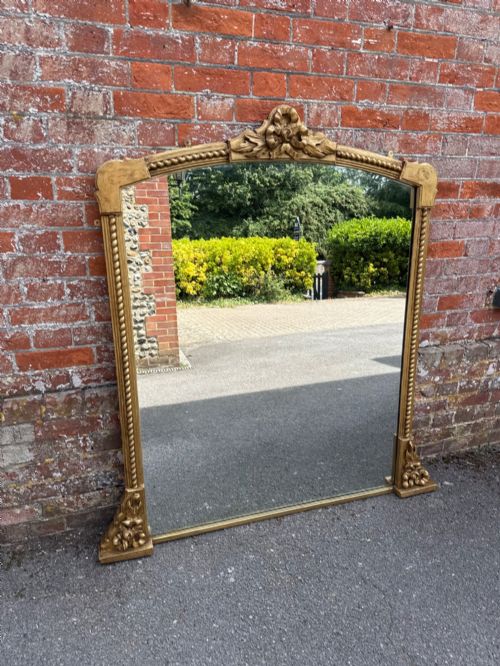
Victorian Style Mantel Mirror
These pieces for a Victorian style mantel mirror bring nineteenth-century presence and reflective light to a room, scaled for positioning above a fireplace.
Victorian Style Mantel Mirror
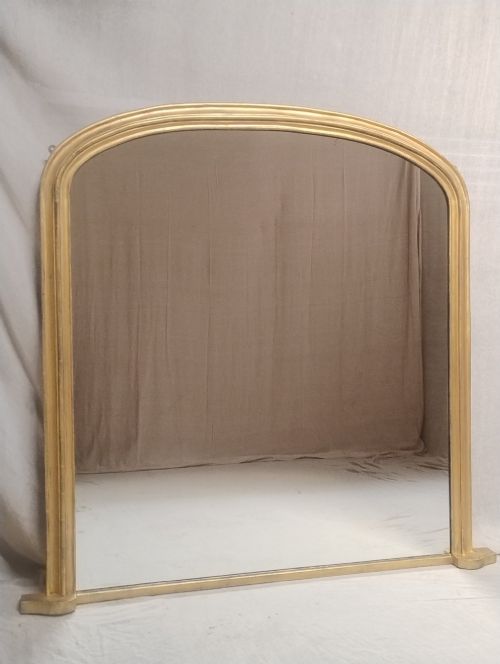
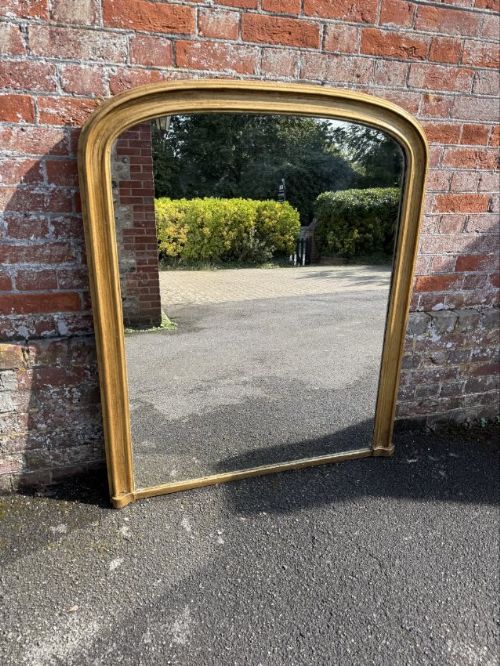
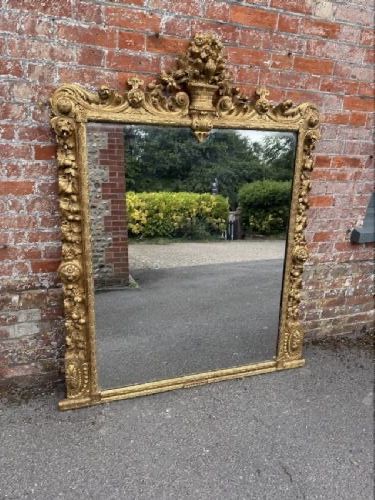
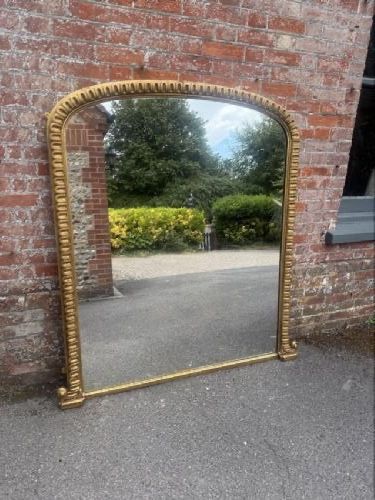
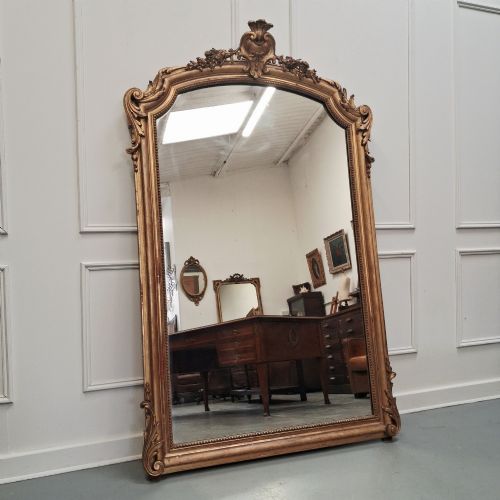
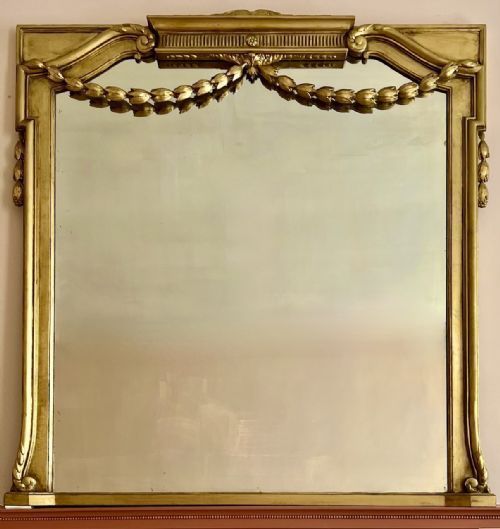
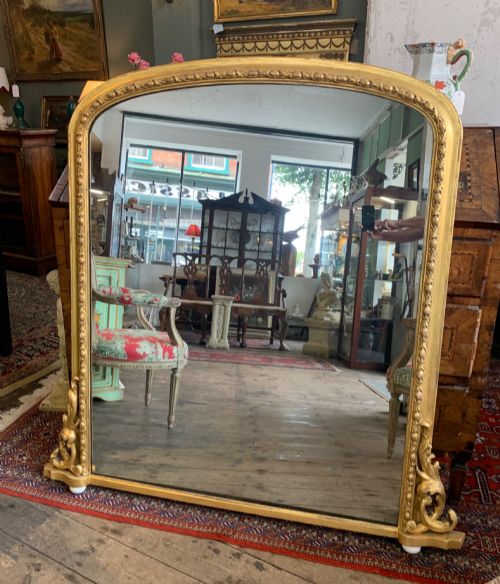
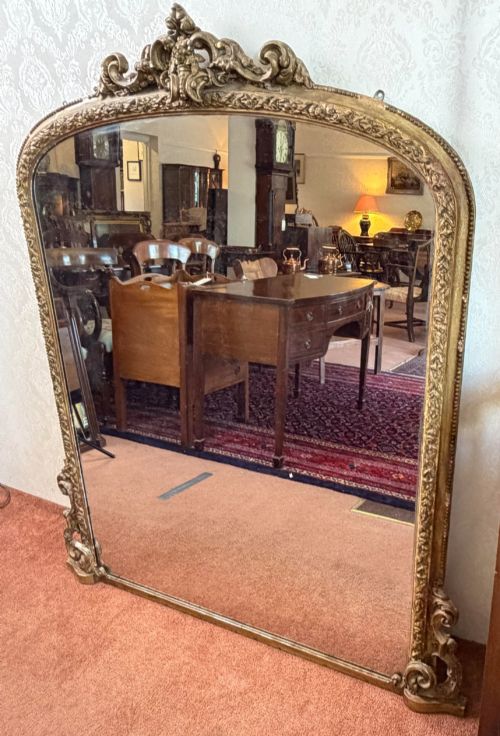
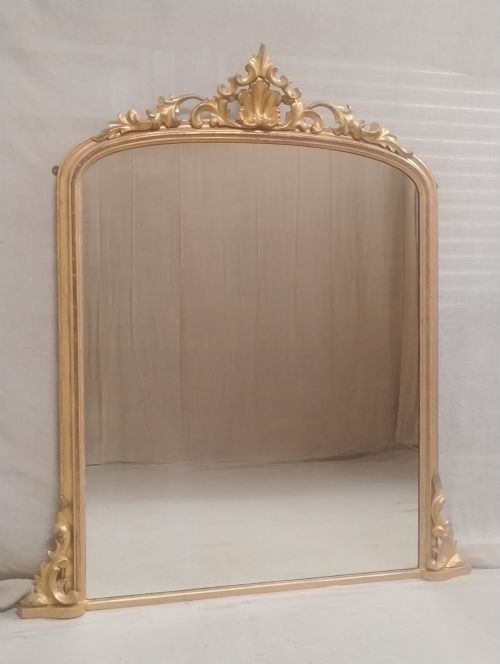
A Victorian style mantel mirror is typically a large, substantial wall-hanging glass plate designed to sit above a fireplace hearth. These pieces belong to the nineteenth century, encompassing early Victorian pieces through to 1880s productions.
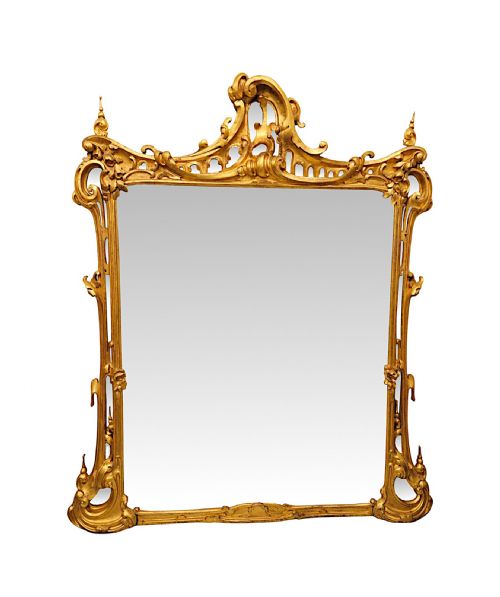
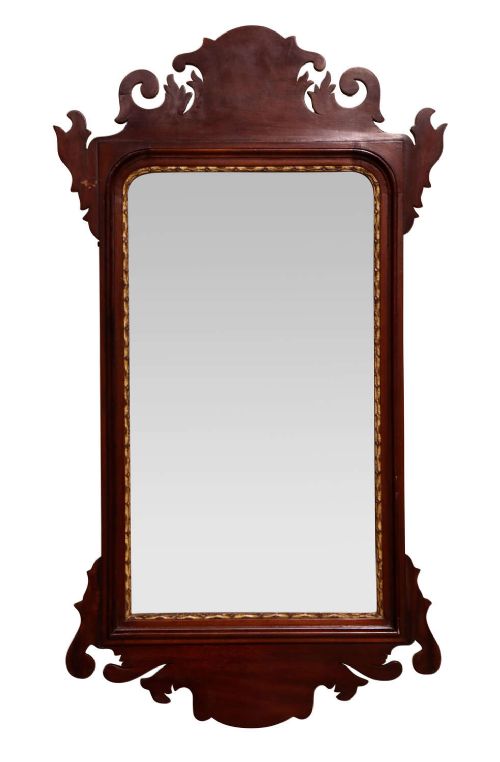
The dominant forms seen here are overmantel mirrors and wall mirrors, frequently featuring arched tops, shaped crests, or rectangular proportions built to command a chimney breast.
Makers drew upon a variety of aesthetic movements, producing examples in Rococo Revival, French Chateau, Neoclassical, and Chinese Chippendale styles alongside standard Victorian interpretations.
How they were made
Frames rely upon carved wood, gesso, composition, and occasionally mahogany, rosewood, oak, or giltwood as foundational support structures. Artisans applied gold leaf, silver, or paint directly onto these prepared surfaces.
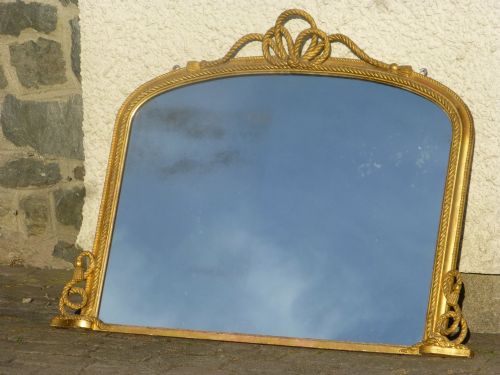
Decorative detailing incorporates applied gesso mouldings, rope twist motifs, fretwork, and carved cartouches to achieve the ornate profiles characteristic of the period.
The listings span the nineteenth century, featuring pieces from the 1860s, 1870s, and 1880s alongside general Victorian items.
What varies in quality
Quality rests upon the depth and crispness of the hand-carved wood elements versus moulded composition ornament, alongside the preservation of the original gilding.
The sophistication of the frame's architectural proportions and the subtlety of decorative flourishes like rope twists or central cartouches distinguish finer examples from simpler workshops.
The Victorian Style Mantel Mirror Glossary
- Overmantel mirror
- A large mirror specifically proportioned to hang on the wall directly above a fireplace mantelpiece.
- Gesso
- A plaster-like material applied to wooden frames and carved or moulded into intricate decorative reliefs before gilding.
- Giltwood
- Timber that has been coated with a thin layer of gold leaf, producing a rich metallic surface finish.
- Composition
- A moulded mixture of whiting, resin, glue, and linseed oil used for rapid ornamentation on period frames.
- Cartouche
- An ornamental tablet or panel frame, often resembling a rolled-up scroll, placed centrally on the crest of a mirror.
- Pier mirror
- A tall mirror designed to be hung on the solid section of wall between two windows.
Victorian Style Mantel Mirror: Frequently Asked Questions
Where should an overmantel mirror be hung?
These mirrors are traditionally positioned centrally on the chimney breast directly above the fireplace mantel. This placement reflects light around the room and anchors the architectural focal point of a historic interior.
Because nineteenth-century pieces can be exceptionally heavy, proper wall fixings and weight distribution are essential for safe mounting above any heat source.
How do I identify a Victorian mirror?
Victorian mirrors often display characteristic revival styles such as Rococo, French Chateau, or Chippendale, combined with traditional nineteenth-century construction methods. Look for timber frames finished with gesso and gold leaf.
Examining the reverse of the frame and the silvering on the glass plate helps confirm the nineteenth-century origin of the piece.
Are these mirrors suitable for modern homes?
The scale and reflective surface of these nineteenth-century pieces make them practical additions to contemporary living spaces. They bounce natural daylight across a room and create an illusion of greater depth.
Beyond the drawing room or fireplace, they function effectively in large hallways and dining spaces as standalone statement objects.
What is the difference between giltwood and gilded gesso?
Giltwood describes a solid wooden frame where gold leaf is applied directly to the prepared timber substrate. Gilded gesso involves coating the wood in a thick plaster mixture that is carved or moulded before receiving the metallic leaf.
Both techniques yield a bright reflective surface, but gesso allows for much sharper, deeply undercut decorative reliefs.