


Victorian Style Garden Furniture
Victorian style garden furniture brings the decorative metalwork and rustic forms of the nineteenth century straight onto the lawn.
Victorian Style Garden Furniture
When searching for victorian style garden furniture, buyers encounter a robust mix of seating, tables and sets designed for outdoor use across the nineteenth and twentieth centuries. The selection centres heavily on garden benches, dining sets and chairs shaped by Victorian, Gothic Revival and Regency influences.
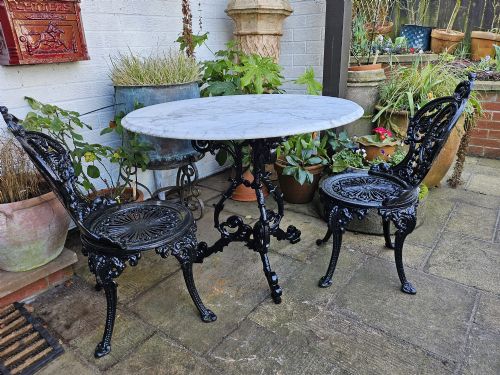
Most pieces on offer date from the nineteenth century or the early decades of the twentieth century, including items from 1880, 1910, 1920, 1930 and 1950. Alongside standard benches and chairs, the inventory includes bistro tables with marble tops, wirework sets, faux bois seats and rocking chairs.
Forms range from single garden seats to complete garden dining sets and tables paired with matching chairs. Pieces span varied design traditions such as French Bistro, Victorian Rustic, Victorian Wirework and strapwork.
How they were made
Makers utilised cast iron, wrought iron, wirework and wood to build sturdy frames capable of withstanding outdoor conditions. Cast iron allowed for ornate decorative patterns, whilst wirework formed intricate openwork structures for tables and chairs.
Surface treatments typically involved paint applied over metal or wood, whilst specific pieces incorporate marble tops for tables or fabric elements. Artisans also produced faux bois designs, imitating natural timber grain in concrete or composition materials.
Listings feature items spanning from the nineteenth century through the 1950s, employing cast iron, wrought iron, wirework, wood and marble.
What varies in quality
The distinction between standard examples and top-tier items lies in the crispness of the casting and the complexity of the design. Pieces featuring detailed Gothic Revival motifs or named attribution show superior artistic ambition compared to plain utility items.
Integrity of materials and the survival of original decorative elements dictate the standing of a piece. Elaborate strapwork, complex wirework patterns and integrated marble tops separate ordinary garden seats from exceptional decorative works.
Christopher Dresser
The Victorian Style Garden Furniture Glossary
- Cast Iron
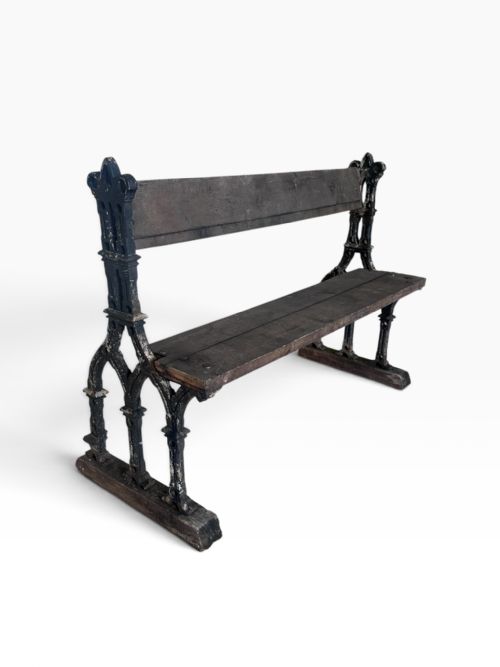
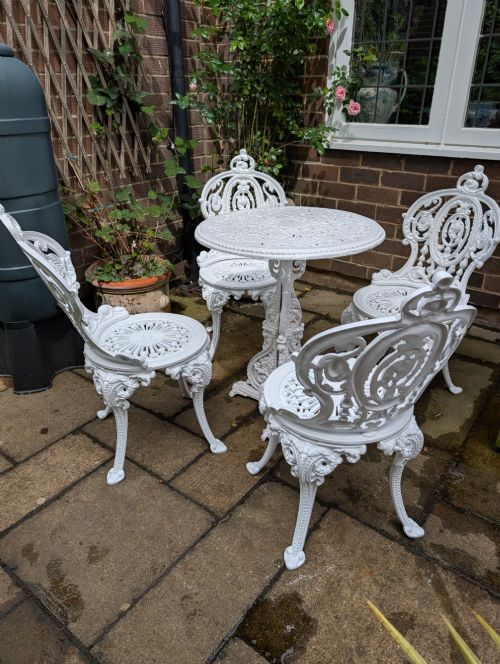
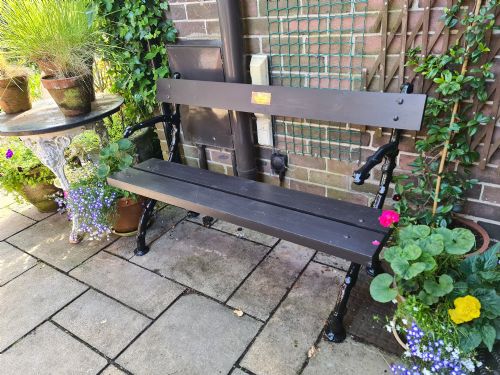
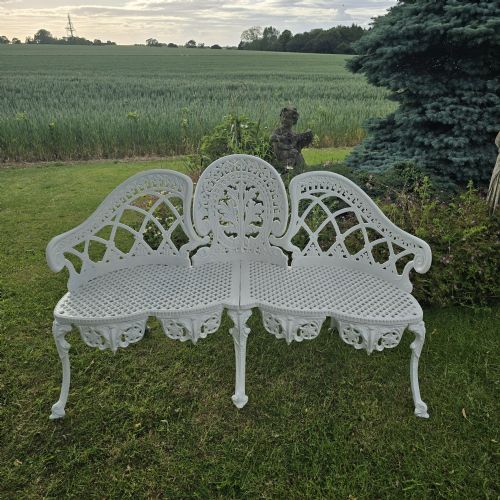
- Molten iron poured into a mould to create rigid structures and ornamental patterns. This technique allowed makers to produce complex scrollwork and Gothic arches for garden benches and chairs.
- Wrought Iron
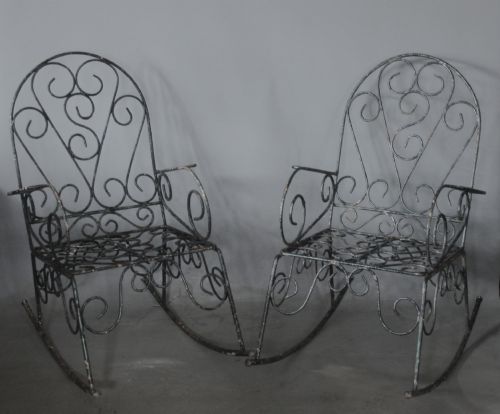
- Iron heated and worked by hand with hammers and tools to form durable structural components. It provides strength and flexibility for items like rocking chairs and simpler frames.
- Wirework
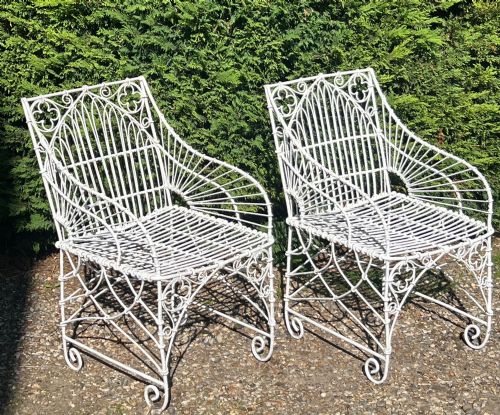
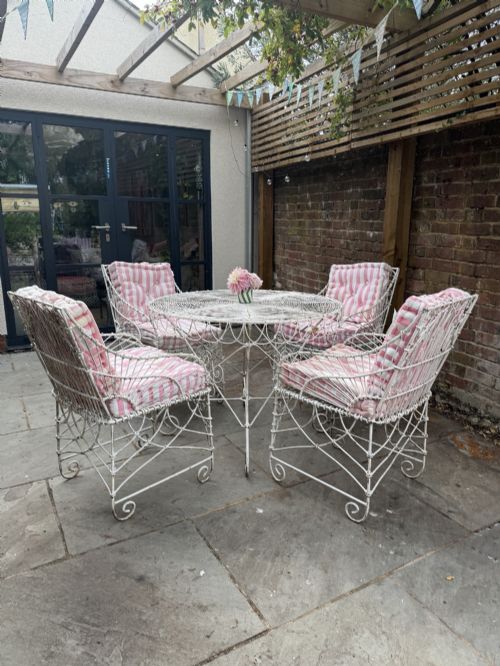
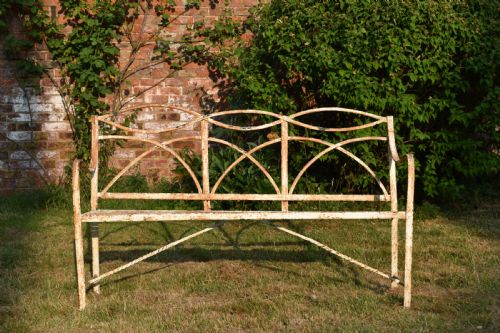
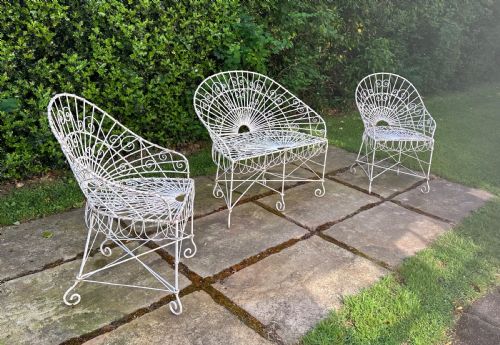
- Metal wire bent and soldered into geometric or plant-like patterns to form lightweight tables and chairs. This technique creates an airy aesthetic popular in nineteenth-century garden design.
- Faux Bois
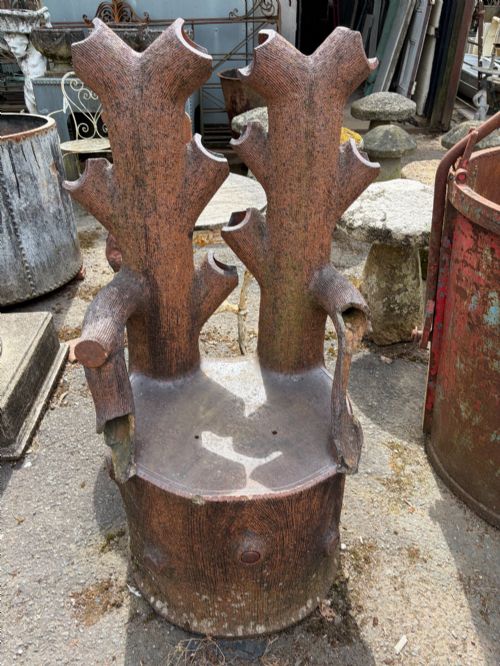
- An artistic imitation of wood grain applied to hard materials like metal or concrete. It gives rigid garden seats the visual appearance of rustic timber branches.
- Strapwork
- Ornamental work consisting of flat, interlaced bands resembling leather straps. This pattern appears on benches and tables, adding linear rhythm to the design.
Victorian Style Garden Furniture: Frequently Asked Questions
How do I identify a Victorian garden bench?
Look for heavy cast iron frames featuring decorative motifs such as Gothic arches, foliage or strapwork. These structural choices reflect the prevalent design styles of the nineteenth century.
Check the construction methods and material patination to understand the age of the piece. Genuine examples show the wear and weight characteristic of nineteenth-century metalwork.
Are wirework sets suitable for outdoor use?
Wirework garden tables and chairs were originally constructed for outdoor placement on lawns and terraces. Their open metal structure allows rain to pass through easily.
Maintenance involves monitoring the painted surface to protect the underlying wire from corrosion. Keeping the paint layer intact ensures the metal survives seasonal weather.
What is a faux bois garden seat?
A faux bois seat is designed to resemble natural tree branches or logs while being made from durable materials. This rustic style was popular for creating a naturalistic look in nineteenth-century gardens.
These pieces combine the comfort of a traditional bench with sculptural imitation of timber. They offer a distinct visual texture compared to standard flat-iron furniture.
How do I clean marble top bistro tables?
Marble top tables require gentle washing with mild soap and water to preserve the stone surface. Avoid acidic cleaners that can etch the polished top.
Regular wiping prevents dirt accumulation in the natural pores of the marble. Storing the table under cover during harsh weather protects both the stone top and the cast-iron base.