

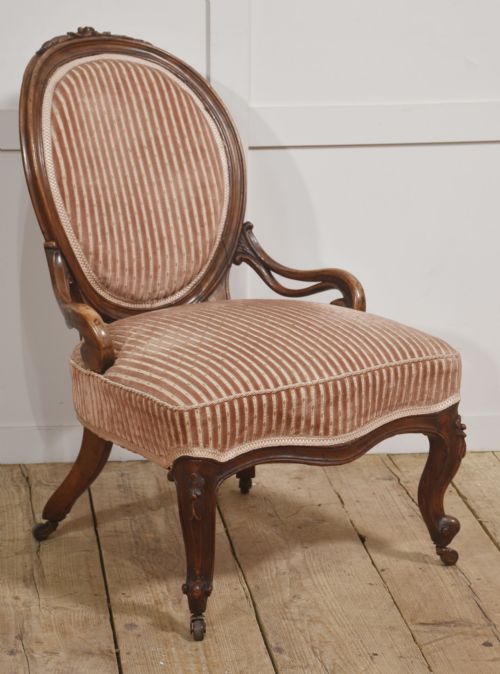


Victorian Striped Armchair
A victorian striped armchair brings rich nineteenth-century upholstery and timber framing together to anchor a traditional room with character.
Victorian Striped Armchair
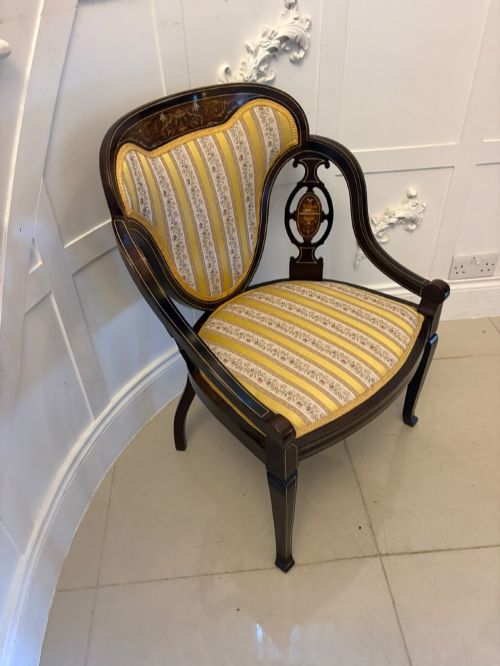
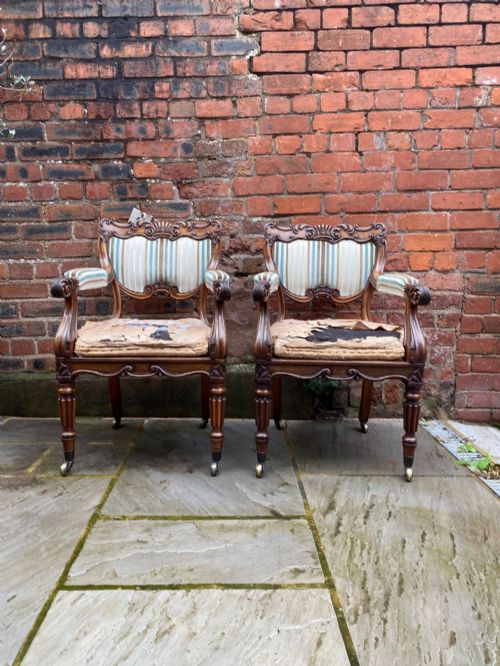
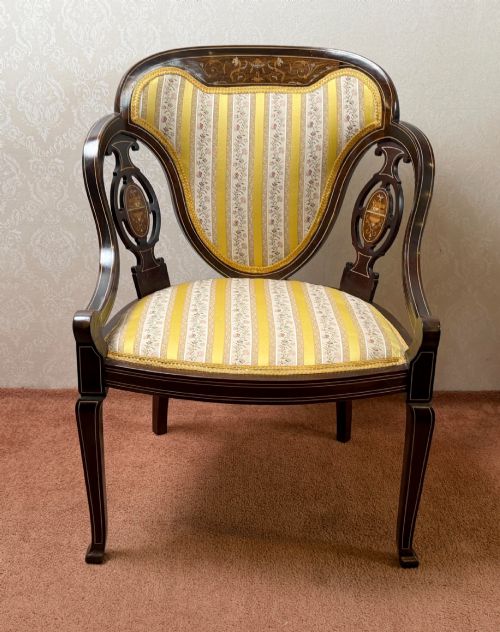
When you search for a victorian striped armchair, you are looking at nineteenth-century seating that ranges from compact ladies chairs to large library armchairs and wing chairs. These pieces combine robust timber frames with patterned textile upholstery, reflecting the diverse revivalist tastes of the period.
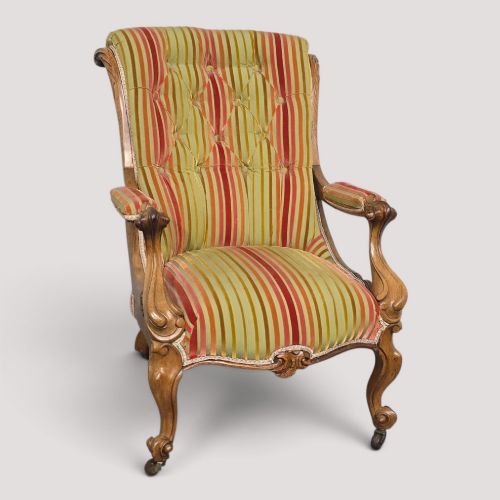
The selections on this page span the broader nineteenth century alongside the Victorian era itself, with occasional Regency and Edwardian pieces appearing. You will encounter open armchairs, button-back designs, and low chairs framed in woods like walnut, mahogany, and rosewood.
Many examples feature decorative woodwork, from carved showwood frames to inlaid bone and boxwood details. Whether upholstered in ticking fabric or patterned velvet, these armchairs serve as functional seating with distinct historical presence.
Materials and Construction
Makers of these armchairs relied heavily on dense hardwoods such as mahogany, walnut, and rosewood to build durable, load-bearing frames. Timber selection dictated the potential for fine carving, allowing craftsmen to shape elaborate open arms, curved oval backs, and cabriole legs.
Upholstery techniques involved durable textiles, traditional fabrics, and velvet secured over supportive internal padding, occasionally complemented by brass accents and detailed woodwork inlays. Showwood frames left polished timber exposed around the padded elements to showcase the grain and carved ornamentation.
Victorian Striped Armchair Retail Price Guide 2026
Typical asking prices for victorian striped armchair among the pieces listed under this phrase on Sellingantiques today, from the lower quarter to the upper quarter. They describe what is for sale here now, not the wider market.
Listings feature 19th-century styles ranging from Regency and Victorian to Edwardian, utilising materials such as mahogany, walnut, rosewood, brass, and velvet.
Judging Quality and Craftsmanship
The distinction between standard seating and finer examples lies in the crispness of the timber carving and the sophistication of the frame's silhouette. Superior pieces display intricate hand-carved details, balanced proportions, and high-grade secondary woods that reflect skilled nineteenth-century cabinet making.
Integration between the wooden frame and the upholstered body also separates tiers of production, where better examples maintain structural integrity alongside well-executed decorative elements like inlay work or hand-painted highlights.
Howard And Sons
The Victorian Striped Armchair Glossary
- Showwood
- The exposed, polished wooden framing of an upholstered chair that remains visible around the padded sections. This allows craftsmen to display the quality of the timber and any decorative carving.
- Wingback
- An armchair featuring protective side panels attached to the arms and back to block drafts. These were traditionally placed near firesides in nineteenth-century homes.
- Button-back
- An upholstery style where buttons are pulled deep into the padding to create a quilted, geometric pattern. This technique adds both structural tension and visual texture to the backrest.
- Squab seat
- A loose, removable cushion placed over the main seat base of an armchair. It provides additional comfort and can be easily lifted or replaced.
- Open armchair
- A chair design featuring un-upholstered, open wooden arms that reveal the structural joinery and side supports. These often appear in library and desk settings.
Victorian Striped Armchair: Frequently Asked Questions
How do I identify a Victorian armchair?
Victorian armchairs are typically identified by their use of dense hardwoods like walnut and mahogany, combined with revivalist design influences such as Gothic or Rococo details. Look at the framing, leg shapes, and upholstery styles to gauge the nineteenth-century origins.
Many pieces also feature distinct structural forms, including low seats, button-backed padding, and carved showwood frames that set them apart from later seating styles.
Where should I place a wingback chair?
Wingback chairs suit corners, studies, and living spaces where their high backs and protective side panels can create a cosy seating zone. Their traditional proportions make them effective anchor pieces in rooms with classic architectural details.
Ensure there is enough surrounding floor space to accommodate the flared arms and substantial footprint typical of nineteenth-century wing chairs.
Are these chairs comfortable for daily use?
Most nineteenth-century armchairs were built with robust hardwood frames and sprung or padded seats designed for sustained sitting. Their ergonomic shapes vary from upright desk chairs to deeper library models.
Comfort levels depend on the current state of the internal padding and upholstery, which can be assessed through the specific construction of each individual piece.