
Victorian Storage Press
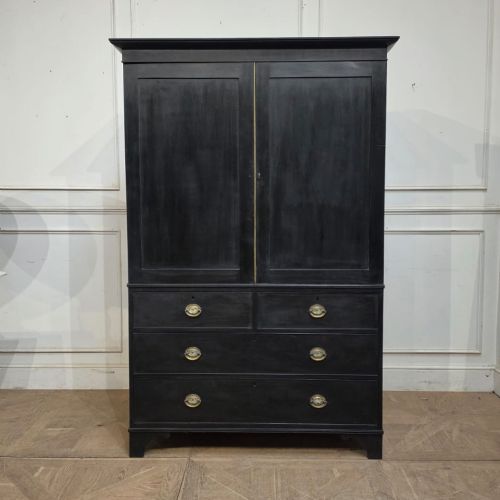
A victorian storage press brings substantial nineteenth-century timber housing into a modern room to organise linen, clothes and household stores.
Victorian Storage Press
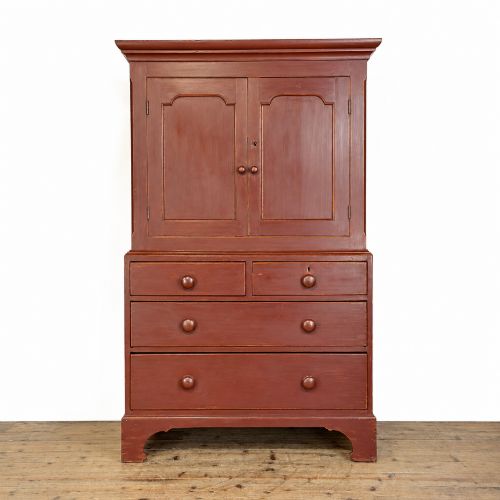
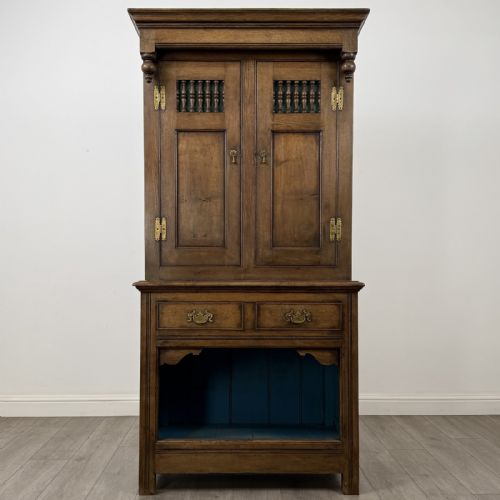
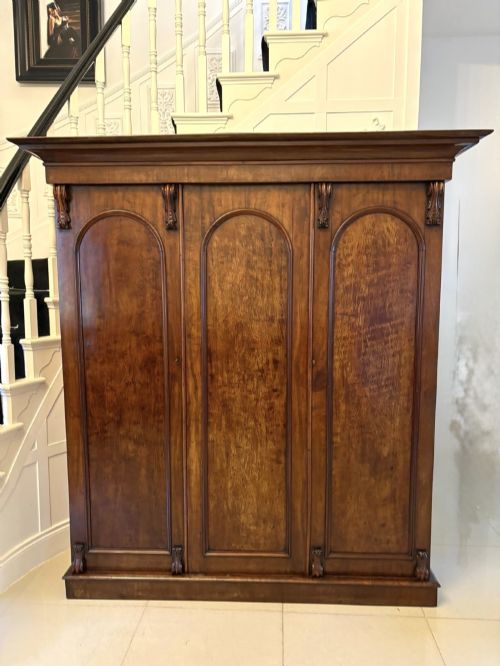
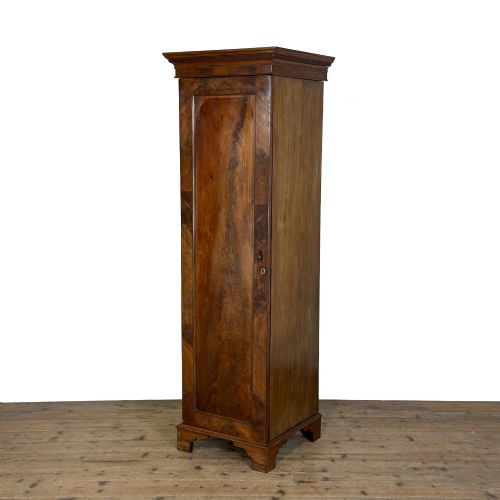
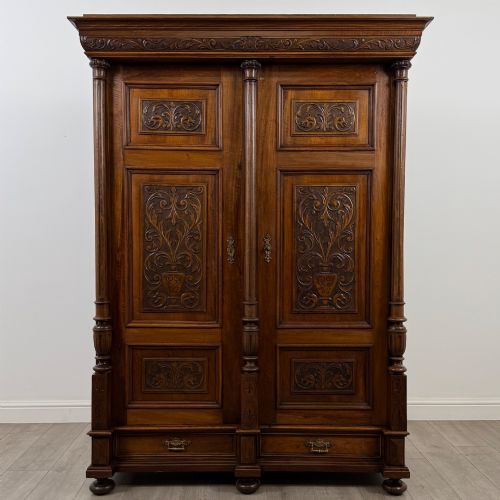
A victorian storage press encompasses large timber cabinets, housekeeper cupboards, wardrobes and linen presses designed for domestic storage during the nineteenth century. These pieces range from plain pine kitchen cupboards to figured mahogany wardrobes and walnut cabinets.
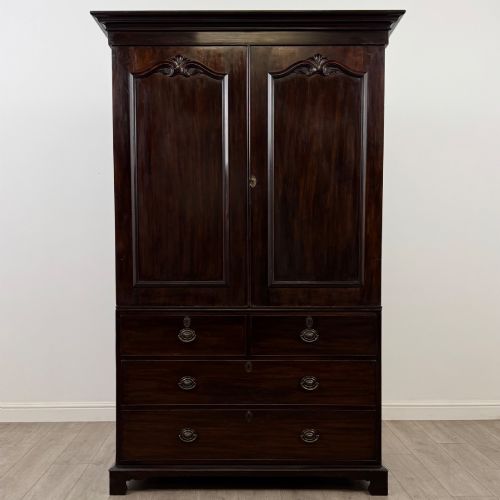
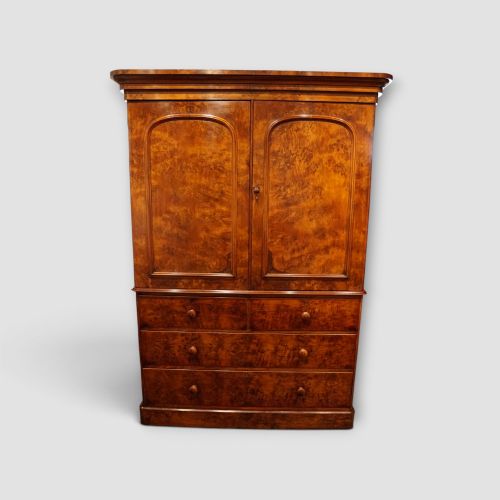
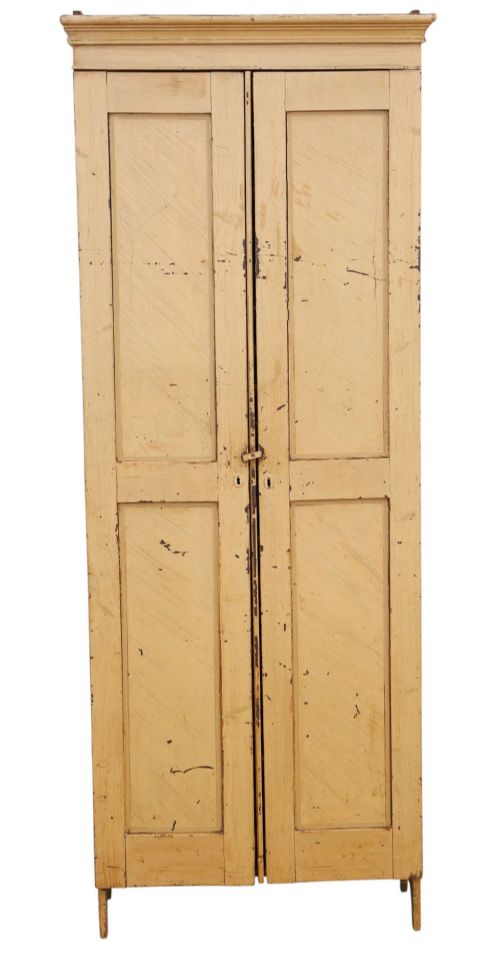
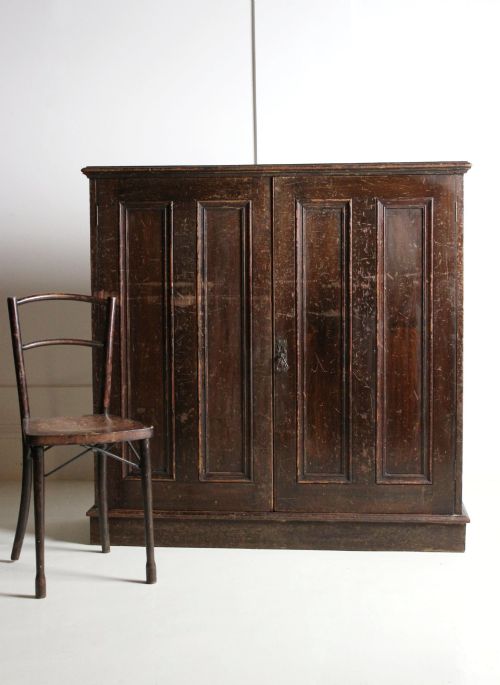
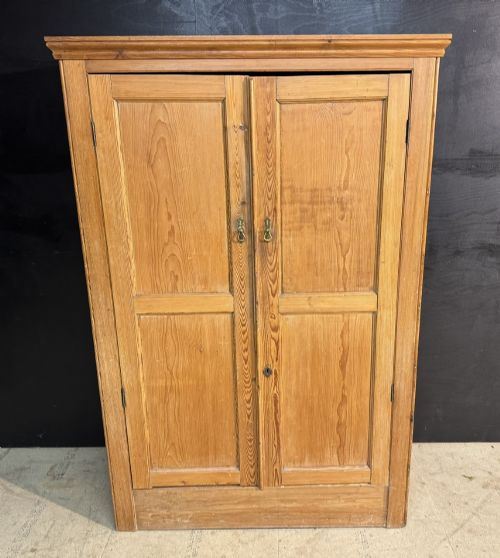
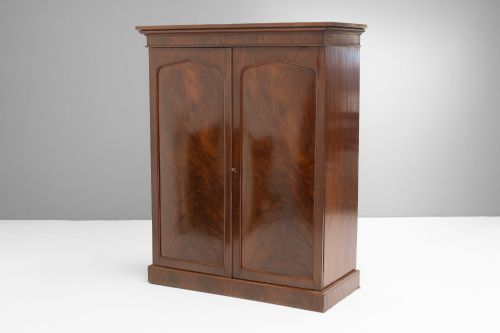
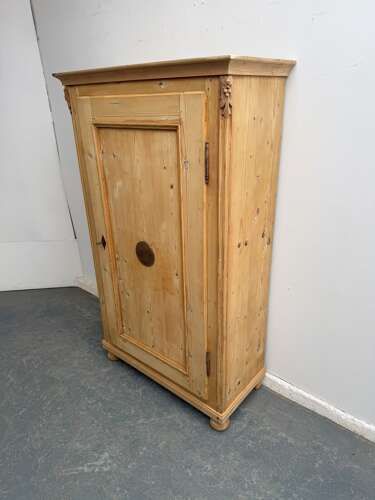
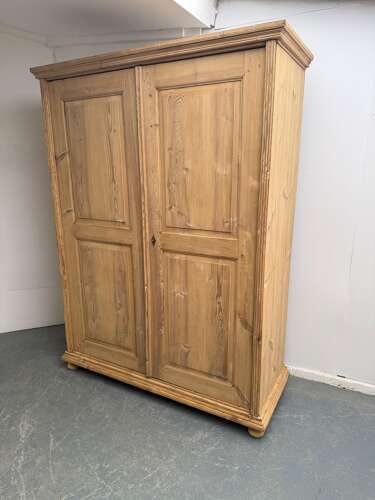
The version most commonly met on this page is the tall pine cupboard or knockdown wardrobe, often finished in original paint, scumble or bare wood ready for wax. Alongside these stand substantial mahogany and walnut linen presses featuring upper sliding trays or hanging space above lower banks of drawers.
Materials and construction
Makers utilised native and imported timbers, building primary structures in pine, oak, ash, mahogany and walnut, supplemented by brass handles, iron hardware and glass panels. Pine pieces frequently relied on simpler construction methods for utility use, whilst mahogany and walnut examples employed figured veneers and fine joinery.
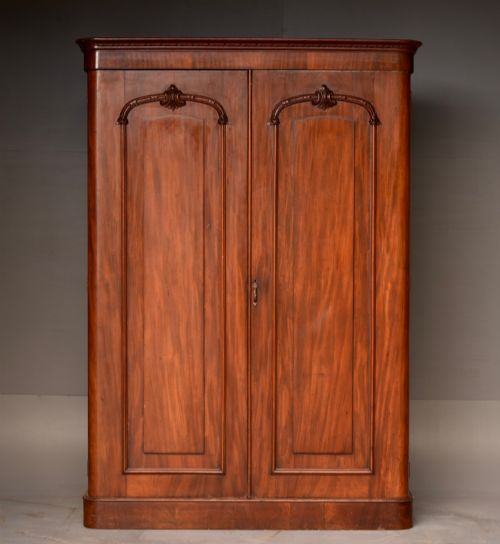
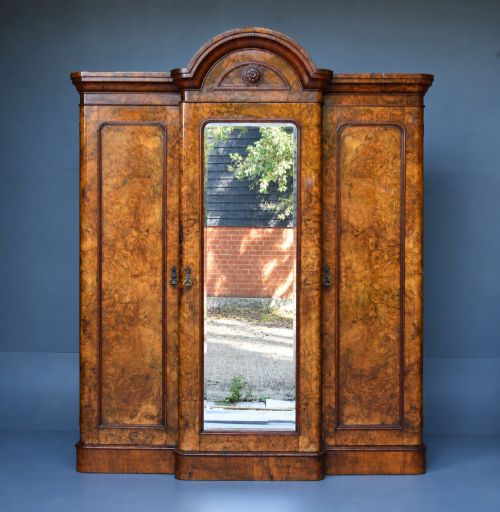
Surface treatments varied widely from clear wax and polish to lead paint, scumble glazes and ebonisation. Many functional pieces display simple panelled doors and carved pillar details, whereas high-status wardrobes incorporate blind fretwork cornices and flame mahogany panels.
Listings feature pine, mahogany, walnut and ash timbers alongside painted, ebonised and scumbled surface finishes.
Quality variations
Timber selection dictates the distinction between utility items and formal pieces, with figured mahogany and burr walnut sitting at the upper end compared to standard utility pine. The choice of primary wood and the presence of decorative details such as carved pillar panels or blind fretwork cornices set certain examples apart.
The integrity of original surfaces, including untouched paintwork or patinated polish, separates unrestored authenticity from later alterations. Construction depth, such as heavy panelled doors and properly fitted knockdown frames, distinguishes heavier architectural furniture from simpler builds.
Maple & Co.
The Victorian Storage Press Glossary
- Linen press
- A large tall cupboard containing sliding trays or shelves in the upper section for folded textiles, placed above a base of drawers.
- Knockdown wardrobe
- A large wardrobe constructed with modular panels and pegged joints that can be disassembled for transport into upper rooms.
- Scumble paint
- A decorative surface technique using translucent glaze brushed over a base coat to imitate the grain of more expensive timber.
- Blind fretwork
- Carved decorative openwork glued to a solid background rather than pierced right through the timber panel.
- Burr walnut
- Timber taken from the gnarled growth of a walnut tree, yielding a swirling, highly figured grain pattern prized for cabinet fronts.
Victorian Storage Press: Frequently Asked Questions
What is a victorian storage press used for?
These pieces served as heavy-duty storage for household linens, folded garments and hanging clothes in nineteenth-century homes.
Today they function effectively as bedroom wardrobes, hallway storage or kitchen larders for modern homes.
How do I tell an early piece from a later one?
Early examples often display simpler arched panel designs, hand-planed pine surfaces and early iron or brass hardware.
Later nineteenth-century pieces tend towards heavier moulded cornices, machine-sawn timber components and more elaborate revival styling.
Are pine cupboards meant to be painted or waxed?
Many utility pine cupboards carried original lead paint, scumble glazes or milk paint finishes for practical kitchen and scullery use.
Others are stripped down to bare timber so owners can apply clear wax to highlight the grain and knot patterns.
What is a knockdown wardrobe?
A knockdown wardrobe is a large cabinet built to be dismantled into flat sections using internal wooden pegs and bolts.
This design allowed bulky nineteenth-century furniture to be moved up narrow staircases and between rooms.