



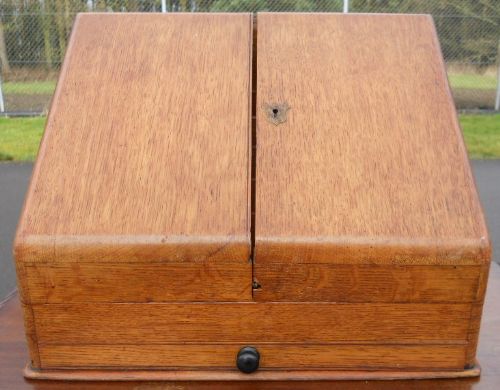


Victorian Stationary Box
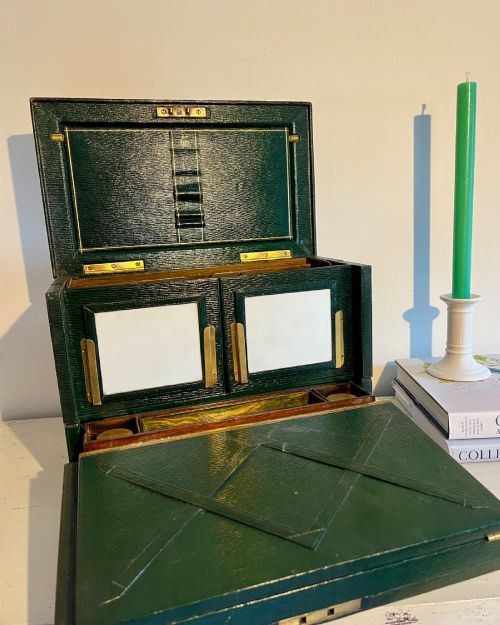
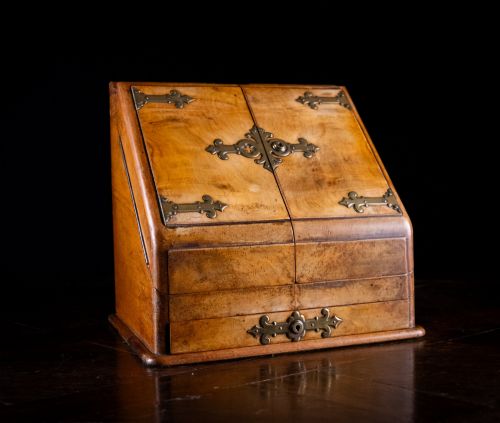
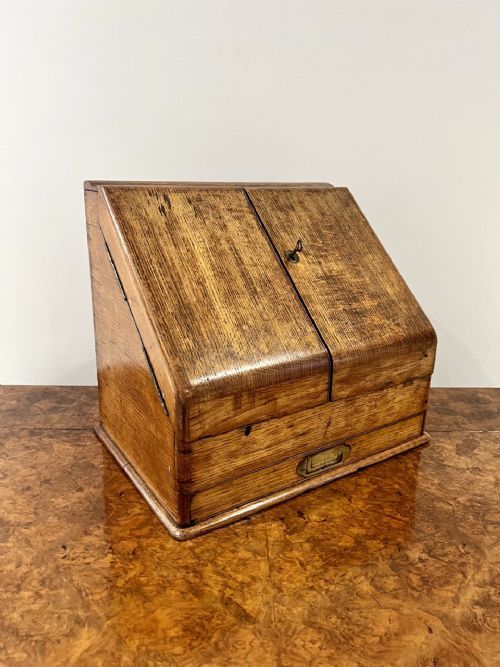
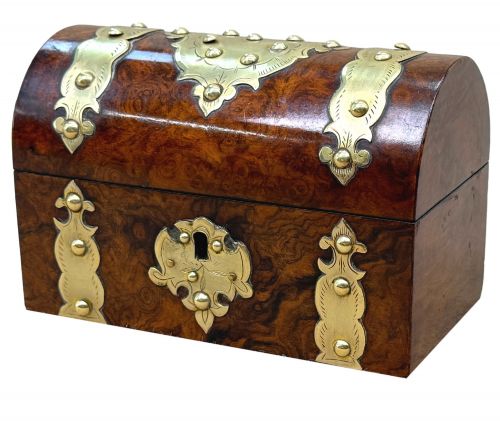
A victorian stationary box keeps correspondence ordered on a desk with brass mounts, sloping lids and fitted pigeonholes.
Victorian Stationary Box
A victorian stationary box provides a desktop house for envelopes, paper and correspondence, taking the form of cabinets, dome-topped caskets and storage boxes.
The pieces on this page span the mid to late nineteenth century, emerging in oak, mahogany and walnut alongside exotic veneers like coromandel and burr walnut.
Most examples sit upright on a desk with a hinged front or sloping lid that opens to reveal tiered compartments for letters and stamps.
How They Were Made
Cabinet makers constructed the foundational carcass from solid timbers such as oak and mahogany, then applied decorative veneers including burr walnut and coromandel.
Mounts, hinges and escutcheons in cast brass reinforced the corners and added structural weight to the opening lids and doors.
Interiors utilised fitted wooden dividers, leather-lined slots and occasional secret drawers to organise writing materials.
Victorian Stationary Box Retail Price Guide 2026
Typical asking prices for victorian stationary box among the pieces listed under this phrase on Sellingantiques today, from the lower quarter to the upper quarter. They describe what is for sale here now, not the wider market.
Materials recorded across the inventory include oak, mahogany, walnut, burr walnut, coromandel, leather and brass.
What Varies in Quality
The choice of primary wood and veneer dictates the standing of a piece, with figured burr walnut and coromandel sitting above standard domestic oak and mahogany.
Complexity of construction separates standard boxes from exceptional examples, seen in dome-topped profiles, Tunbridge ware decoration and integrated perpetual calendars.
The refinement of internal fittings, such as tiered pigeonholes and subsidiary stationery racks, marks the distinction in craftsmanship.
Houghton and Gunn·George Austin of Dublin
The Victorian Stationary Box Glossary
- Coromandel
- A dense, heavy exotic hardwood native to India and Southeast Asia, prized for its dark brown grain and contrasting pale streaks. It appeared frequently on high-end nineteenth-century desk accessories.
- Tunbridge ware
- A form of mosaic woodwork created by gluing together thousands of tiny tinted wood blocks to form a pictorial mosaic. Boxes bearing this decoration display intricate geometric or floral patterns.
- Gothic Revival
- An architectural and decorative style drawing on medieval ecclesiastical forms, characterised here by pointed arches and heavy brass strapwork. It influenced Victorian desk boxes during the mid-nineteenth century.
- Dome top
- A curved lid construction that allows taller envelopes and ledgers to sit within the cabinet while giving the box a distinct architectural silhouette.
- Escutcheon
- A flat plate of brass surrounding a keyhole, serving both to protect the surrounding wood from wear and to enhance the visual symmetry of the front panel.
Victorian Stationary Box: Frequently Asked Questions
How were stationery boxes used?
These boxes sat upon nineteenth-century writing tables to hold incoming letters, writing paper and envelopes away from ink spills. Owners opened the hinged lids or front panels to sort correspondence before sitting down to write.
Interior dividers kept different paper sizes separated, while auxiliary compartments held stamps, sealing wax and nibs ready for daily correspondence.
What is the difference between a stationery box and a writing slope?
A stationery box remains upright on the desk as a small cabinet designed purely to store paper, envelopes and writing accessories. It opens from the front or top to reveal vertical slots and compartments.
A writing slope folds open to create an angled, slanted desk surface lined with leather for writing letters, often concealing inkwells and storage beneath the folding leaves.
How do I date a Victorian stationery box?
Dating relies on combining the timber choice, decorative style and construction methods visible in the piece. Mid-nineteenth-century examples frequently feature Gothic Revival brass mounts or coromandel veneers, while later decades introduce simpler oak carcasses and adjustable date blocks.
Makers' marks, patent stamps or inscribed brass plates can sometimes narrow the production window to a specific decade or workshop.
Where should I place a stationery box at home?
A stationery box suits placement on a study desk, bureau or entryway console where it continues its original function of holding letters and paper. Keeping the piece away from direct sunlight and radiators protects the delicate veneers and polished timber finishes.
The interior compartments also serve well on modern dressing tables or sideboards for organising small daily accessories and notes.